CT SKT Attempt, part 2
Originally published in the Fall 2025 issue of Tread Lines, the newsletter of The Colorado Trail Foundation.
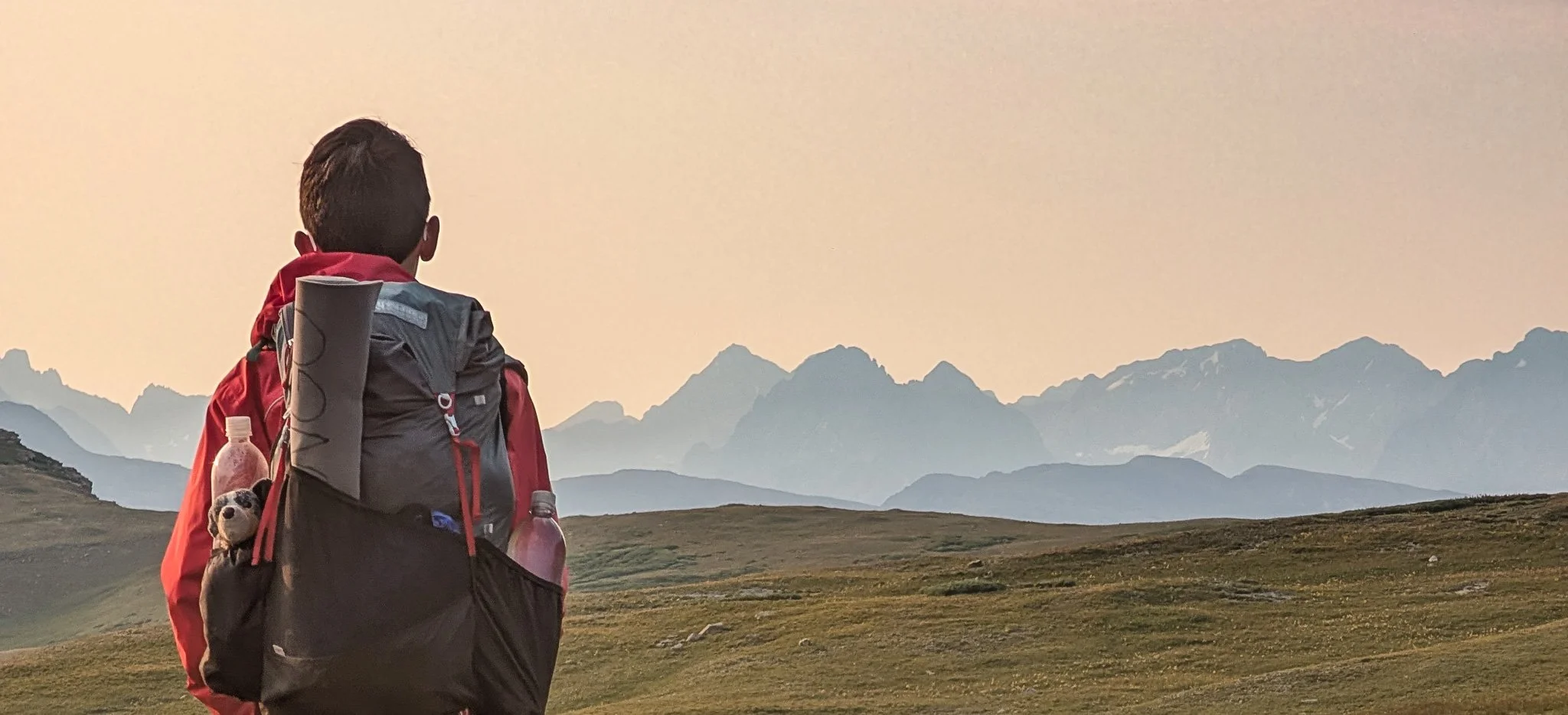
The San Juan mountains as seen from CT segment 25
As we came down the final switchbacks above Little Molas Lake, Matthew and I had mixed feelings about finally finishing the Colorado Trail. For the last five years, we had been working towards completing our piecemeal northbound effort from Durango to Denver. Now that we were taking our final steps, it felt bittersweet, like coming to the end of a good book.
I was also secretly considering my failed attempt at an SKT (‘Slowest Known Time’) for a full traverse of the CT. Only a few years ago, I had been cocky about my chances, but lately it had become obvious that an SKT was mathematically impossible based on my age and increasing competition from other hikers who were running out the clock. It was clearly time to throw in the towel and just enjoy the hike.
We began our CT journey when Matthew was six years old with a 2-night backpack on the Collegiate West from Monarch Pass to Hancock. He proudly carried all of his own gear in a huge external frame pack from the local thrift store. We kept the distance down to 8 miles per day, and brought a stove, fishing gear, and way too much food. All of this worked in favor of an SKT and probably led me to early overconfidence.
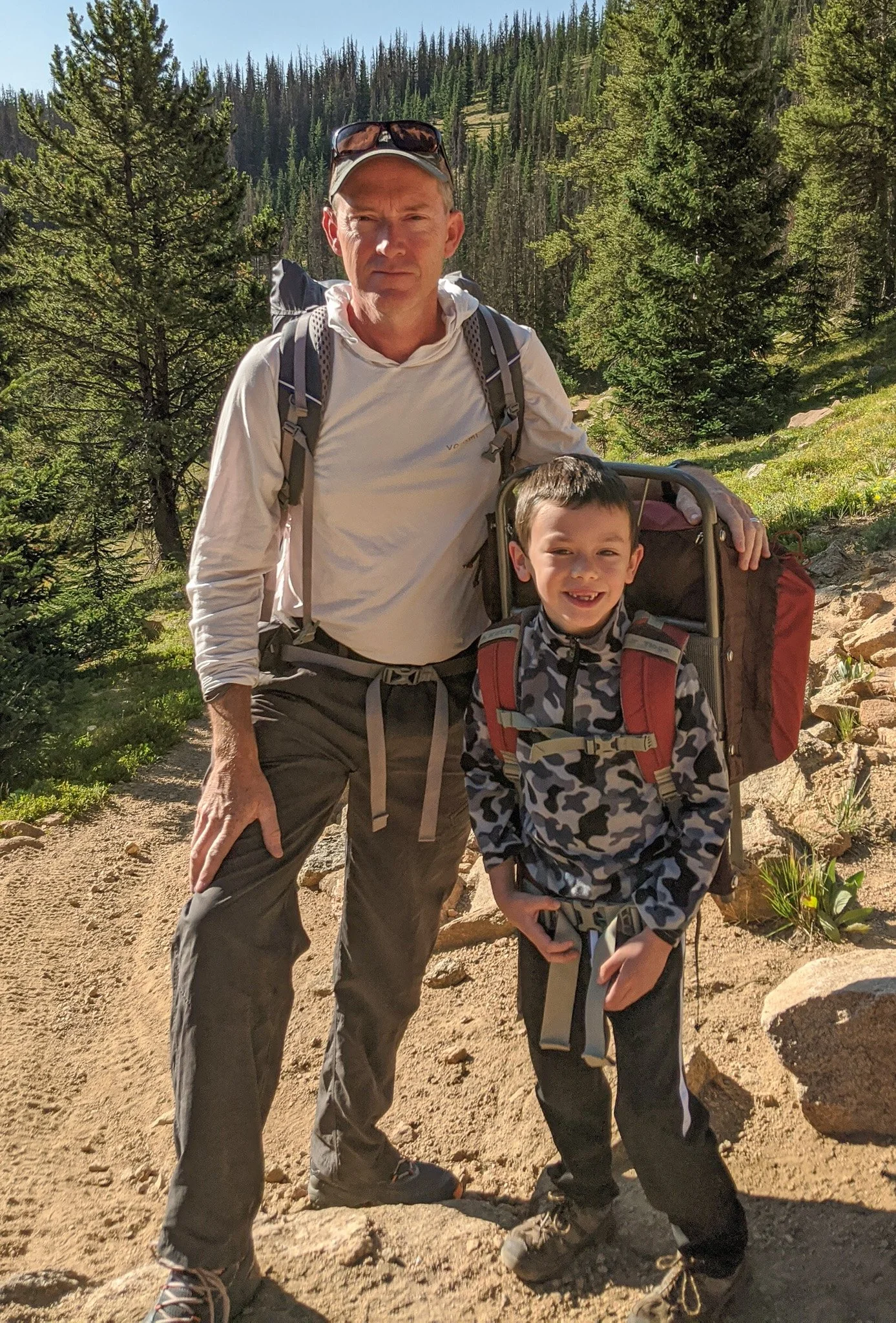
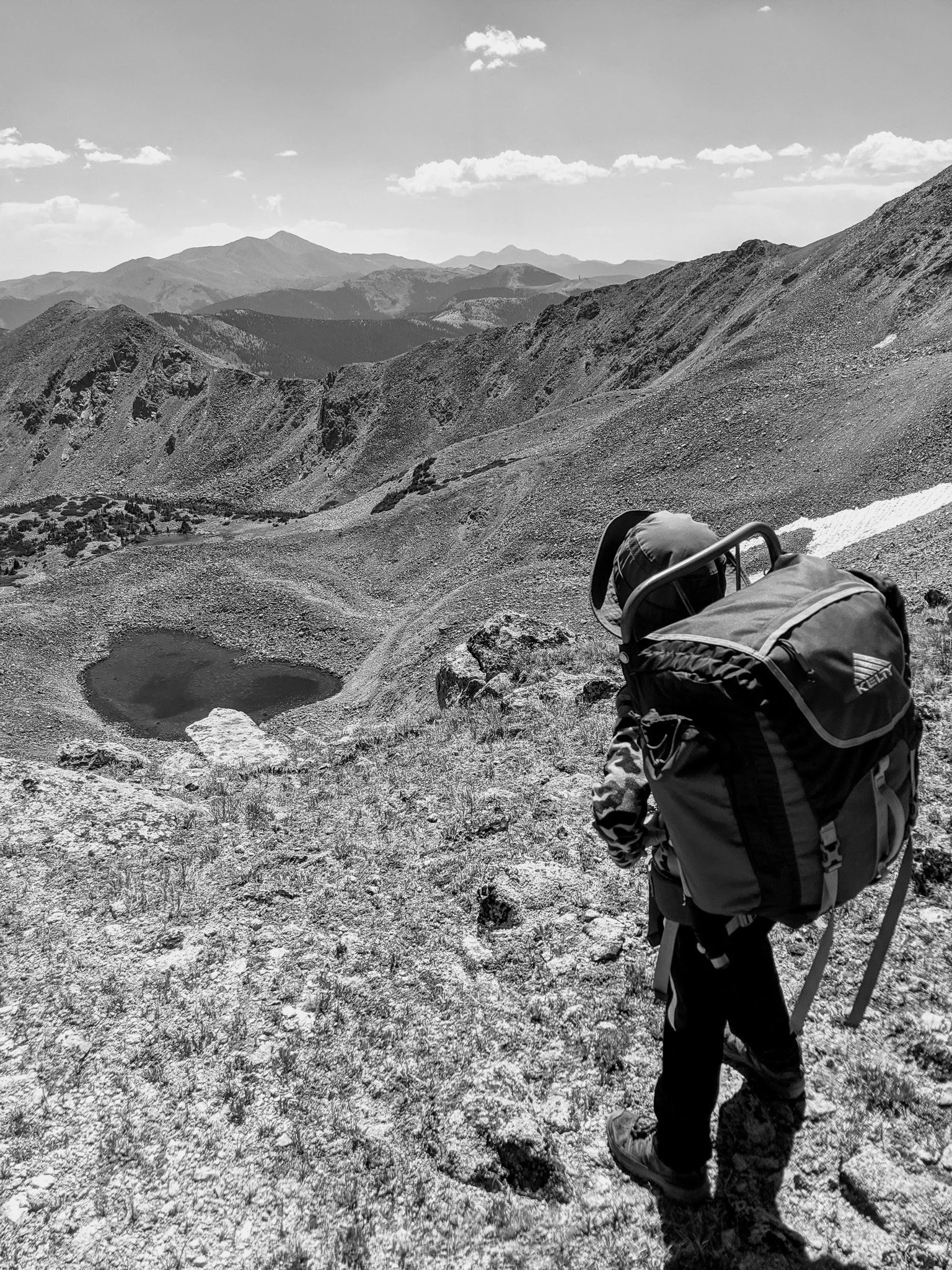
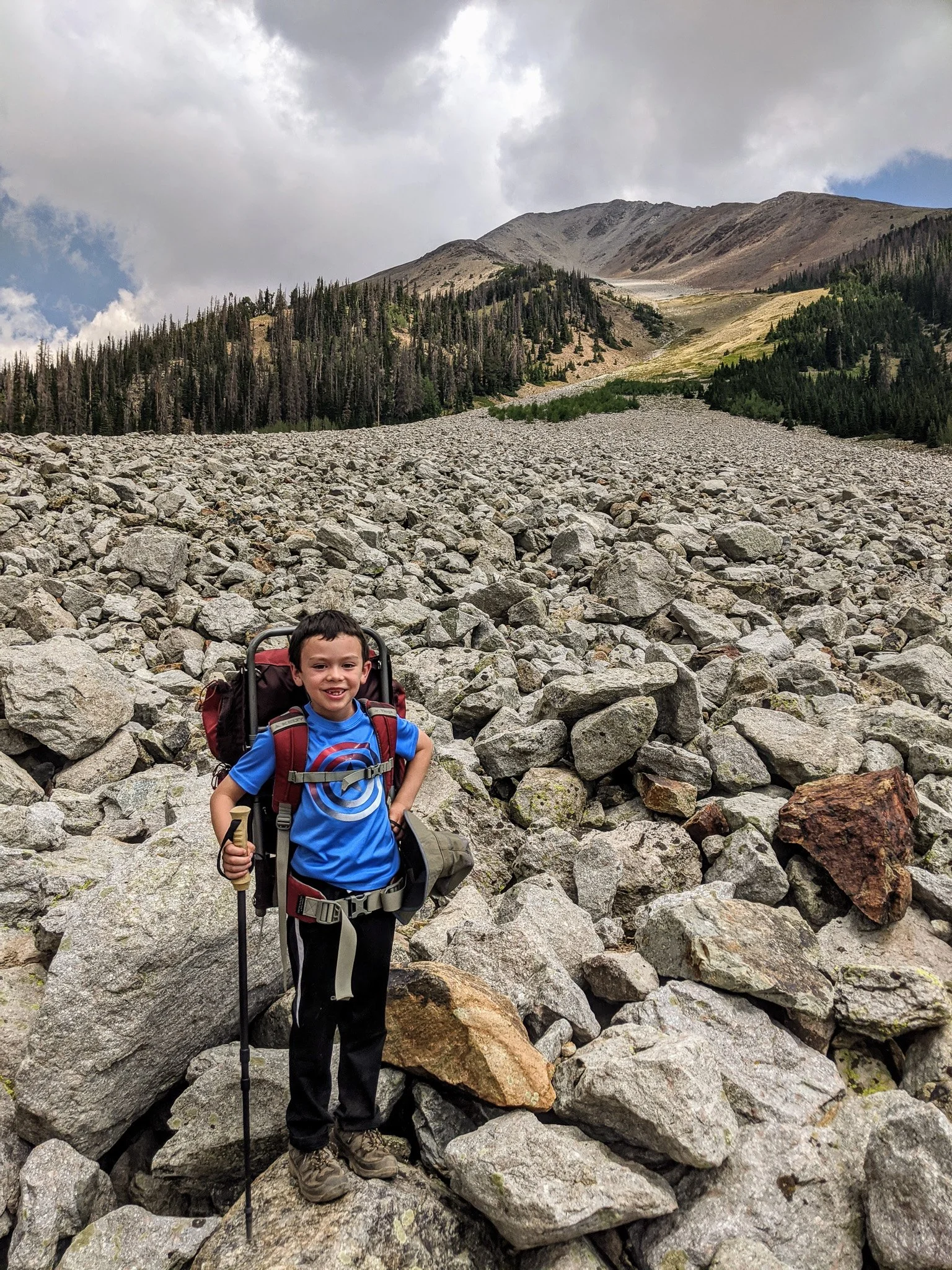
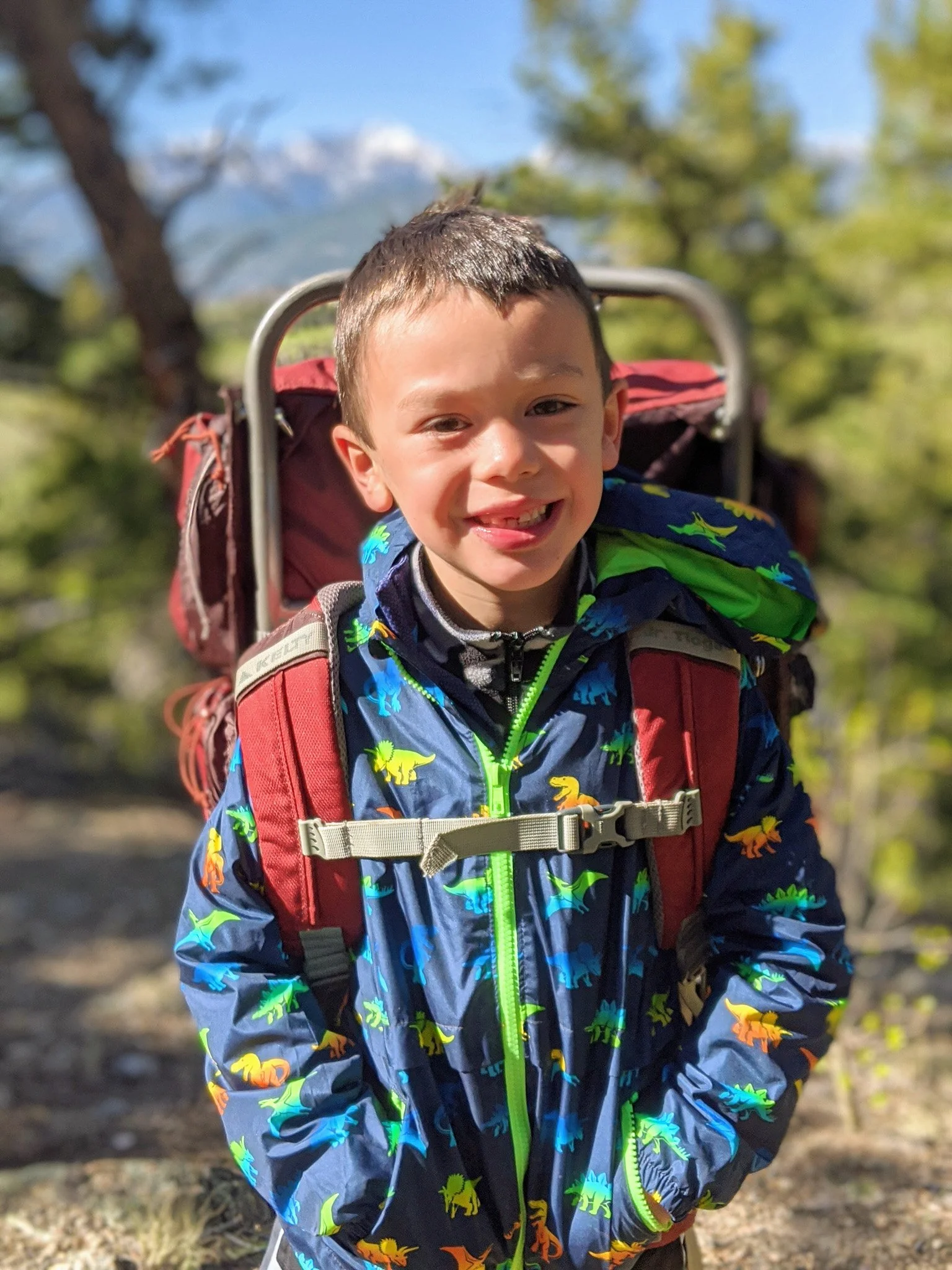
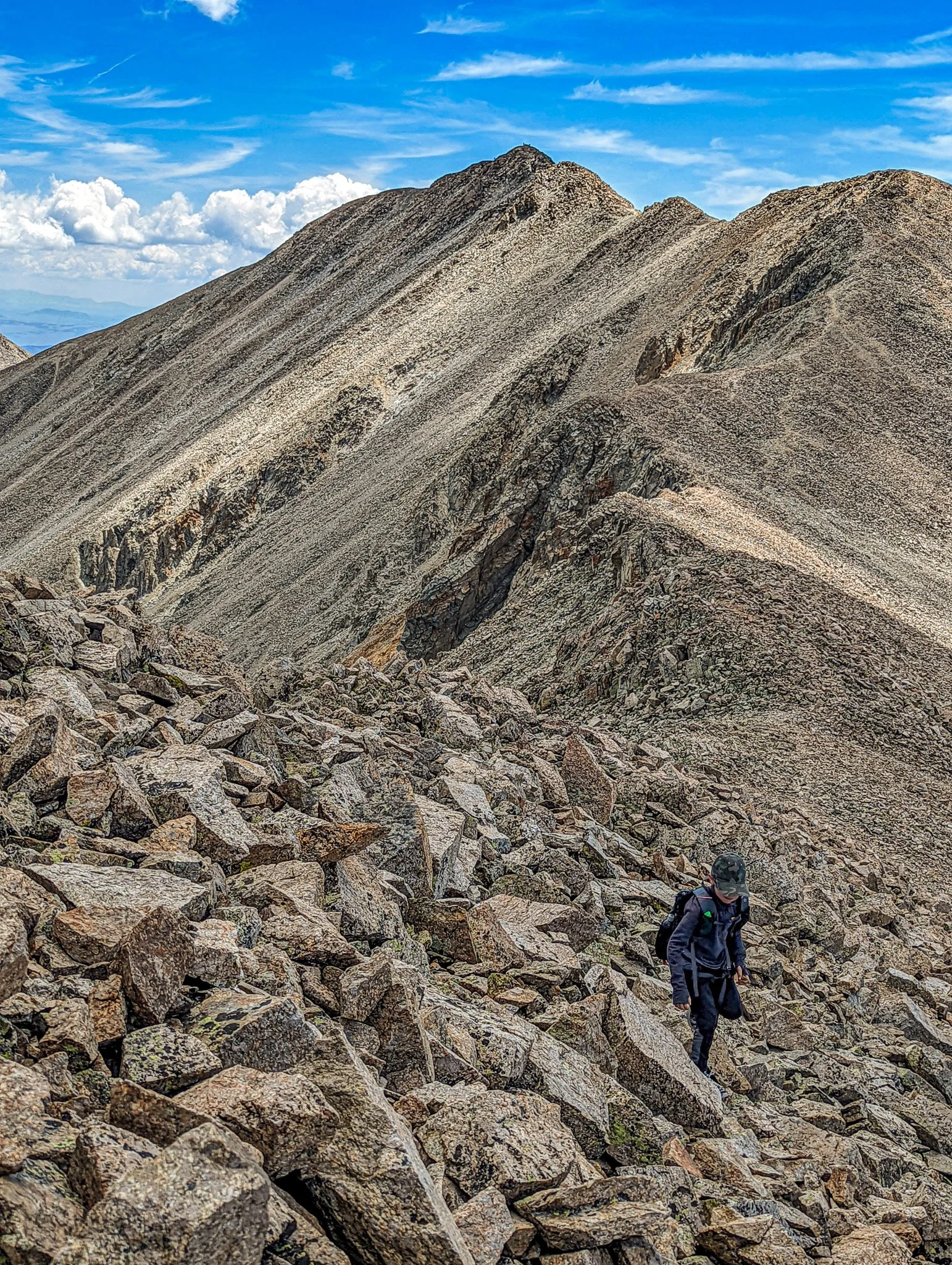
In the end, it was youth that did us in. Although the years have not been kind to my own conditioning, Matthew was moving in a different direction. By the time we got to our final chunk of the trail, he was pushing me on to 25-mile days. By then, I had loaded him up with the tent and most of the food to no visible effect. Towards the end, I dreamed of hiding rocks in his pack if I could ever catch up to him.
Whatever the measuring stick, it was a stunning trip. We experienced the CT in all seasons and conditions. We travelled mainly on foot, but weren’t above using bikes and skis when appropriate. We achieved our secondary goals of climbing all of the 14ers in the CT neighborhood and eating at every local pizza joint. Mission somewhat accomplished, I guess.
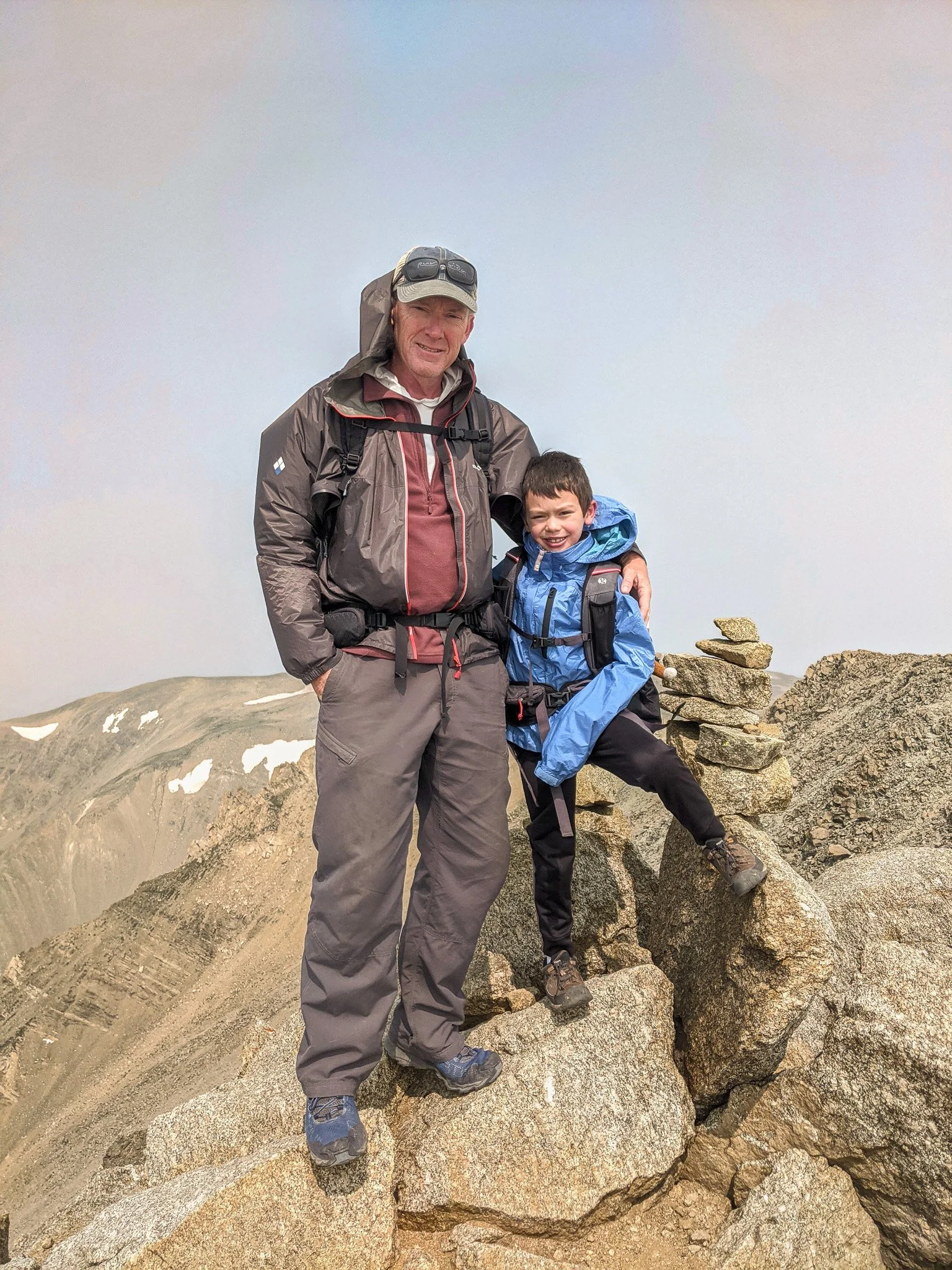
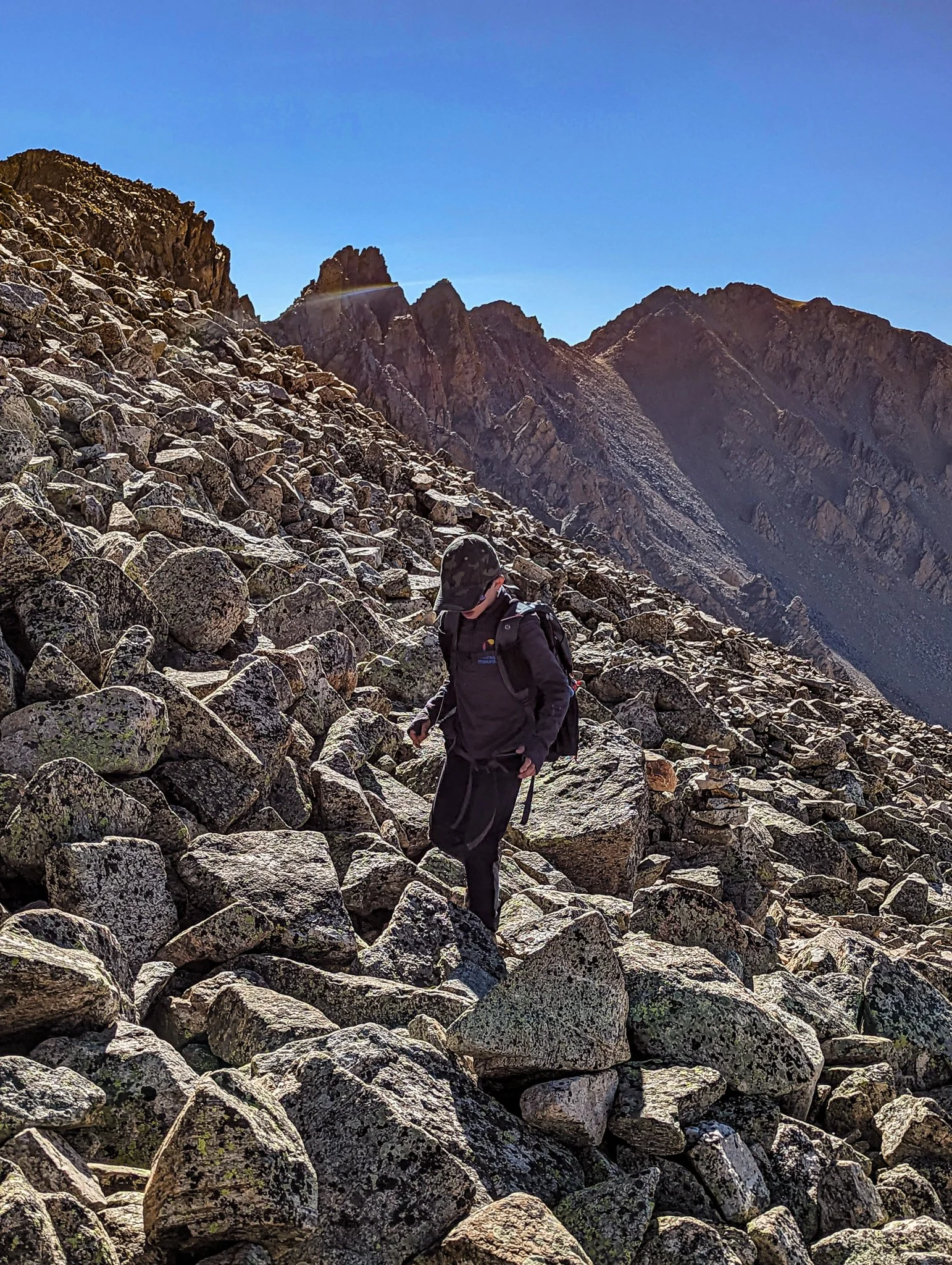
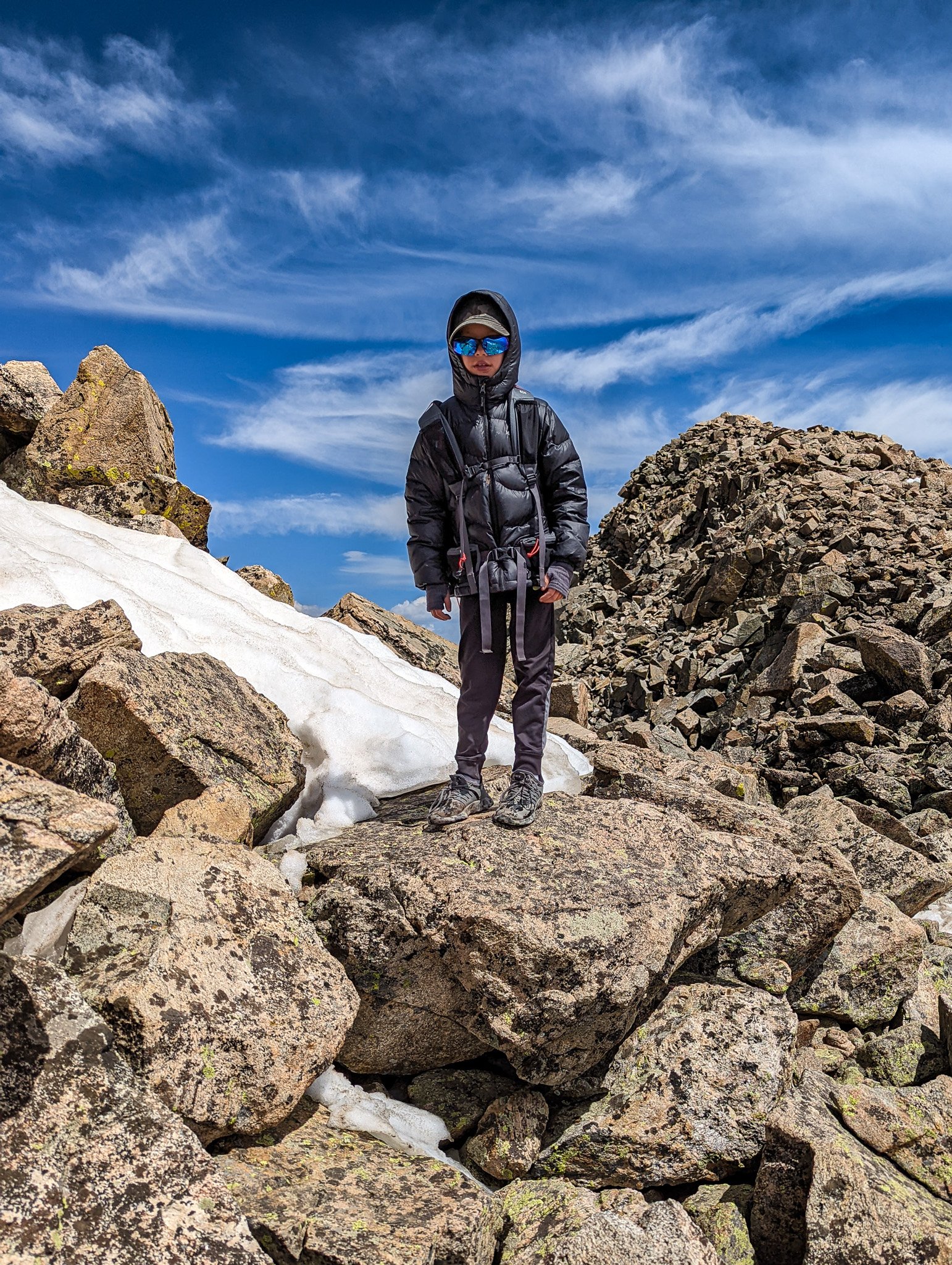
Even if I have blown the chance for an SKT, I can at least share some of our lessons learned:
Some say northbounders miss out on the social aspect of the CT. I disagree. When you’re northbound (NOBO), you get to meet everybody. We started as NOBOs accidentally, but stuck to it once the pattern emerged. It became so ingrained that when I suggested to Matthew that we flip direction for our final outing, he grimly denied my request. Dang.
Dry camping on a breezy ridgeline = no bugs, no crowds, no condensation. Win/win/win.
Consider skipping the campfire. Without the need for gallons of water to extinguish a fire, campsite options expand exponentially. Plus, campfire rings have been growing like mushrooms lately.
Any miles hiked before breakfast are ‘free’.
Any miles hiked after dark are miserable.
Hate bear hangs? So do we. Colorado trees are not designed for them, and if you use a rock as a weight for the toss, you’ll eventually get clocked. For the Silverton to Lake City push, we tried Ursacks and never looked back.
If a large tree suddenly falls across the trail between you and the hiker ahead of you, profanity is appropriate and likely unavoidable.
Those 14 dry miles between Durango and Molas are real. We got distracted chatting with hikers at the last NOBO water source and headed off undersupplied. We were very ready for a drink when we got to Straight Creek.
Don’t make timing estimates based on mileage and vertical alone, especially when biking. Much of the mountain biking on the CT is rugged and unpredictable, at best qualifying as ‘type 2’ fun. Yes, I’m talking about some of those segments in the ‘teens’.
Never bike so fast that you’re unable to stop when a downed tree suddenly appears across the trail.
Avoid camping in places where a flash mob of elk might gather to bugle all night at earsplitting volume.
Those 6,557 vertical feet from Junction Creek to Kennebec Pass are no joke.
Nerds Gummy Clusters are a cheap and effective energy source for powering up that kind of vertical.
The CT is surprisingly kid-friendly: It’s okay to eat junk food, wear the same clothes, and not brush your teeth for days on end.
If you eat ramen noodles for an entire summer, you have consumed the recommended daily allowance of sodium for the rest of your life.
Try going stoveless. We did for the last two years and haven’t missed it. Nor the ramen, for that matter.
If you drop something down a crack in a boulder field, it is gone forever.
Keep it lightweight. We started heavy but finished light, with both of us getting down to a sub-9-pound base pack weight by the end. It really makes hiking more enjoyable, and it’s less of a burden to add an ice axe or extra water when needed.
Stop at Twin Lakes General Store, if only to pet Motu, the official dog of the Colorado Trail. Bonus: their resupply options are mind-boggling, and ‘John Denver Sundays’ are incredibly peaceful and relaxing.
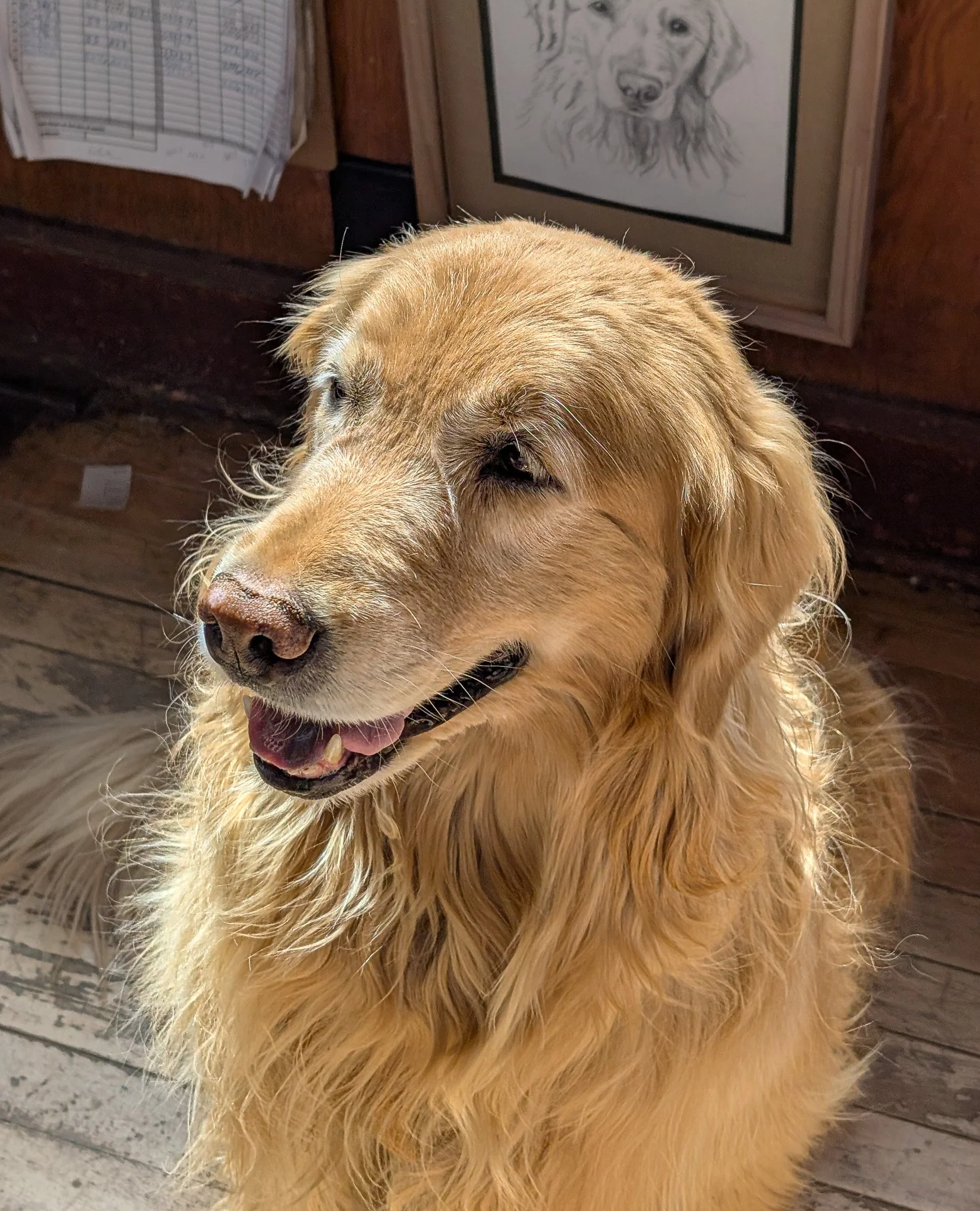
Motu minding the store at Twin Lakes
The best way to get past those pesky Twin Lakes is to just follow the trail around them.
Hope Pass is really not that bad.
7 AM on a Sunday is a terrible time to hitch a ride just about anywhere.
It’s possible to hitch out of Eddiesville as long as it’s a weekend and you can reach the summit of San Luis Peak in time to chat up hikers heading in your direction. (Credit to Bill Manning for suggesting this).
The Cochetopa Hills are really not that bad.
You meet some interesting people when hitchhiking.
Example: We met a generous local in Silverton who agreed to give us a ride to Molas Pass. He had a cup of coffee in one hand and a burrito in the other, and never let go of either during the drive up the narrow winding road to Molas, even with a manual transmission. It was the adrenaline high point of the season.
The following summer, we were hitching to the base of Stony Pass, and the same guy picked us up. We immediately checked for coffee and burritos, but there were none. Nevertheless, this ride turned out to be even more exciting: he drove the wrong way out of town (“Plates are expired”) and appeared unconcerned about the low gas indicator (“Should be enough”). As we neared the turnoff for Stony Pass, he began skirting any rock that projected more than a half-inch from the ground (“Suspension is shot”). At times, we came so close to the guardrail-free edge that I could see the dirt crumbling away while peering down at the wrecked vehicles of other generous locals.
Have fun with it. This is not life-or-death here, except for maybe the hitchhiking.
Hike your own hike. Seriously – this is your experience. Make it what you want to be, and don’t let anyone tell you otherwise. The Colorado Trail is a blank canvas on which you can chart your own adventure. Be creative and enjoy the Trail as you see fit.
Ever since we finished, everyone has been asking us what's next on our plate. It turns out there's still plenty left to do in the mountains of Colorado. We'll keep up our trail adopter work with CTF, which is always a great way to give something back and stay in shape at the same time. We want to continue chipping away at the Colorado portions of the CDT, and have plans for some multi-day trips over 14ers via non-standard routes. Matthew has dreams of through-biking the CT someday, so we should probably ride all of the segments we haven't already.
No rush, right?
