Camino Francés, part 3
Astorga to Santiago de Compostela
260 km / +19,706’ / -21,343’ / 12 days
A walk on the Camino de Santiago might be the perfect family vacation:
It’s cheap, culturally compelling, and good exercise.
The locals are friendly and love kids.
It’s a great way to practice your Spanish and try new cuisine.
You get to meet interesting people from all over the world, and deal with their snoring at close range.
Entering Cacabelos
We didn’t know this when we began a family traverse of the Camino Francés in 2023. There are many Caminos leading to Santiago de Compostela, but the Camino Francés is the classic route generally referred to as “the Camino” which stretches the width of northern Spain.
I walked it years ago, the first half on my own and the second half with my dad. It was a transcendent experience which I knew the whole family would enjoy. Finally Matthew was old enough to appreciate it, and Lesly was ready to try out a newly installed hip.
Off we went in 2023, starting in Pamplona and finishing in Santo Domingo de la Calzada. The next year we picked up in Santo Domingo and walked to Astorga, just west of Leon.
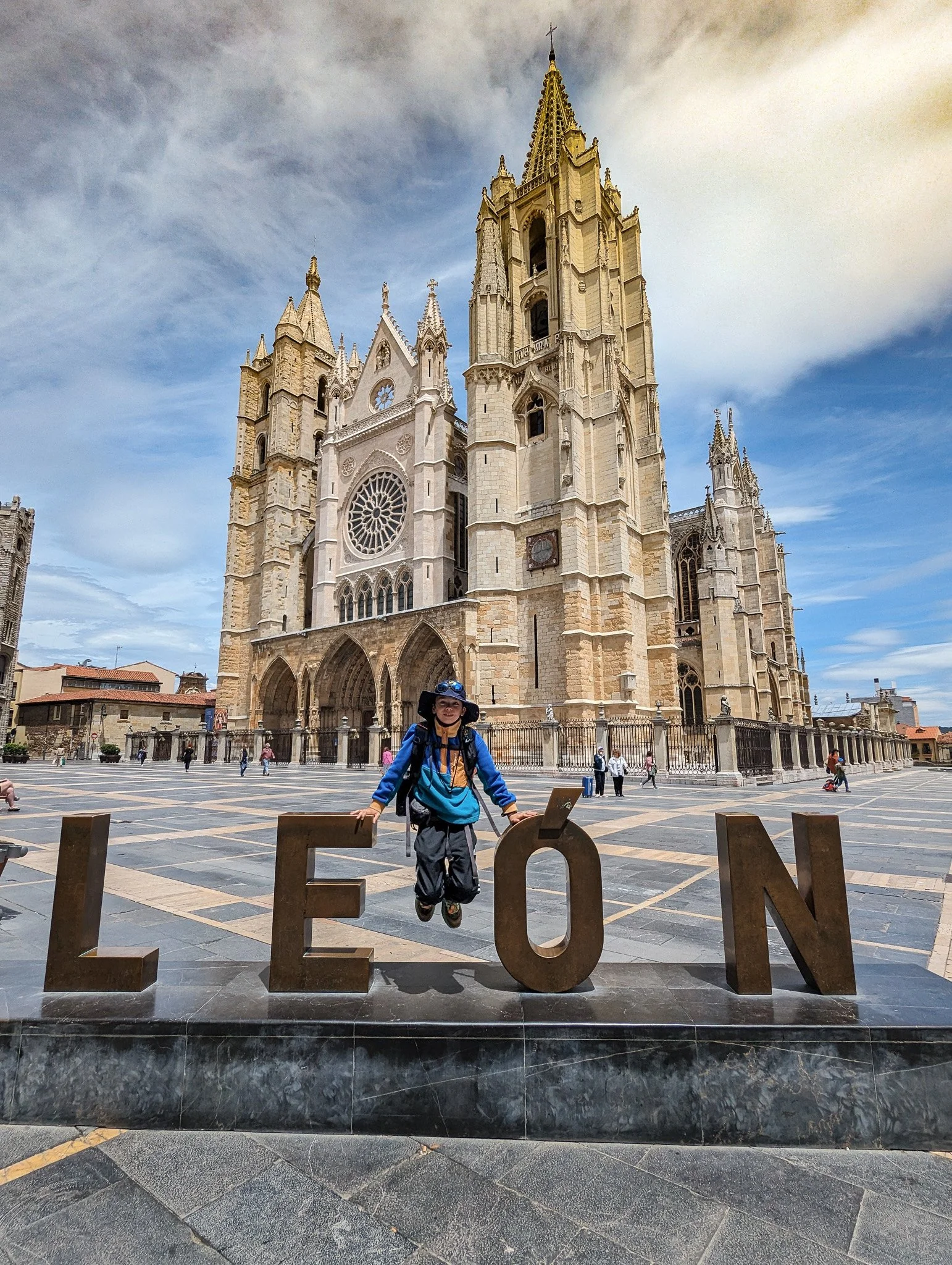
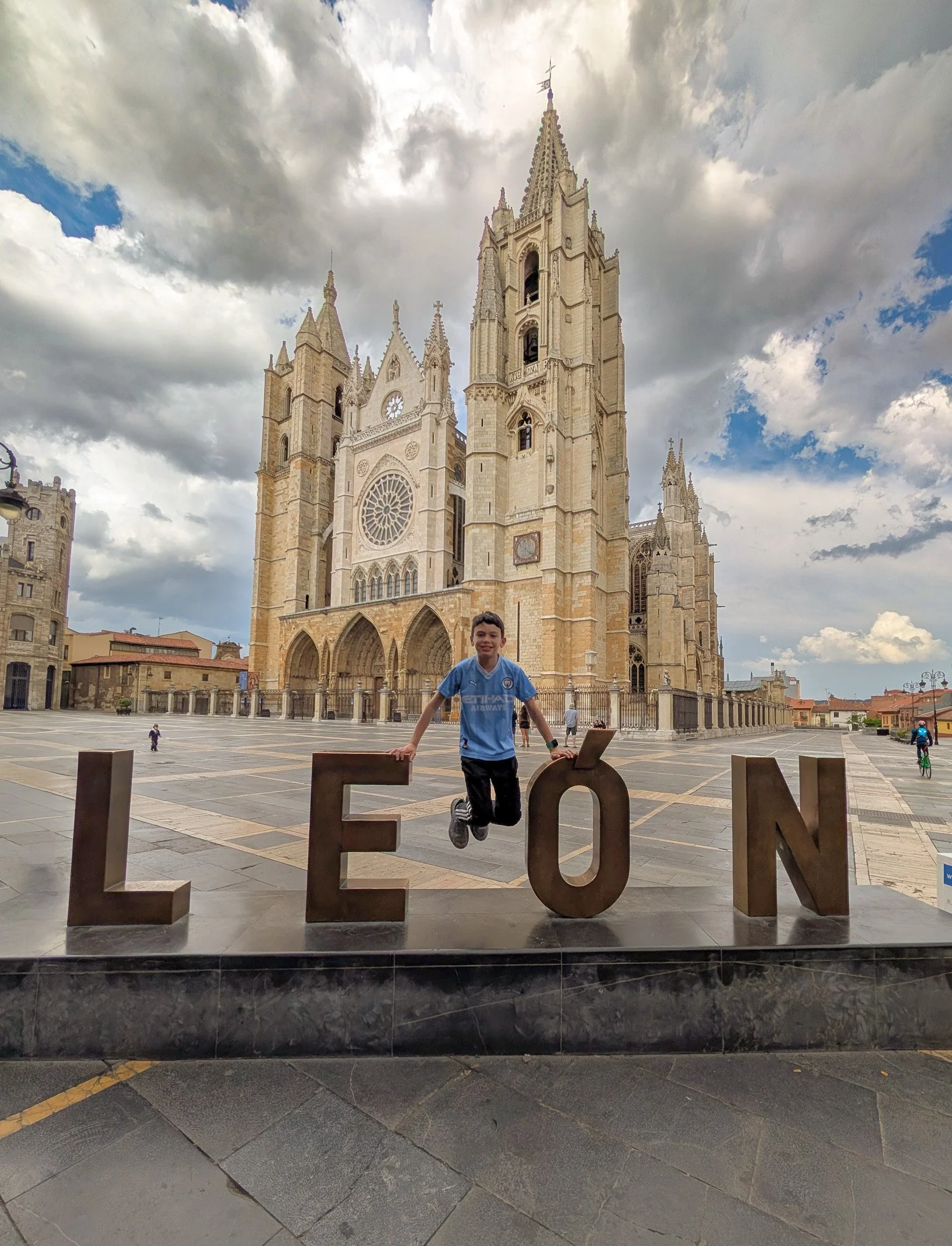
On this visit we hoped to finish the Camino from Astorga. Travel was easy – a flight to Madrid, and then the high speed train to Leon. Before we knew it, we were treating our jet lag in the beautiful Plaza del Grano, a quiet but central public square in Leon. We spent a peaceful night in the adjacent Hospederia Pax. The next day we would take a local train to the quaint Camino hill town of Astorga
Day 1 - Astorga to Rabanal del Camino
22 km / +1,141’ / -192’ / 5:30
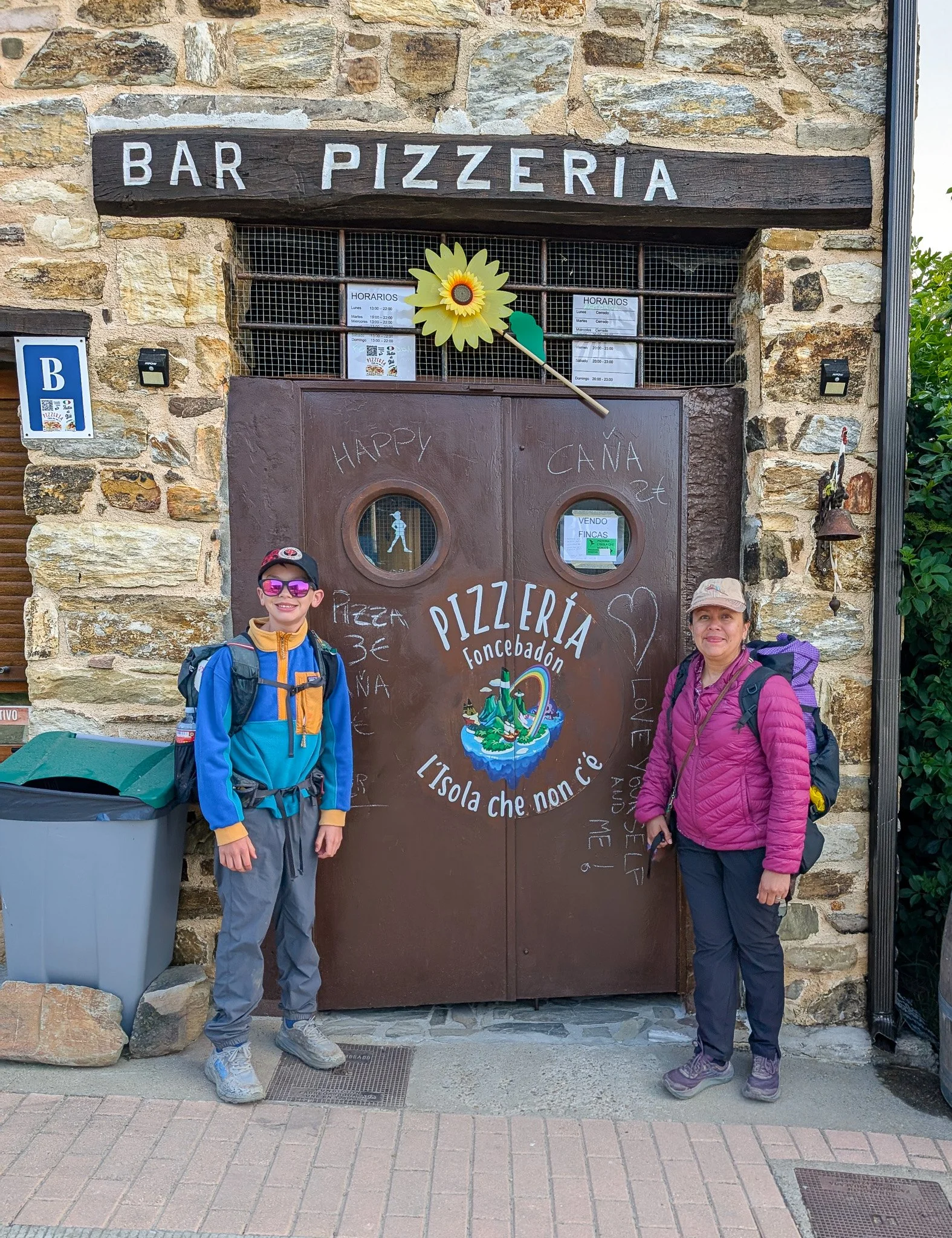
Ten years earlier Dad and I walked through Astorga, stopping only briefly for lunch. At the end of the last trip we intentionally spent more time there. The cosy Pizzería L´Isola Che Non C´e is worth going for just by itself, staffed by an affable Italian expatriate serving the real deal. There’s another branch further west on the Camino in Foncebadón if you can’t make the timing work in Astorga.
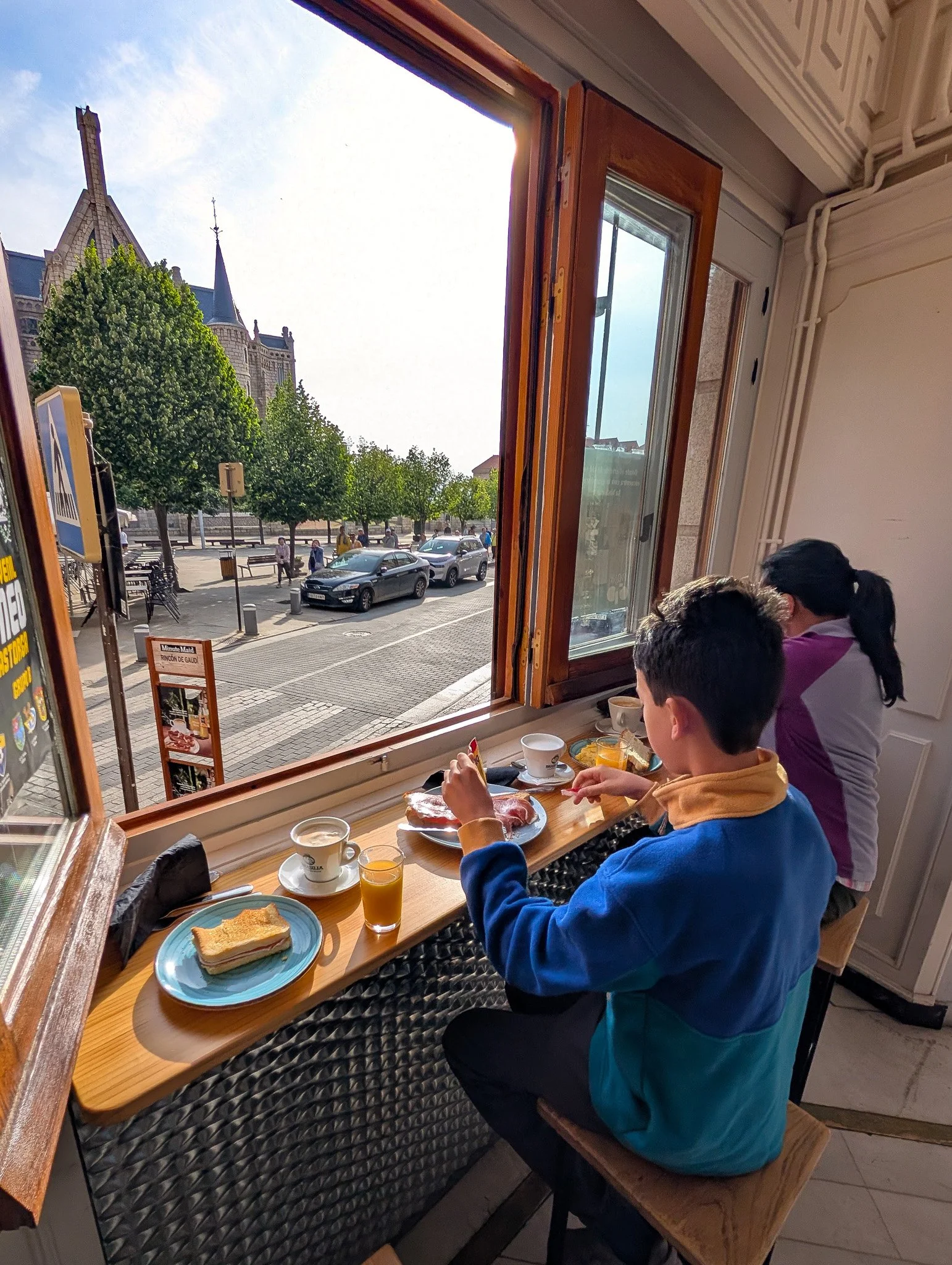
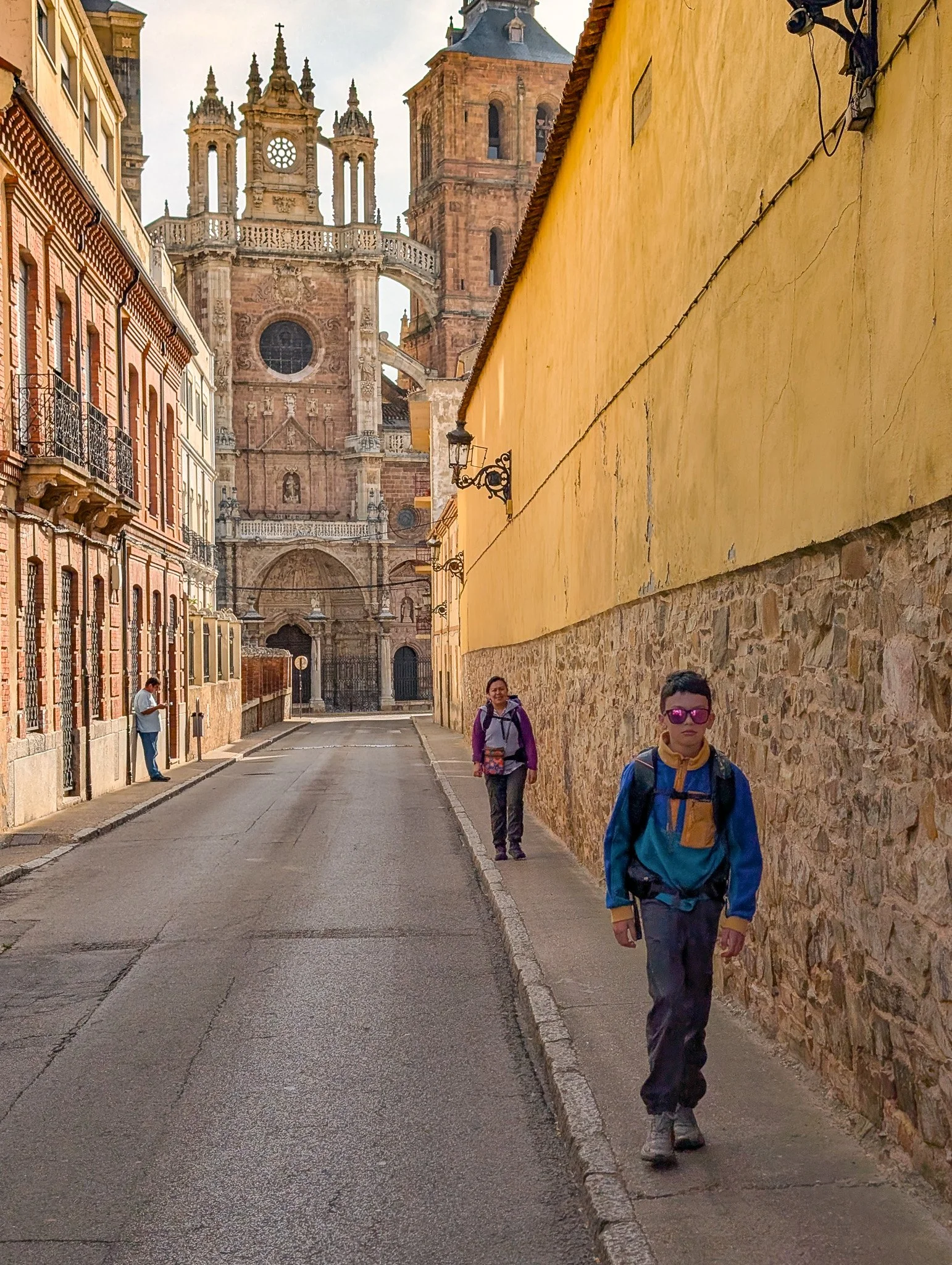
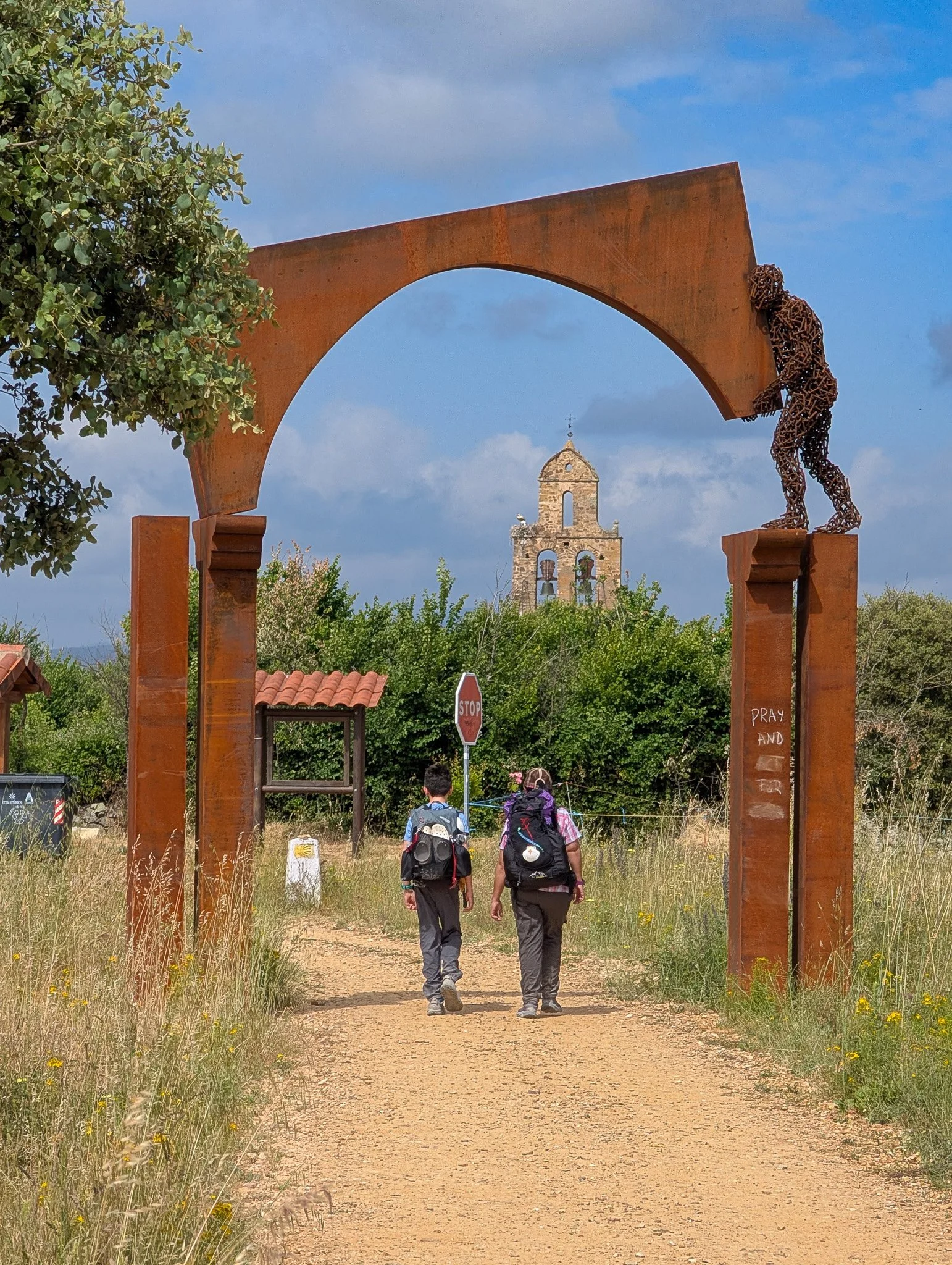
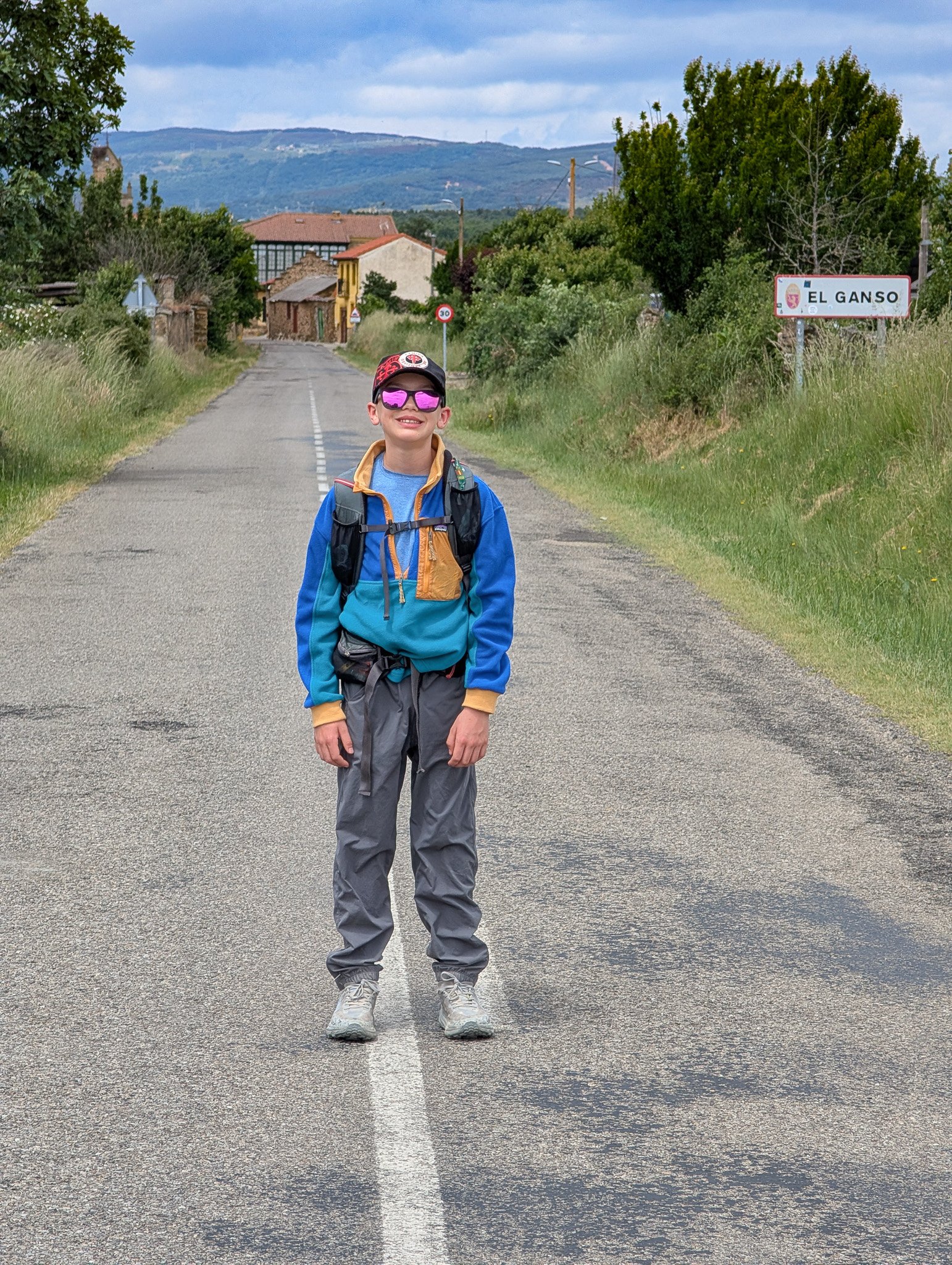
After a quick breakfast at the foot of the cathedral, we hit the trail. For our first day we planned to keep it down to just 14 km to El Ganso, but it was early when we got there so we kept going to Rabanal del Camino.
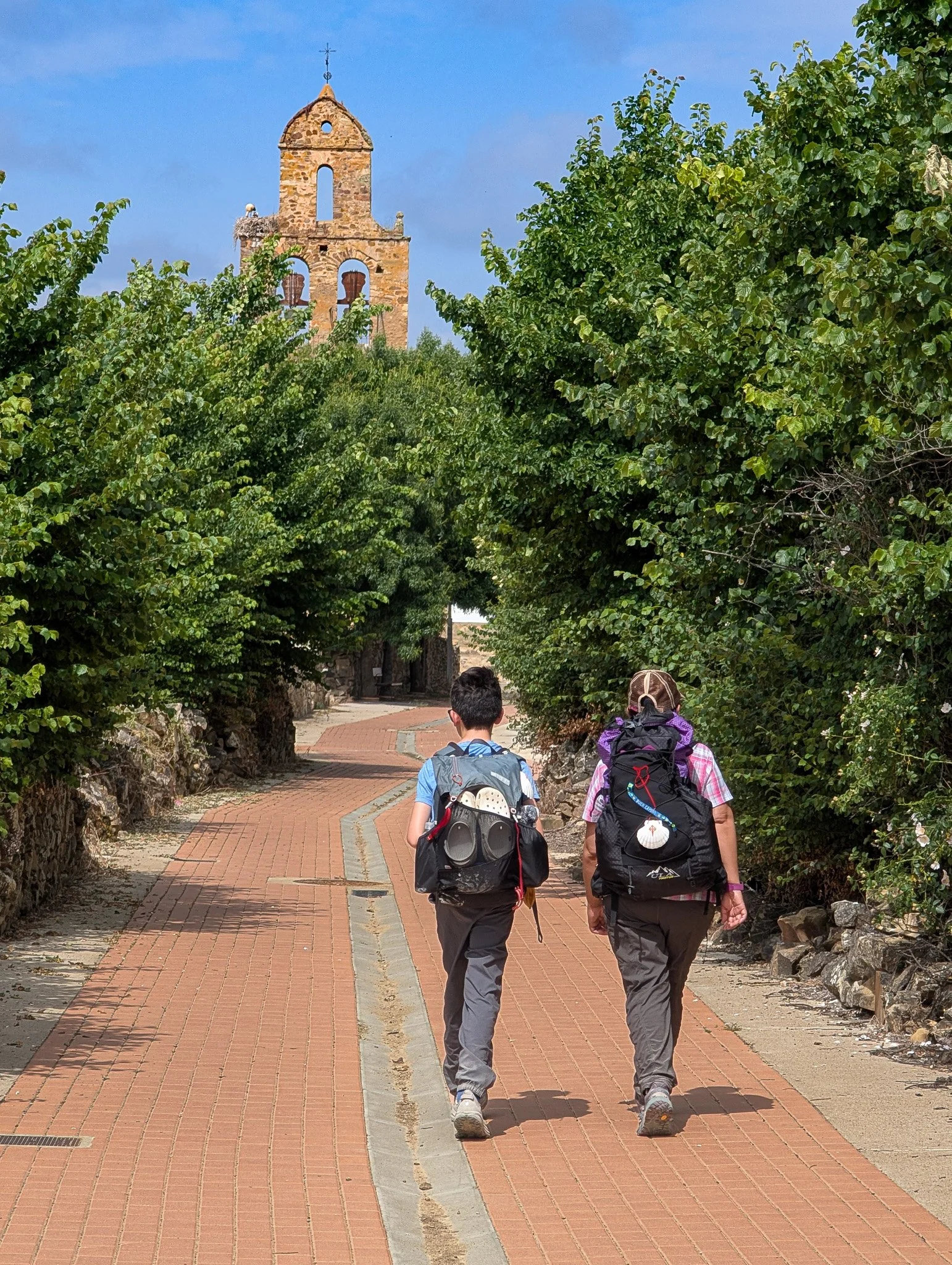
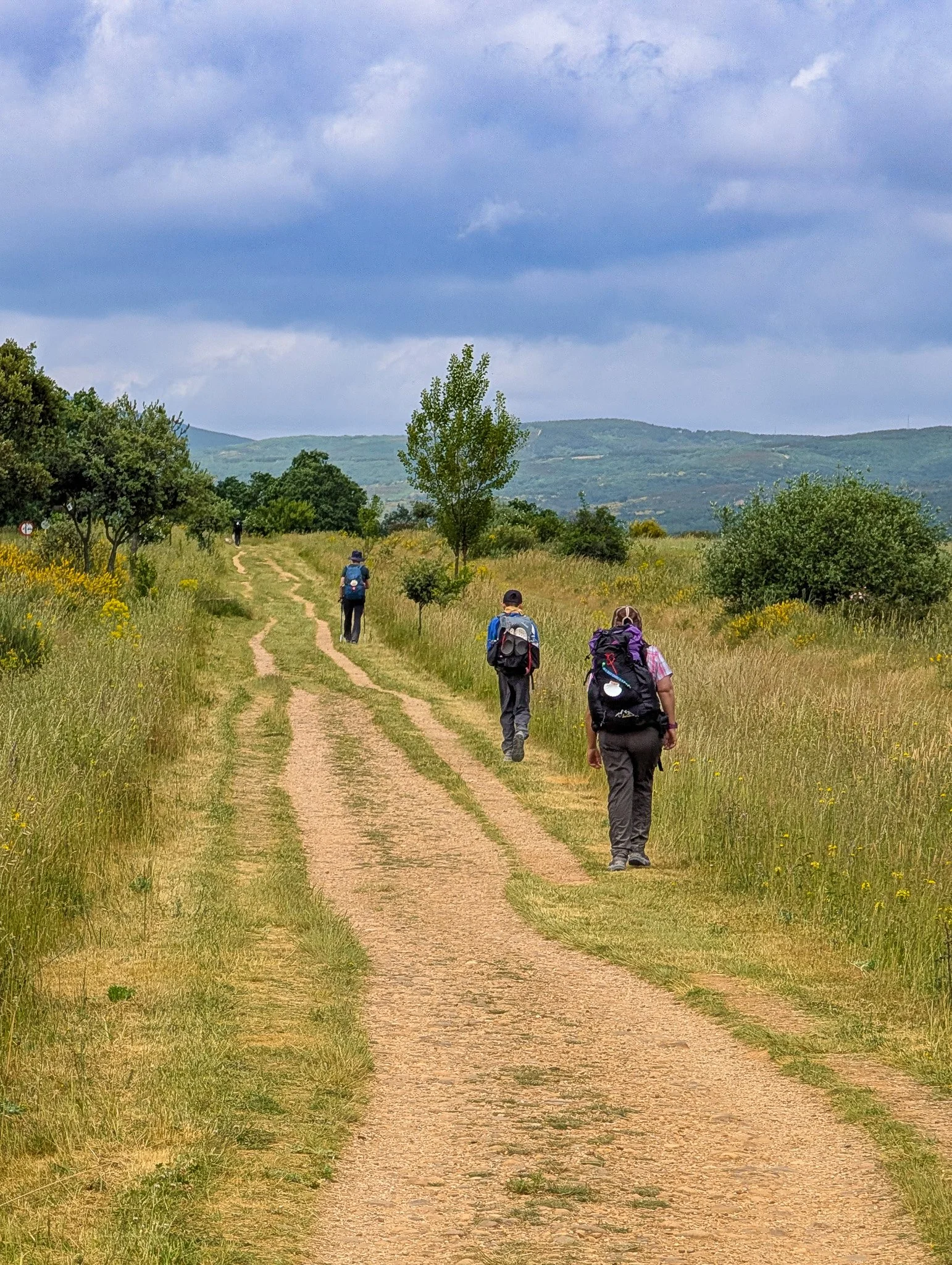
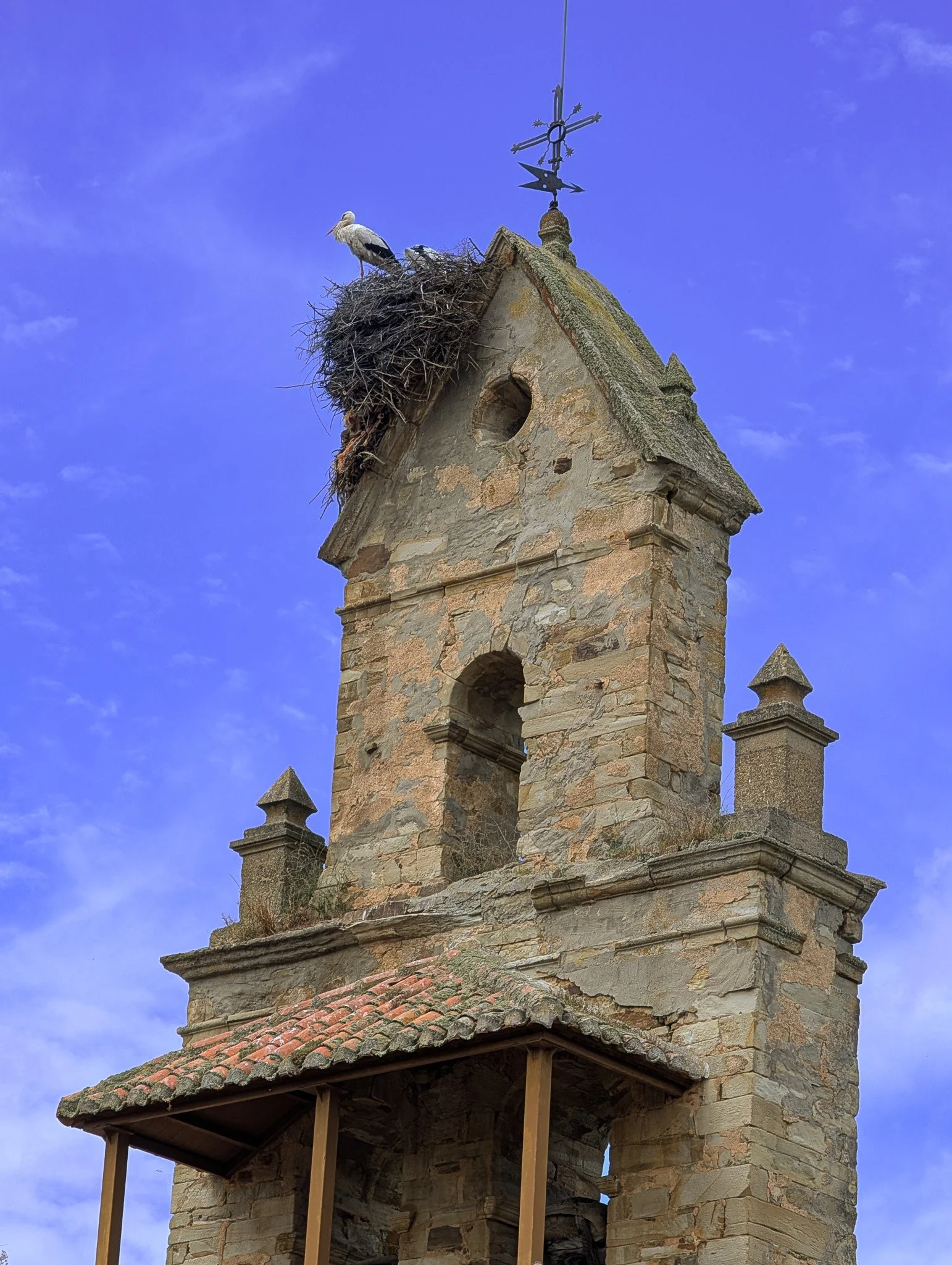
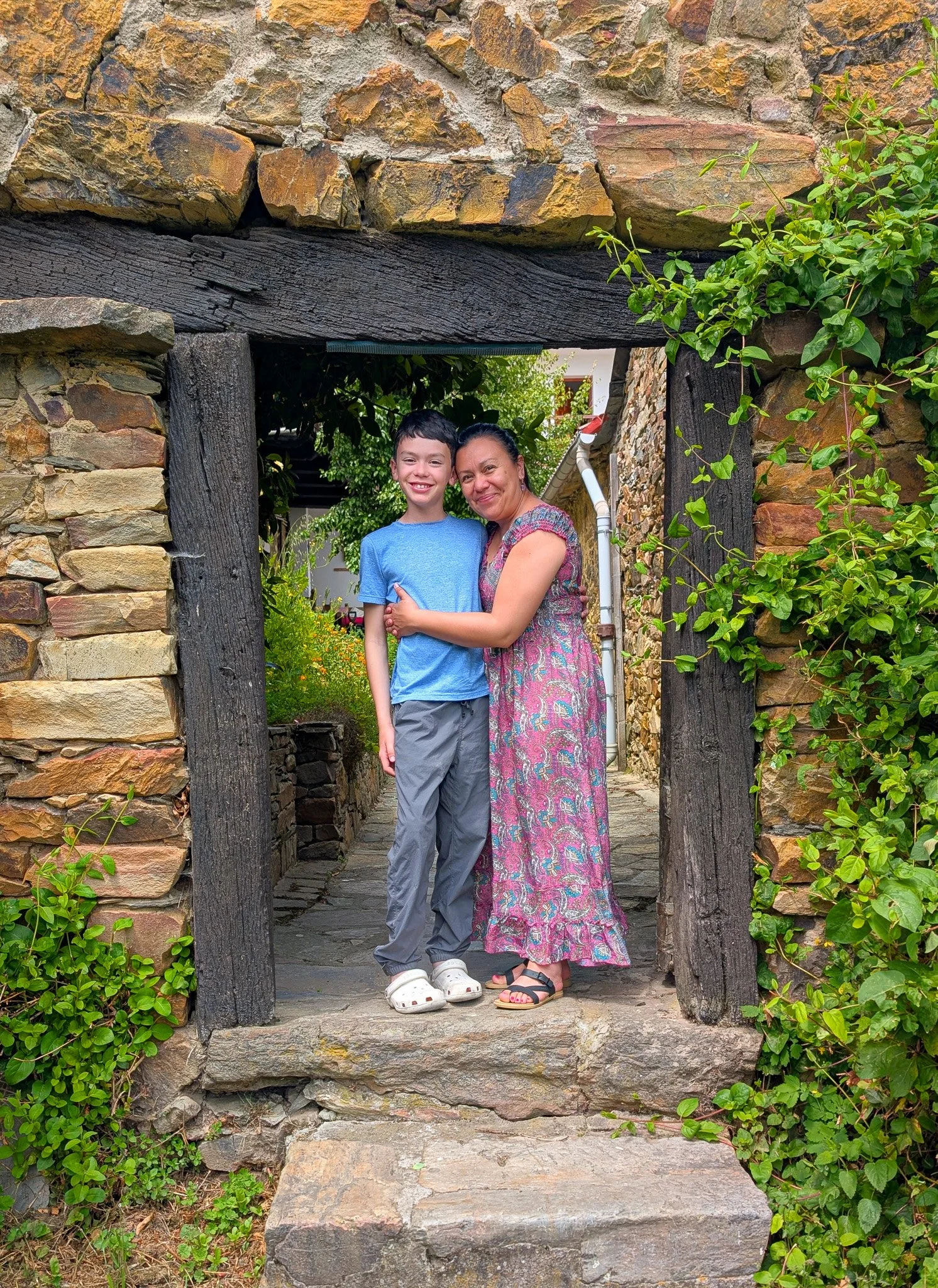
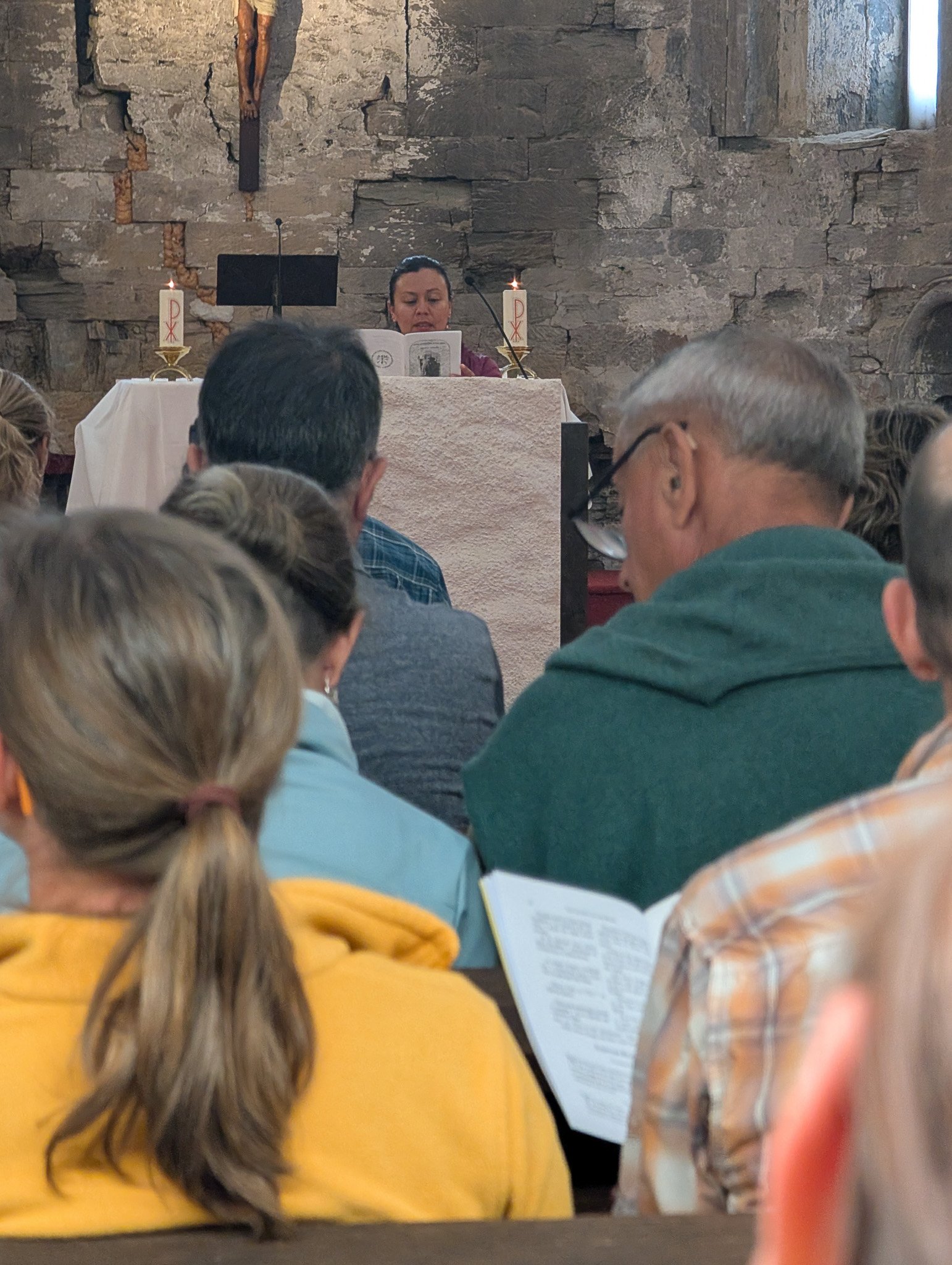
In Rabanal we made out way to Refugio Gaucelmo, where we experienced classic Camino hospitality: friendly hospitaleros, extensive gardens, and a very British tea time which impressed even Matthew. Lesly was asked to read at the Pilgrim Mass that evening. Afterwards we picnicked in the garden under the late Spanish sun. The dorm room was a little tight, but we slept well thanks to limited snoring.
Day 2 - Rabanal del Camino to El Acebo de San Miguel
19 km / +1,627’ / -1,687’ / 6:30
Refugio Gaucelmo operates on the donativo system, where you pay whatever you can. Many of our best Camino experiences were at donativos, including one stay so amazing that I forgot to donate. This time we remembered to stuff the box before taking off in the morning.
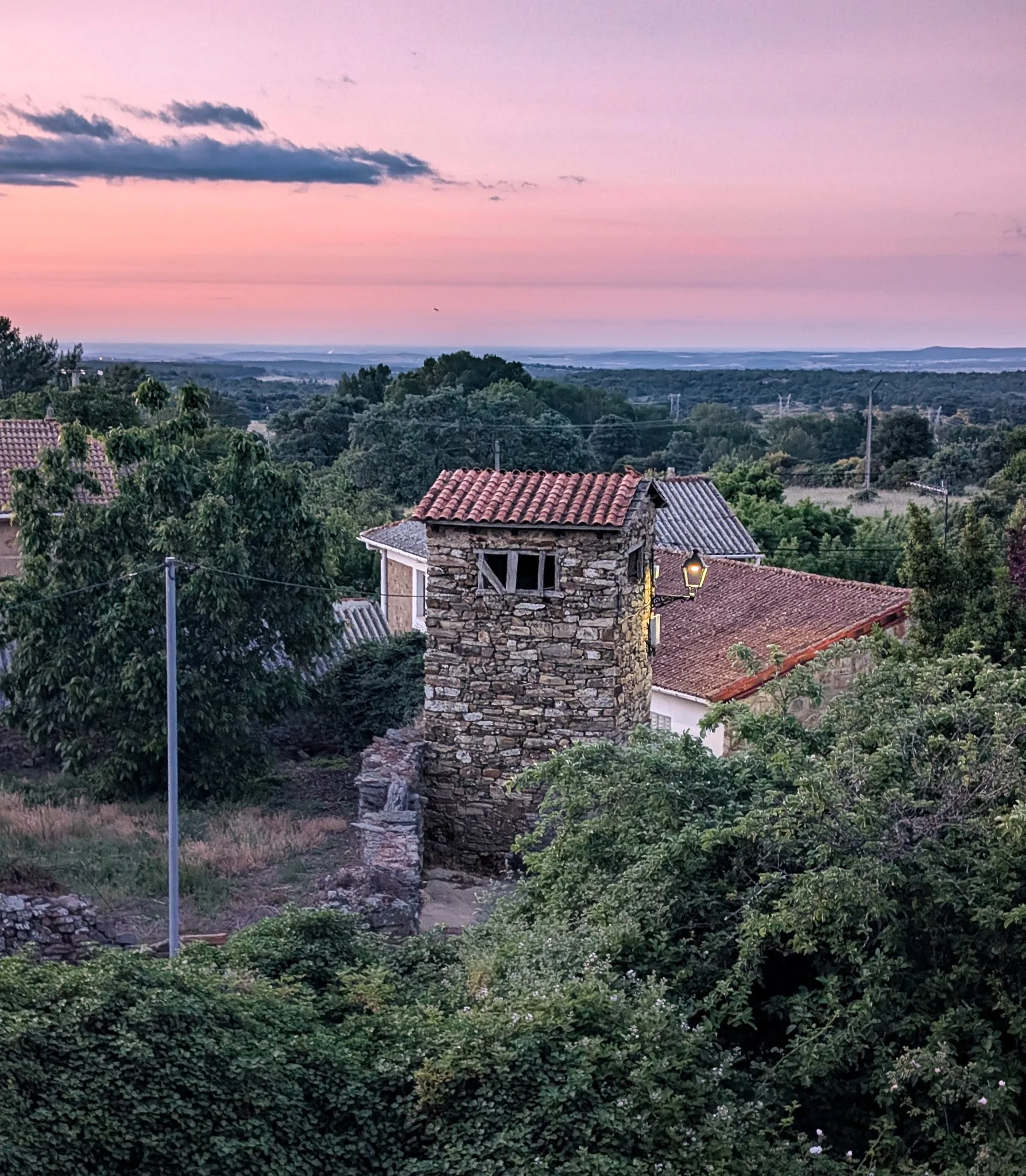
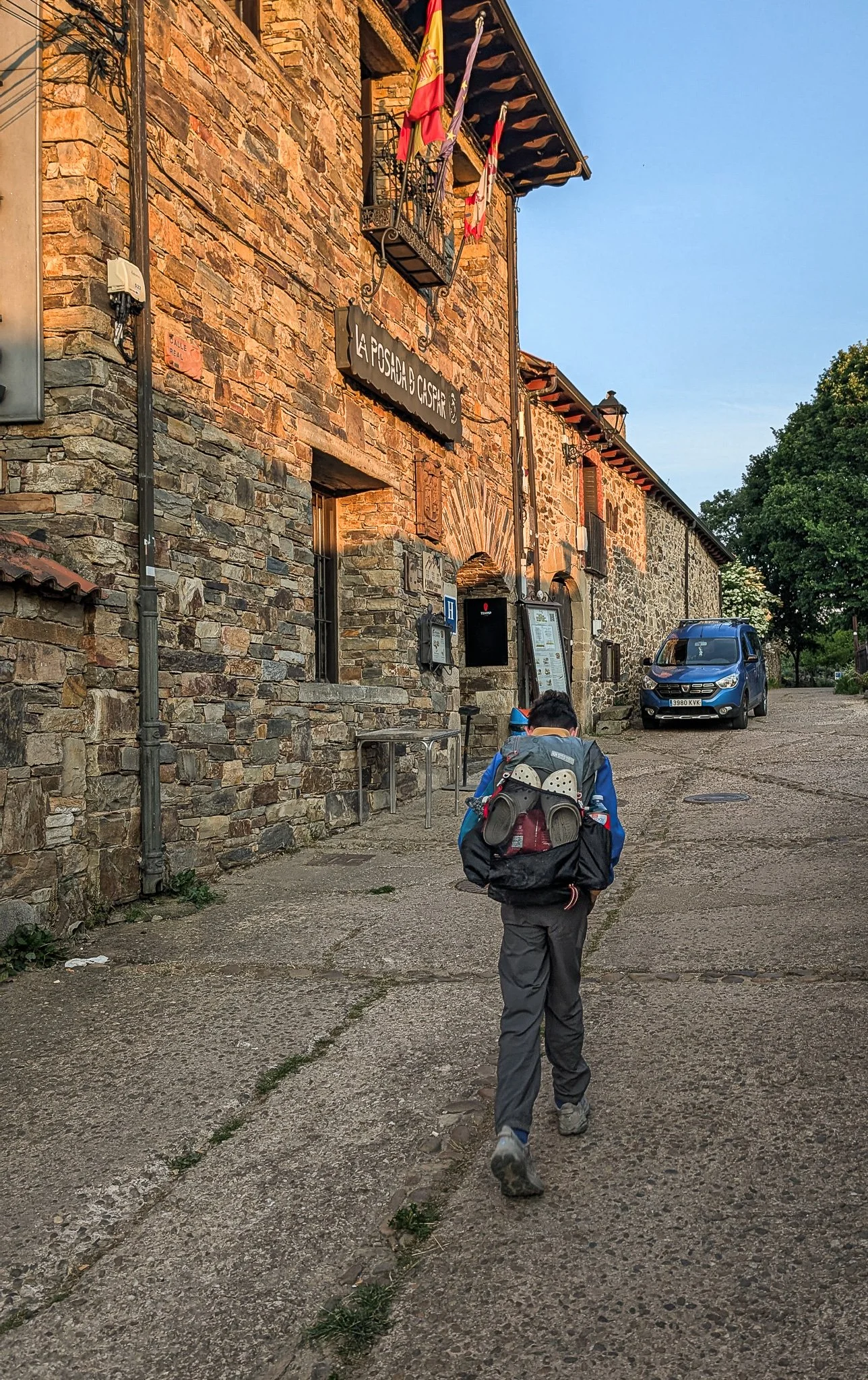
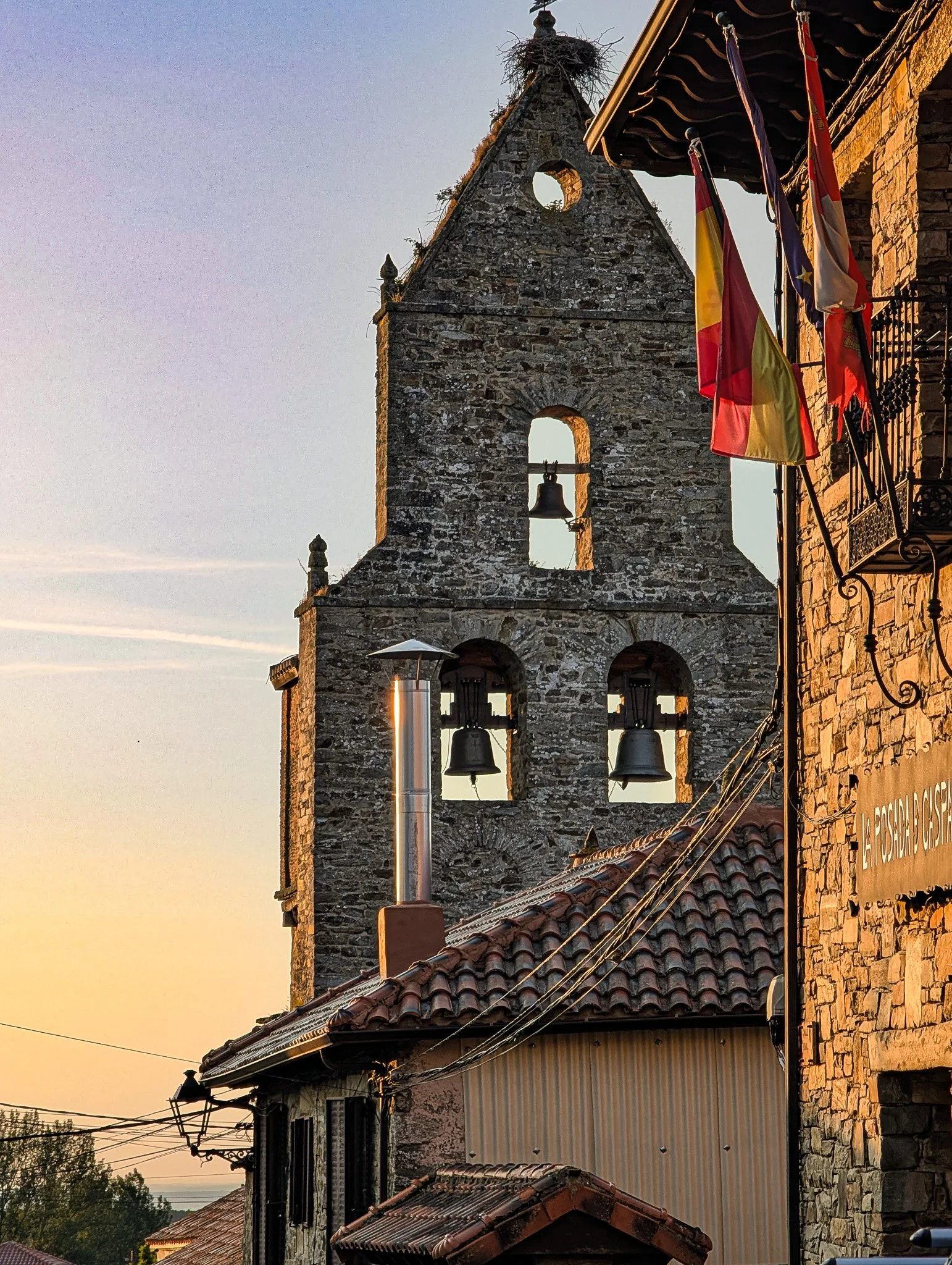
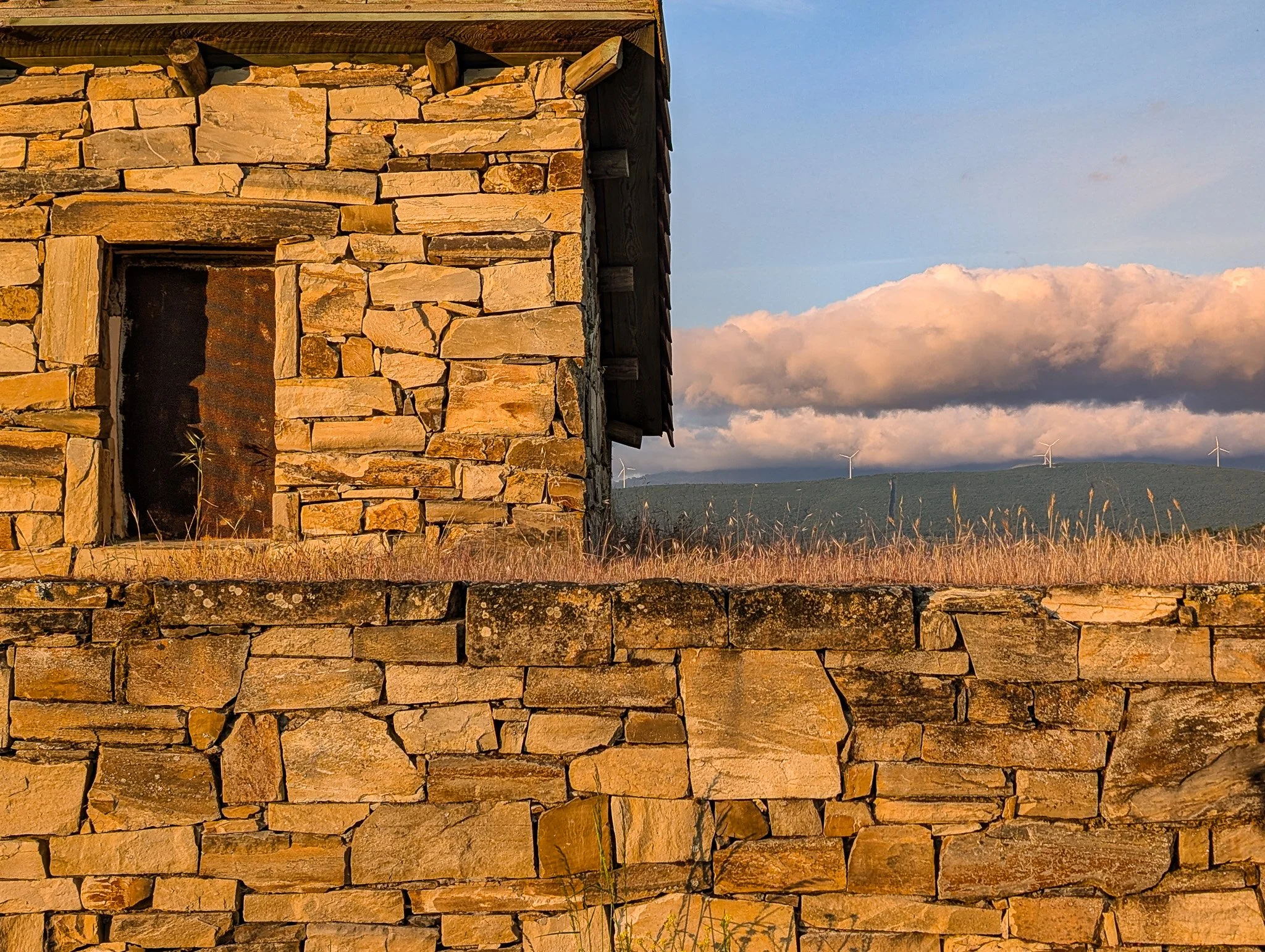
The day’s walk led up to Cruz de Ferro and down to El Acebo de San Miguel. We passed Astorga’s sister pizzeria in Foncebadón at 9:30 AM. Let’s just say that if pizza was served at that hour we would have ordered it. Instead we made do with breakfast at a local bar.
Approaching Cruz de Ferro we heard chatter closing in behind us. As we settled into a bench a very large group of Spanish middle schoolers arrived. They were carrying small daypacks, and had a lot of energy. A pair of 15-passenger sag wagons waited across the street. The kids swarmed the hill, took photos, updated their social media, and then disappeared westward, all within the span of 10 minutes. Silence resumed.
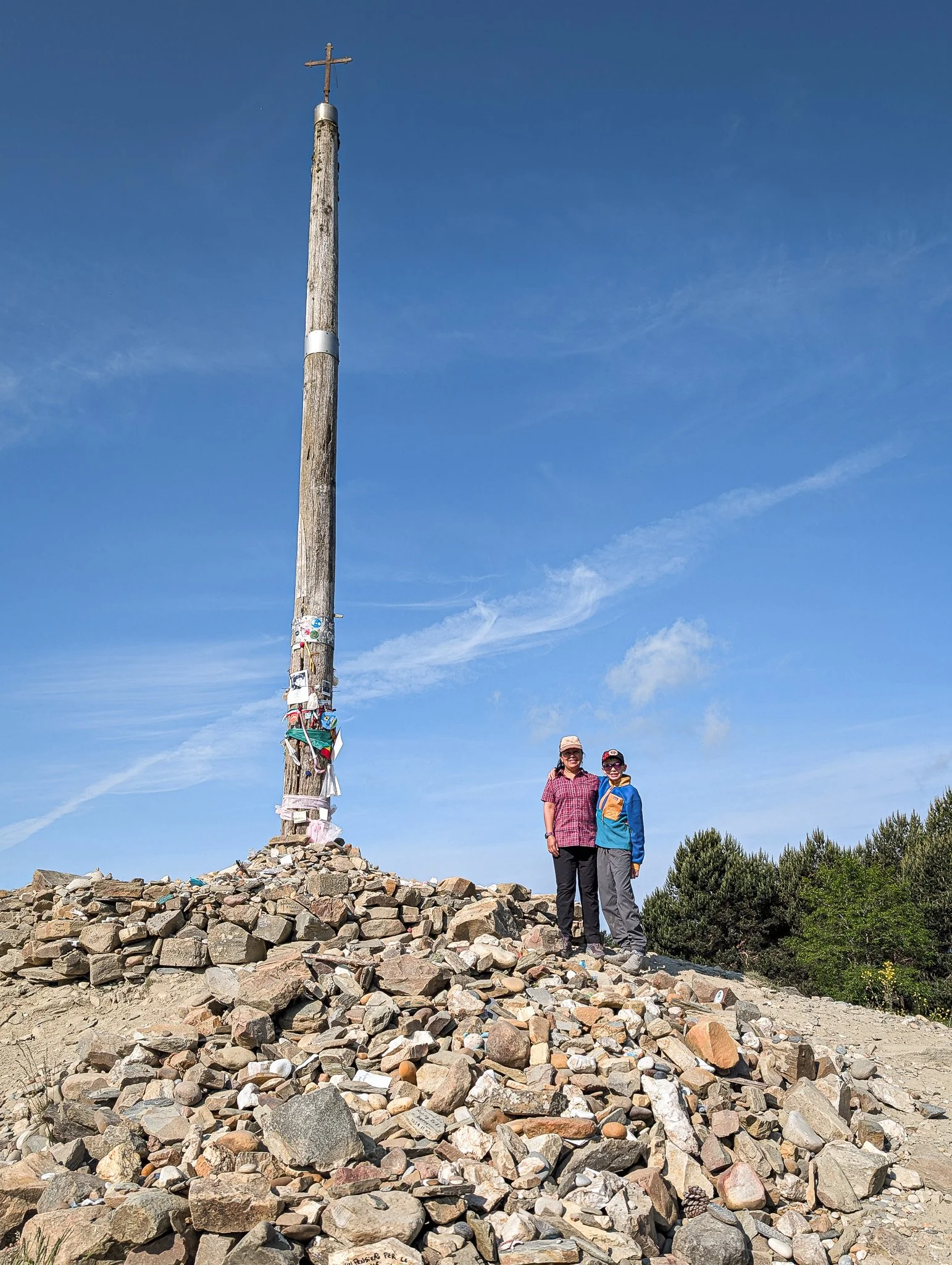
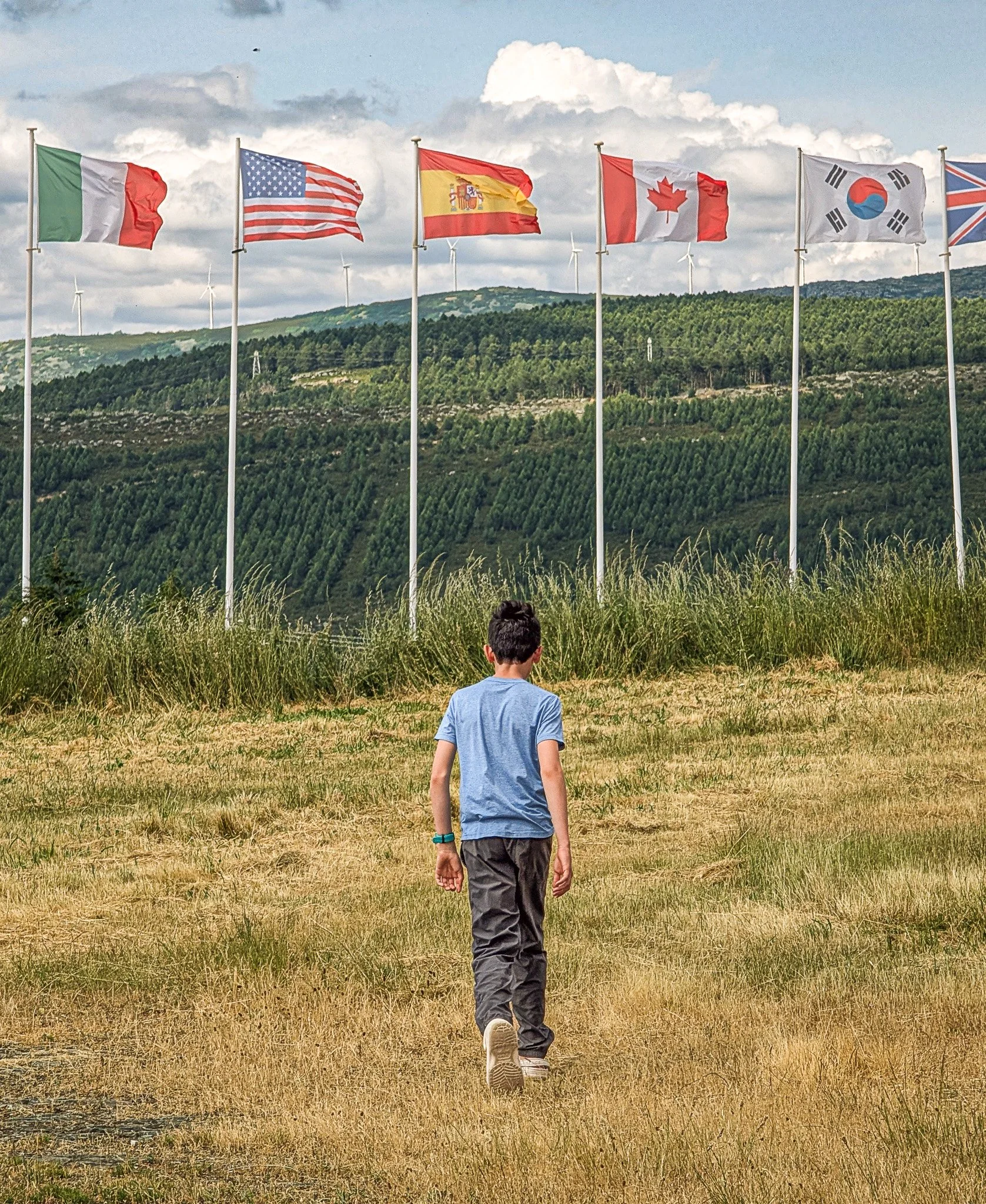
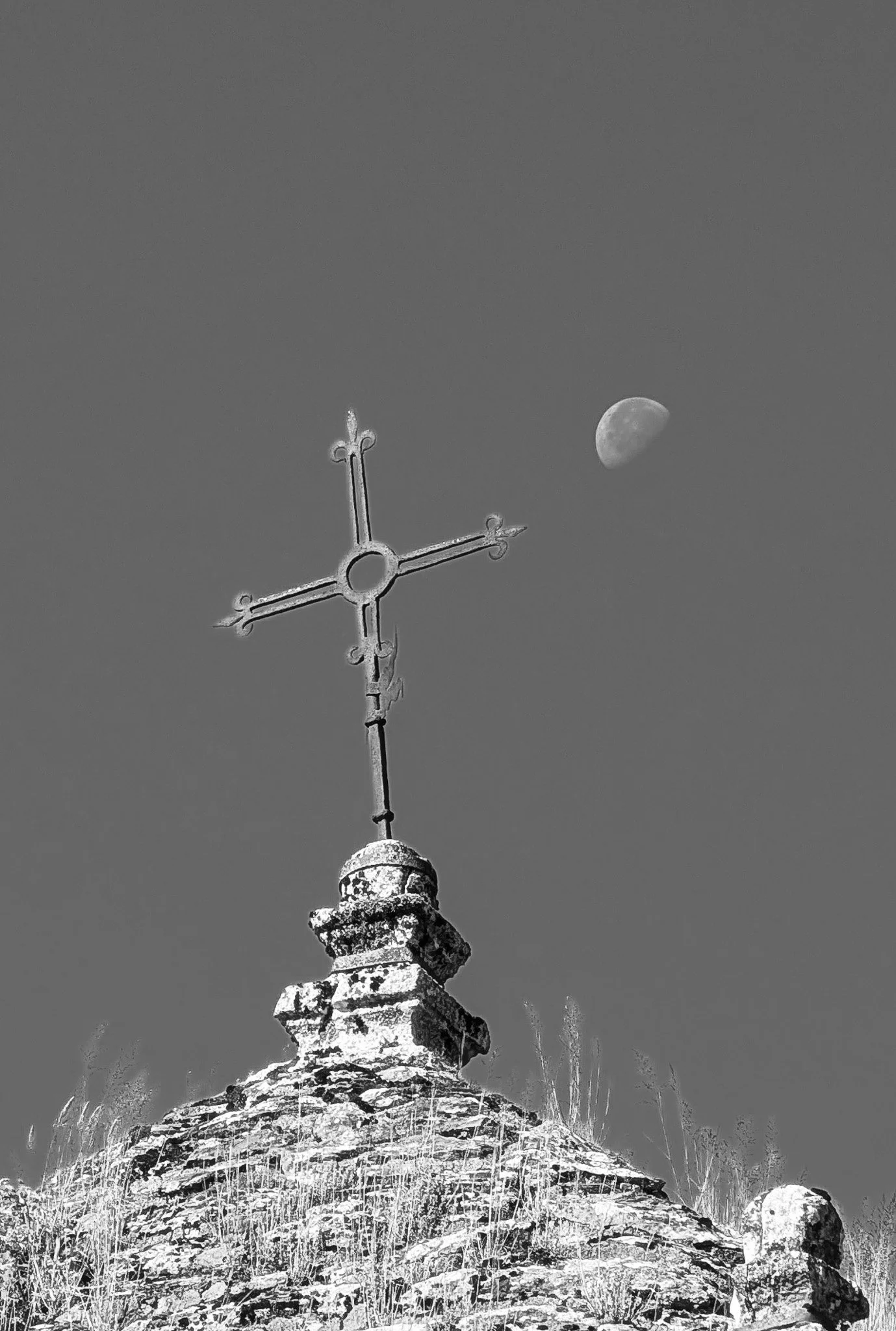
The iron cross at Cruz de Ferro was installed in the eleventh century by Gaucelmo, an abbot from Foncebadón. Pilgrims traditionally bring a small stone from their place of origin and leave it on the pile. With this visit I now had a perfect 2/2 record for not bringing a stone from home. I blame it on my ultralight backpacking ethic. Lesly had one, of course.
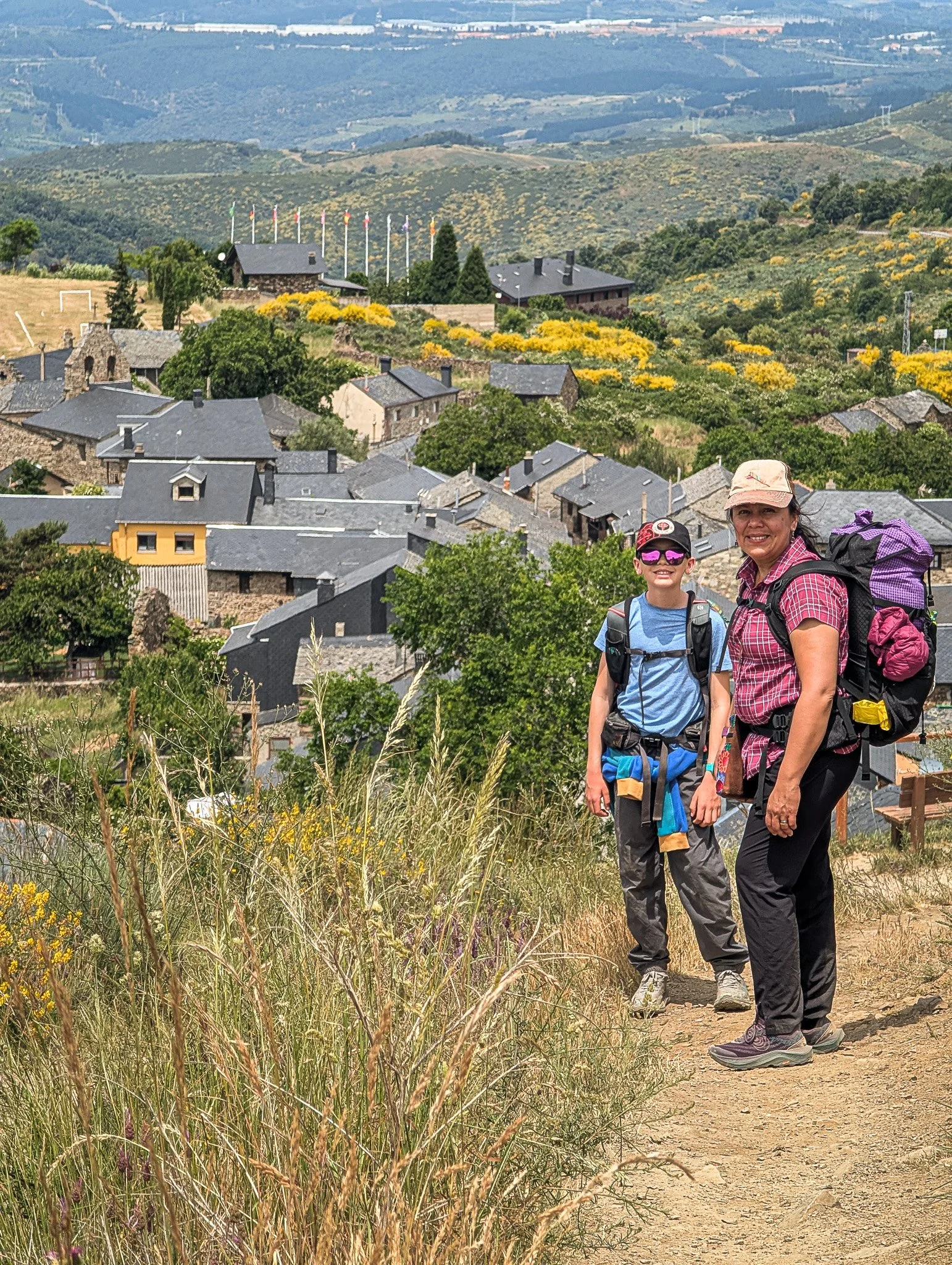
We didn’t see the students again that day. They may have piled into vans to descend upon another point of interest on the Camino. Like the ocean, the Camino is big enough to absorb all kinds of things. After placing our single stone, we continued downhill from the cross through pasture land and forests to the village of San Miguel which overlooked a long valley to the north.
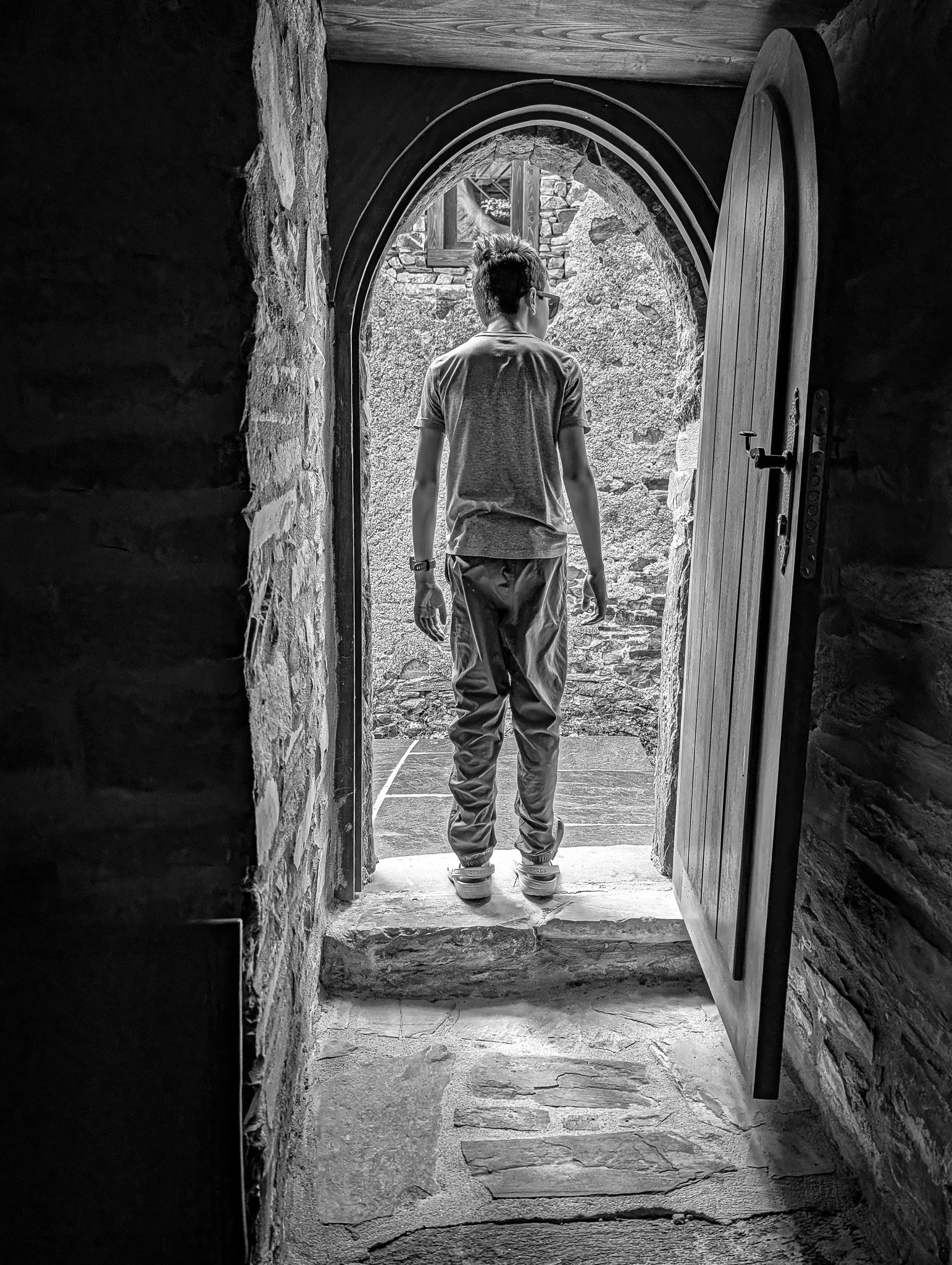
In San Miguel we stayed at Albergue La Casa Del Peregrino, mainly because it was really hot and they advertised a pool. Unfortunately, there wasn’t a drop of water in the pool and the albergue was just far enough out of town we didn’t feel like walking back to find something else. The place did have a rarity we took advantage of: air conditioning.
Day 3 - San Miguel to Ponferrada
19 km / +613’ / -2,497’ / 7:00
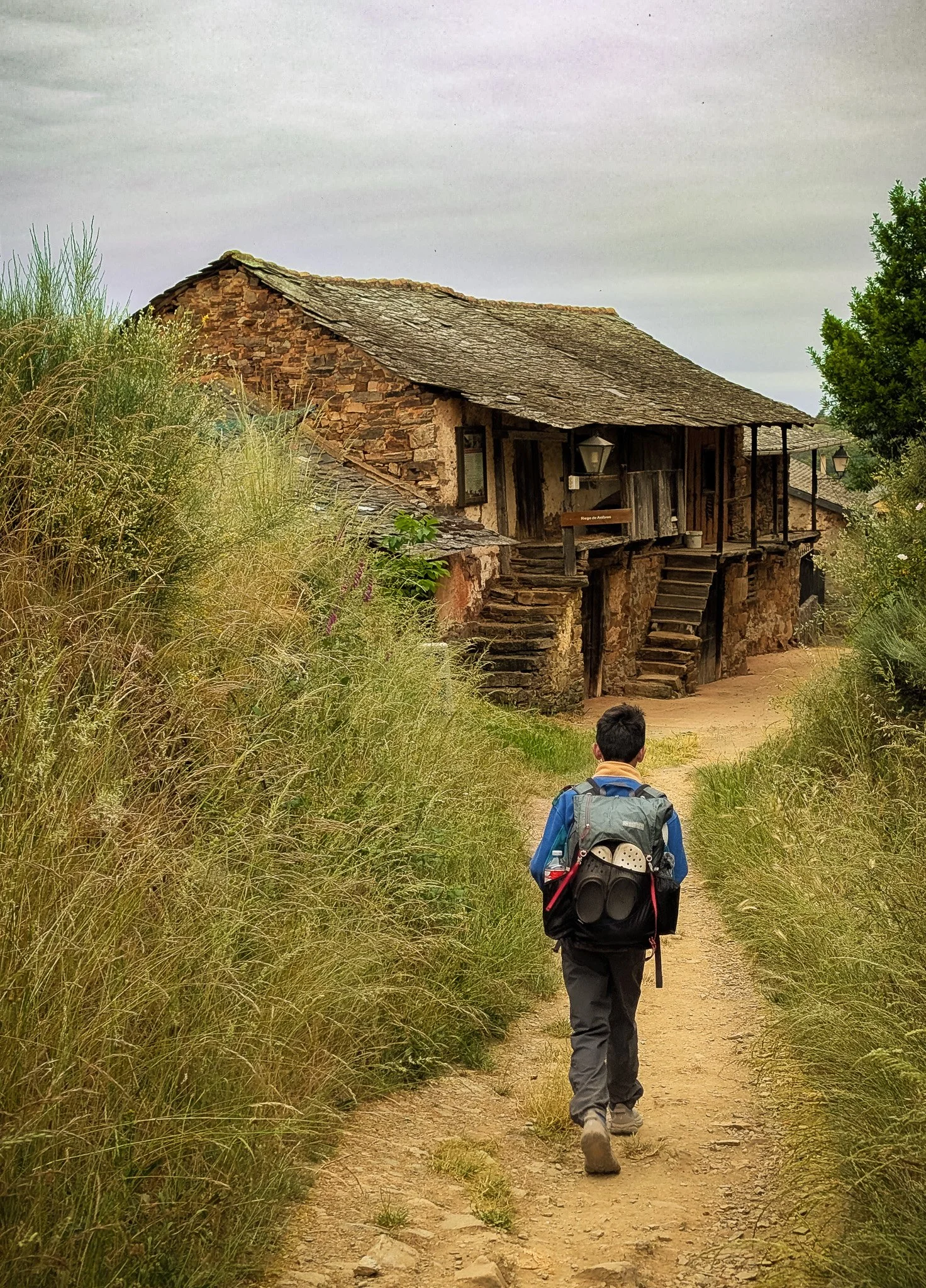
Only a few clicks downhill was the picturesque town of Riego de Ambros, which I passed in the dark during my previous time in the area. We should have stayed there – it was quiet and beautiful. Next time.
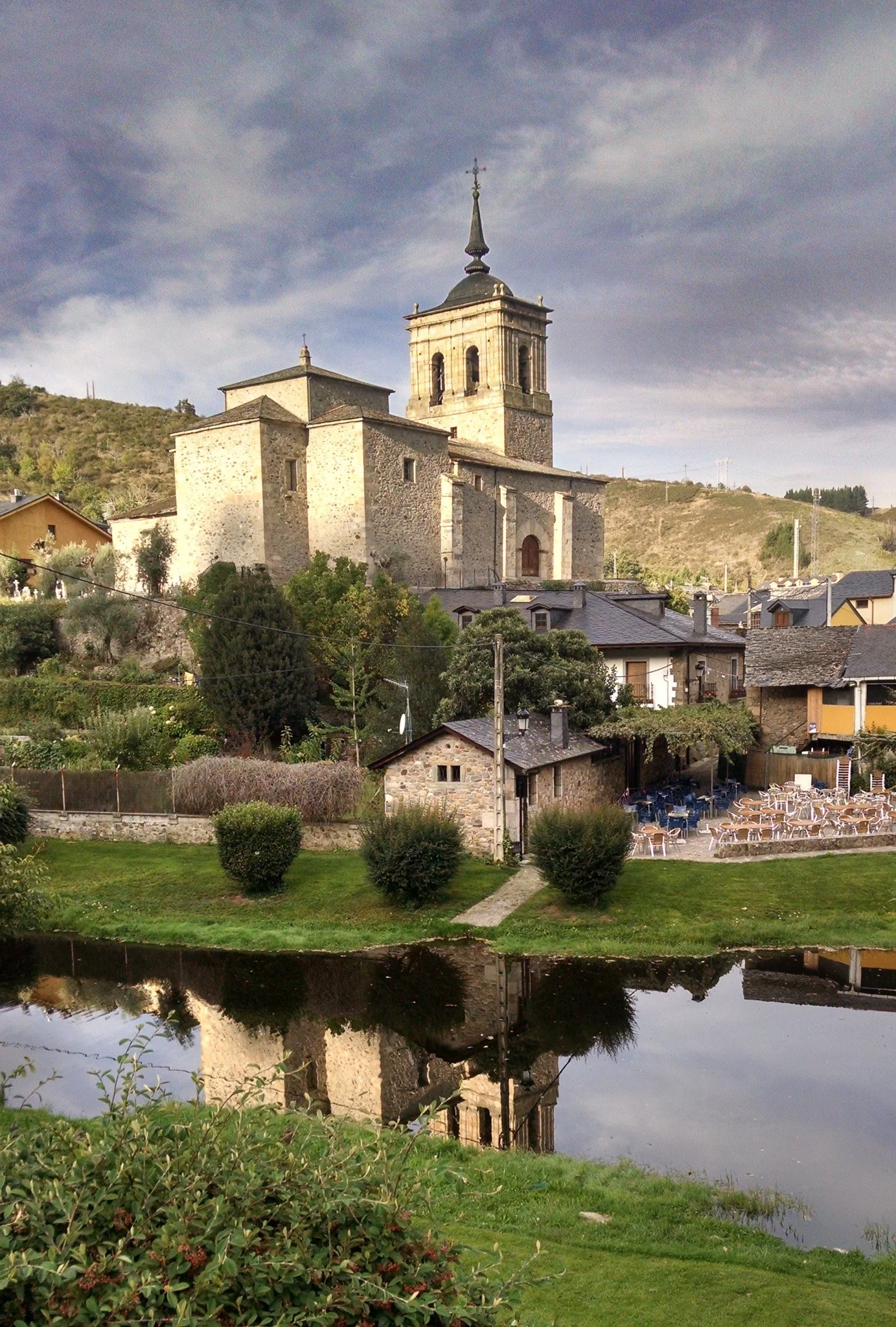
We continued downhill to Molinaseca. Perfectly sited on the banks of the Rio Merulo, the small town is easily one of the prettiest places on the Camino Francés. After a second breakfast we took time to explore the back streets. We even found a nice spot to dip our feet before continuing our journey.
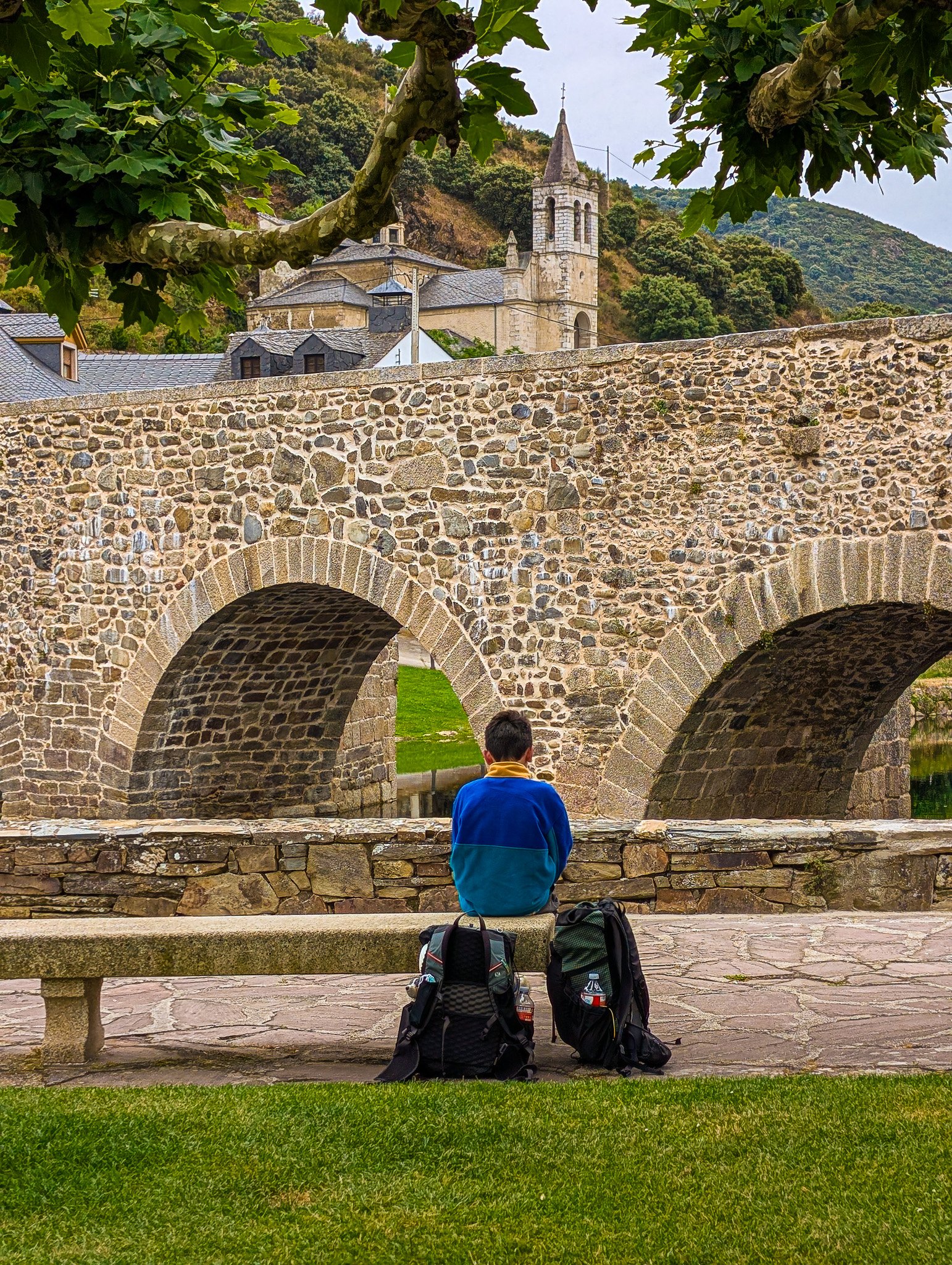
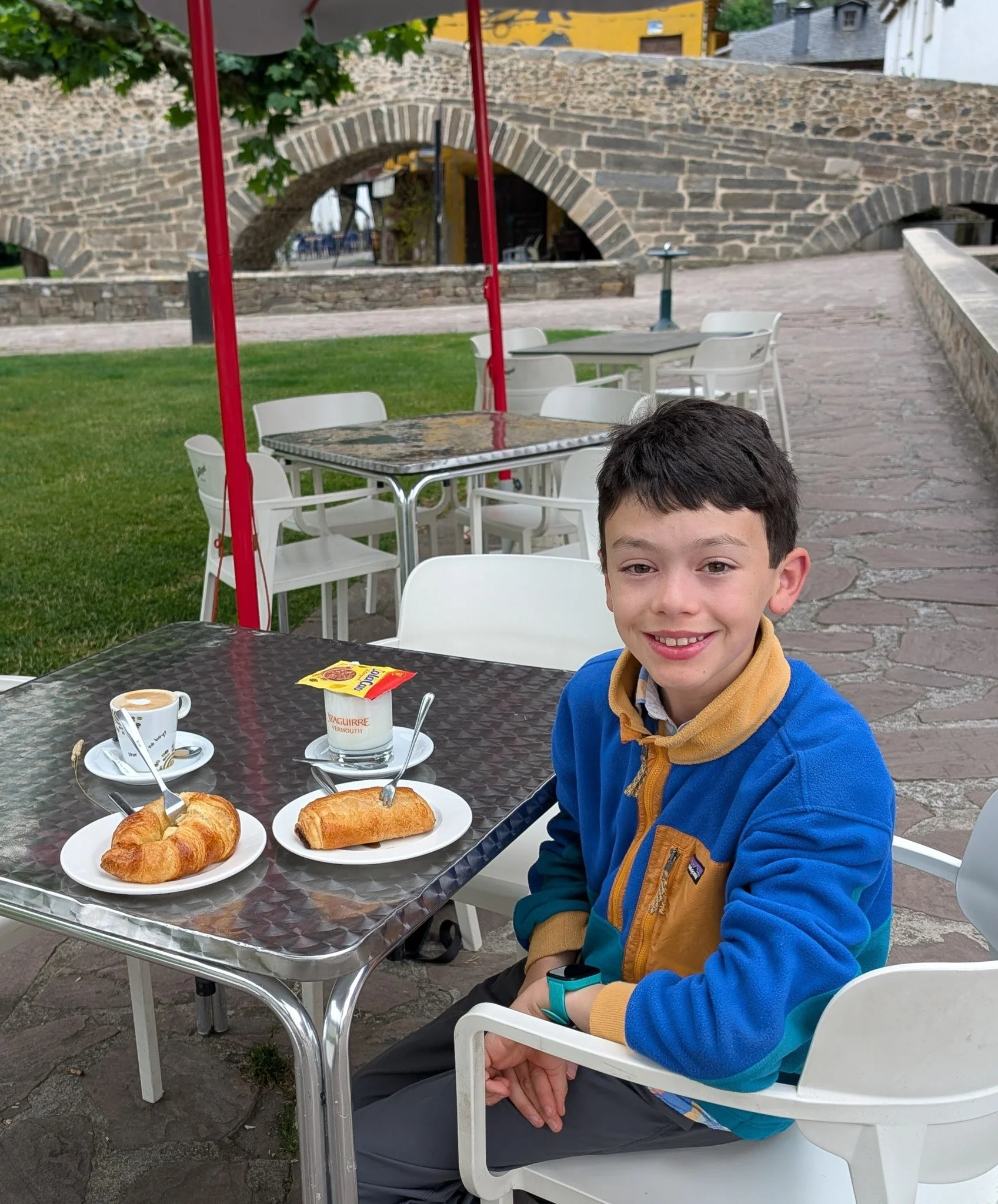
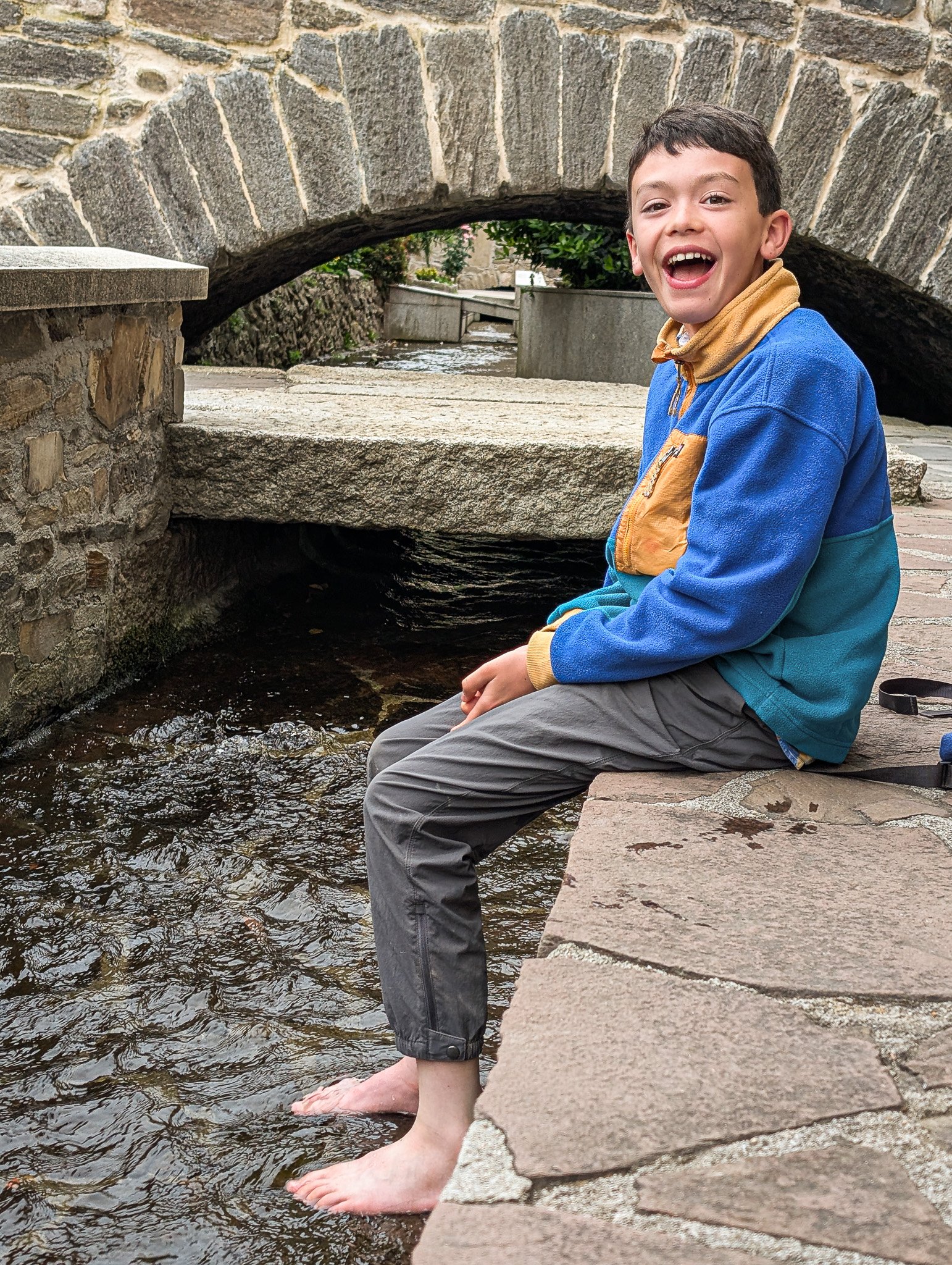
Down, down, down we continued on to Ponferrada, another classic Camino town best known for its castle. Being almost exactly 200 km from Santiago, Ponferrada is a popular starting point for an abbreviated version of the Camino Francés.
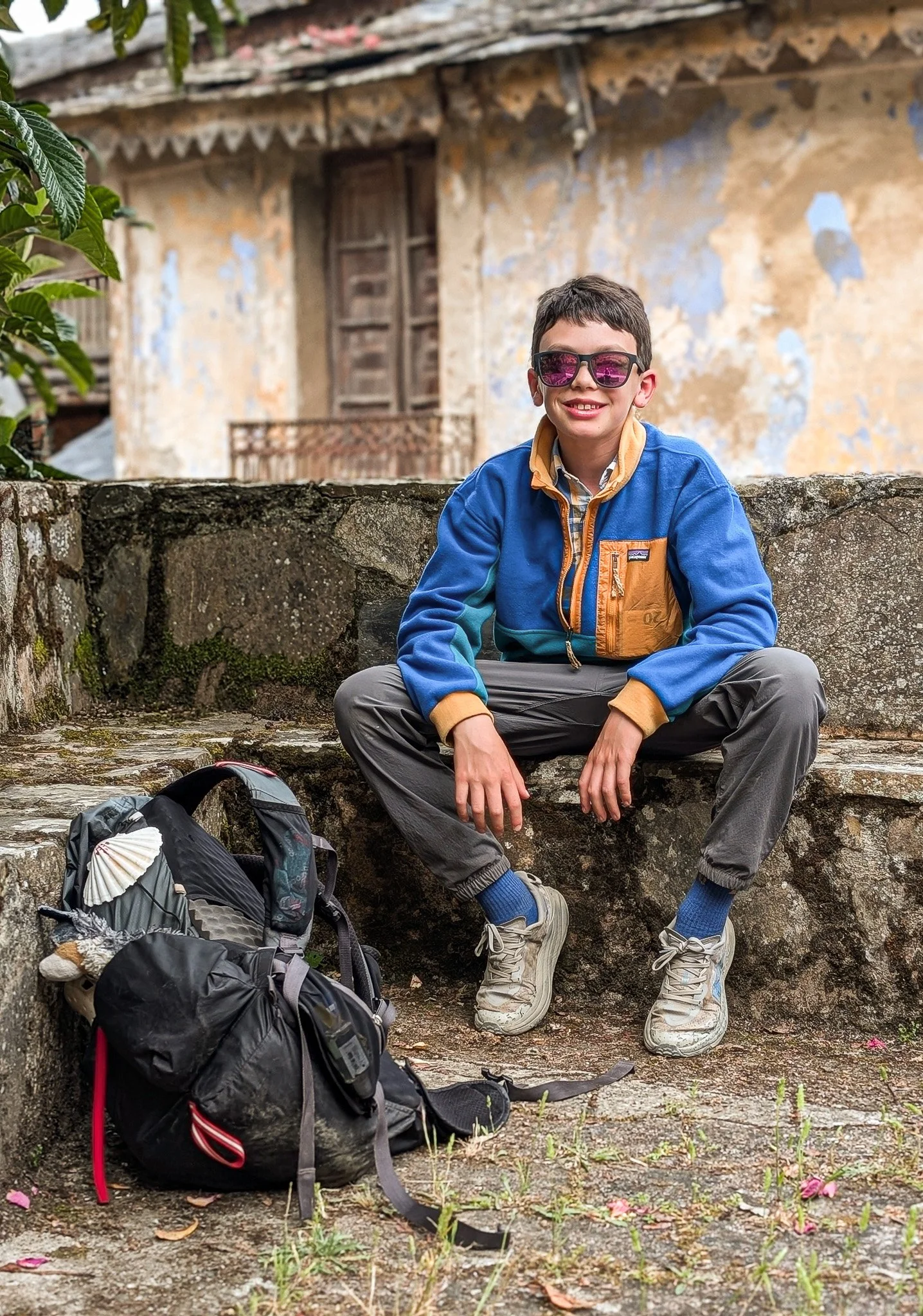
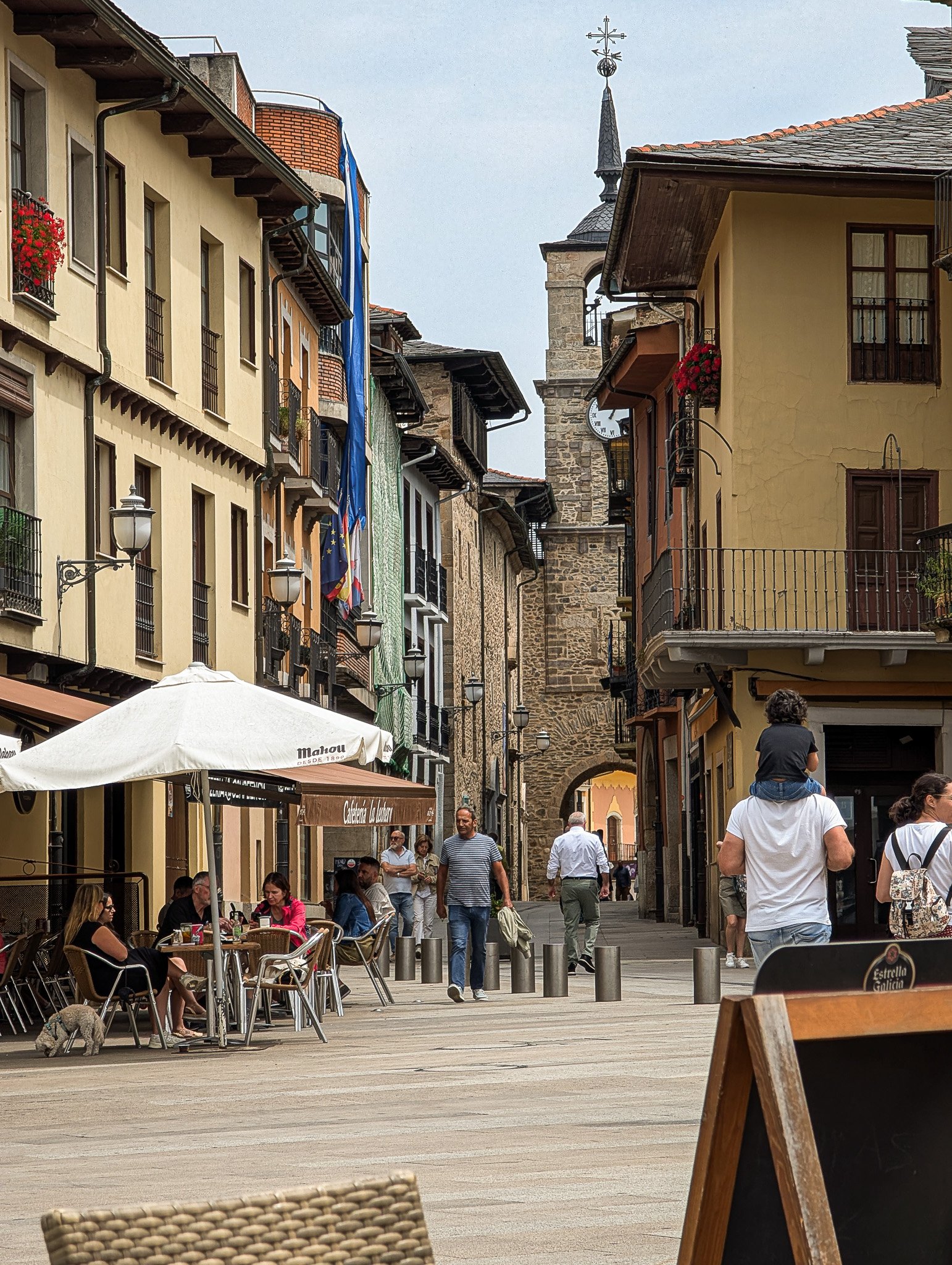
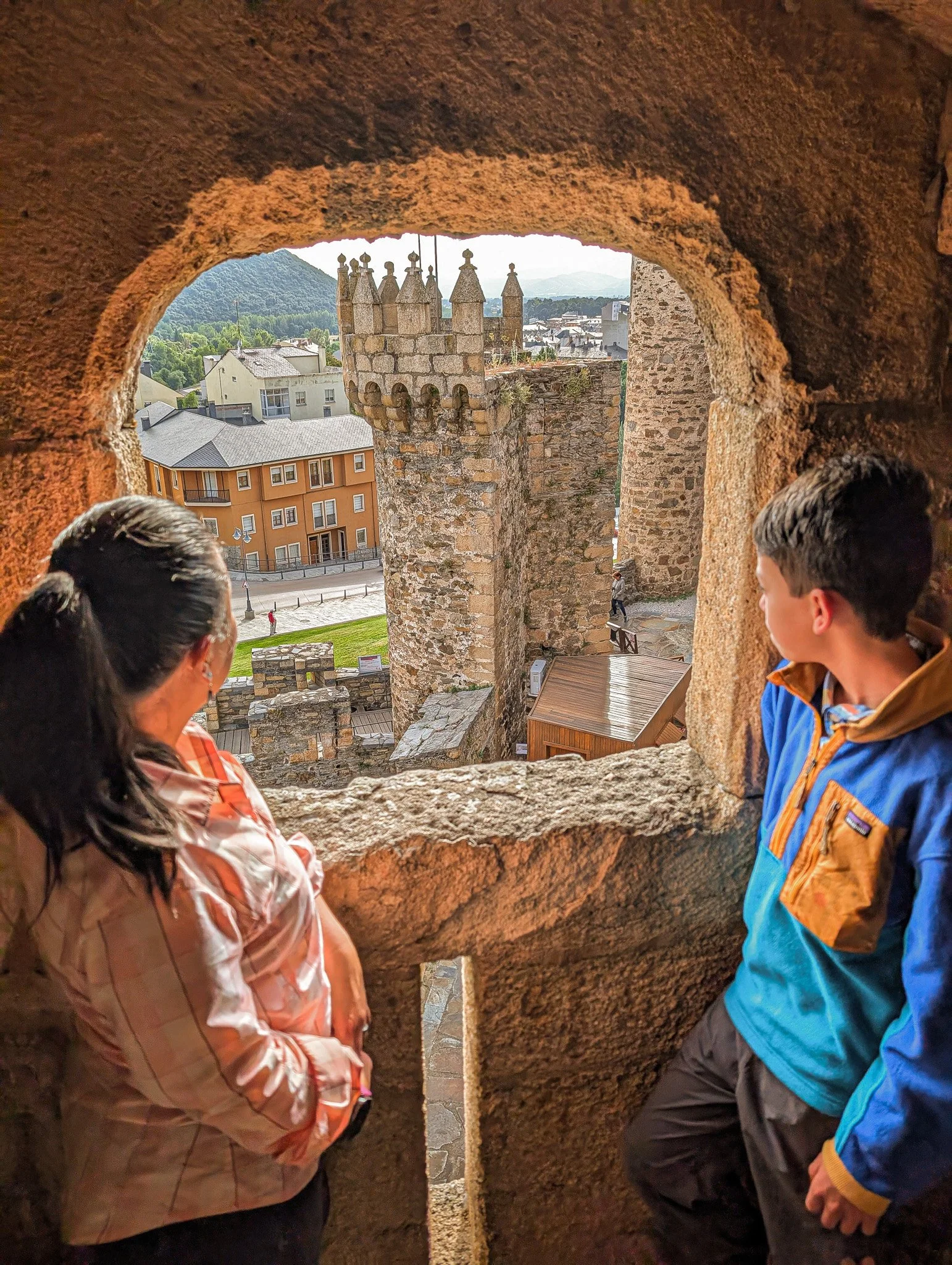
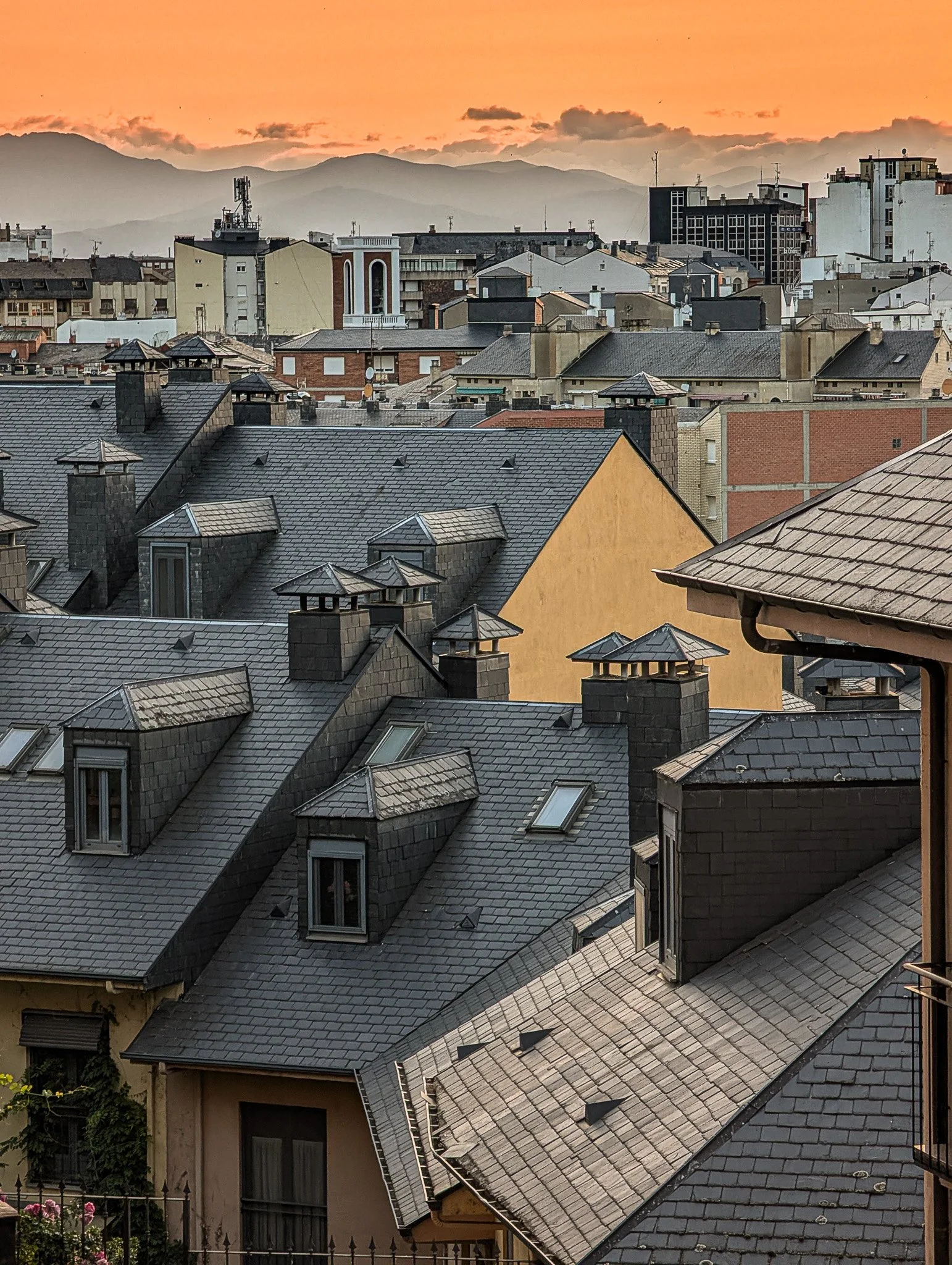
The Templar Castle of Ponferrada was built in the 12th century to protect pilgrims walking the Camino. Previously Dad and I had zipped through town nonstop — he never was big on crowded places. This time we spent the night so we could explore. We toured the castle, saw the town, napped, and ate well.
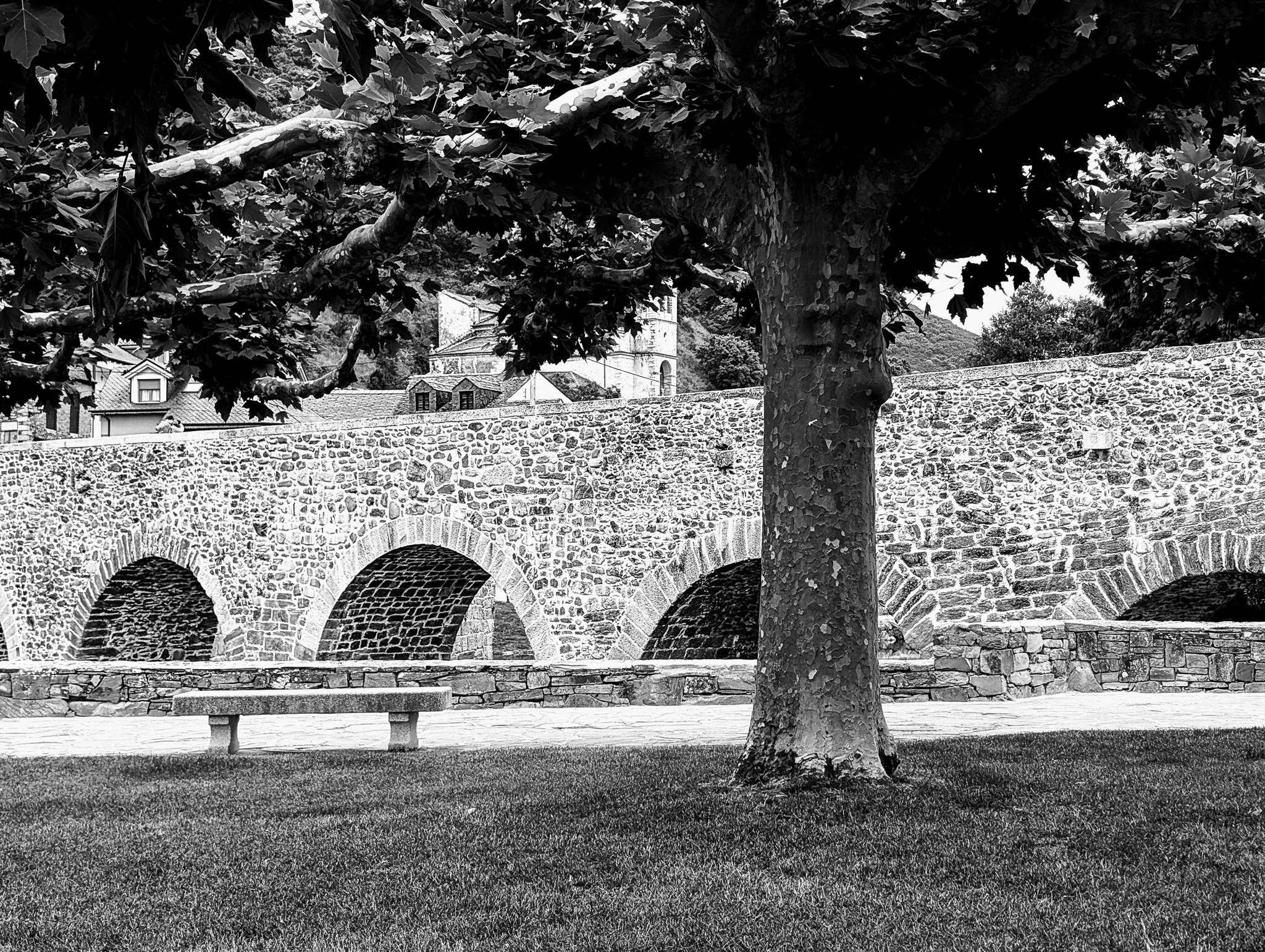
The camera loves Molinaseca
Day 4 - Ponferrada to Valtuille de Arriba
25 km / +859’ / -710’ / 9:00
Another hot day was in store, so we left Ponferrada at 7:00 AM. On paper it looked like an easy walk — at least if we finished before it got hot. On the Camino you never know where you’re going to get side-tracked, though.
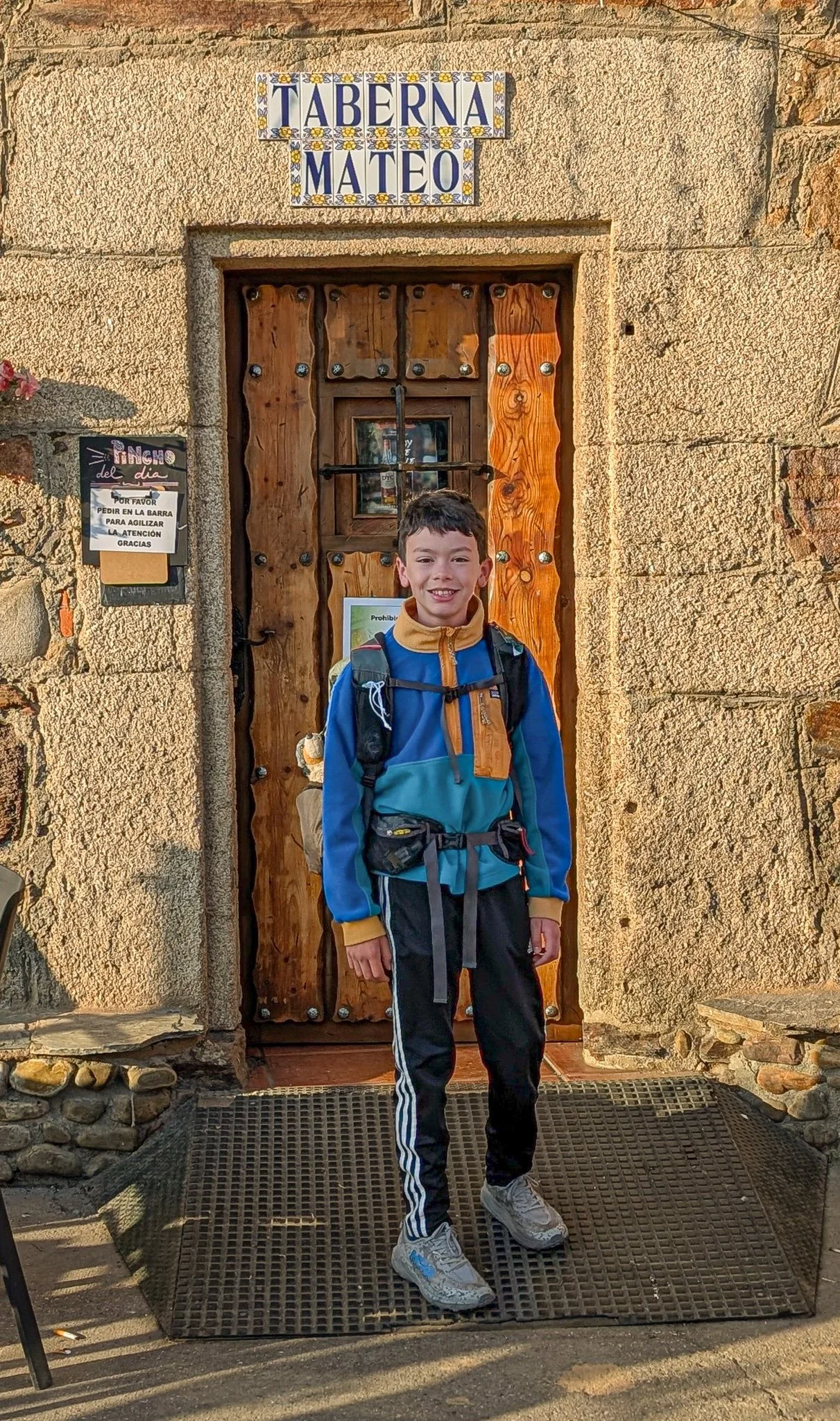
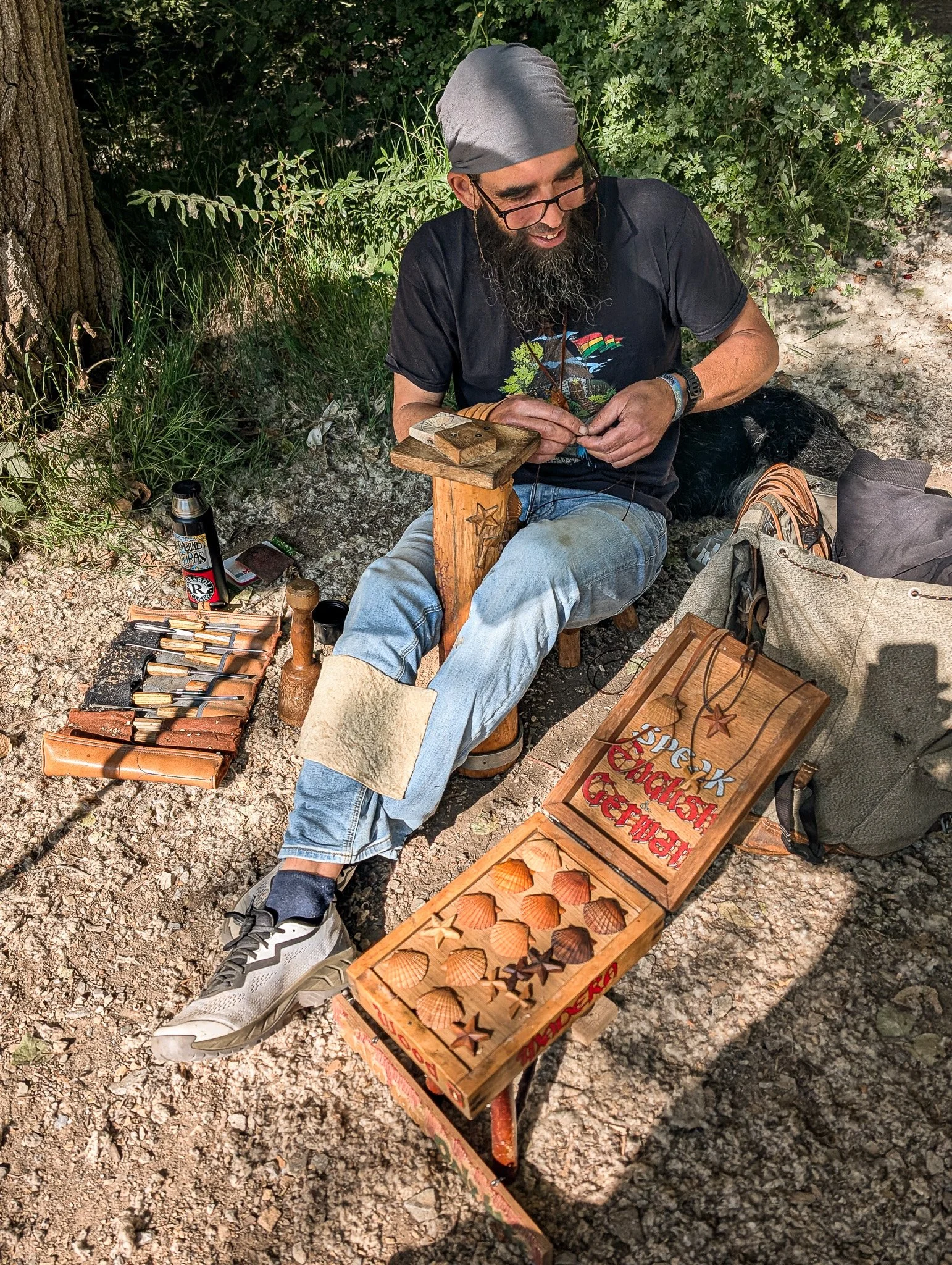
In Fuentesnuevas we discovered a tavern business Matthew evidently was running on the side. Further on in the woods we came across a guy carving Camino shells out of wood, one of which was my main souvenir from the trip.
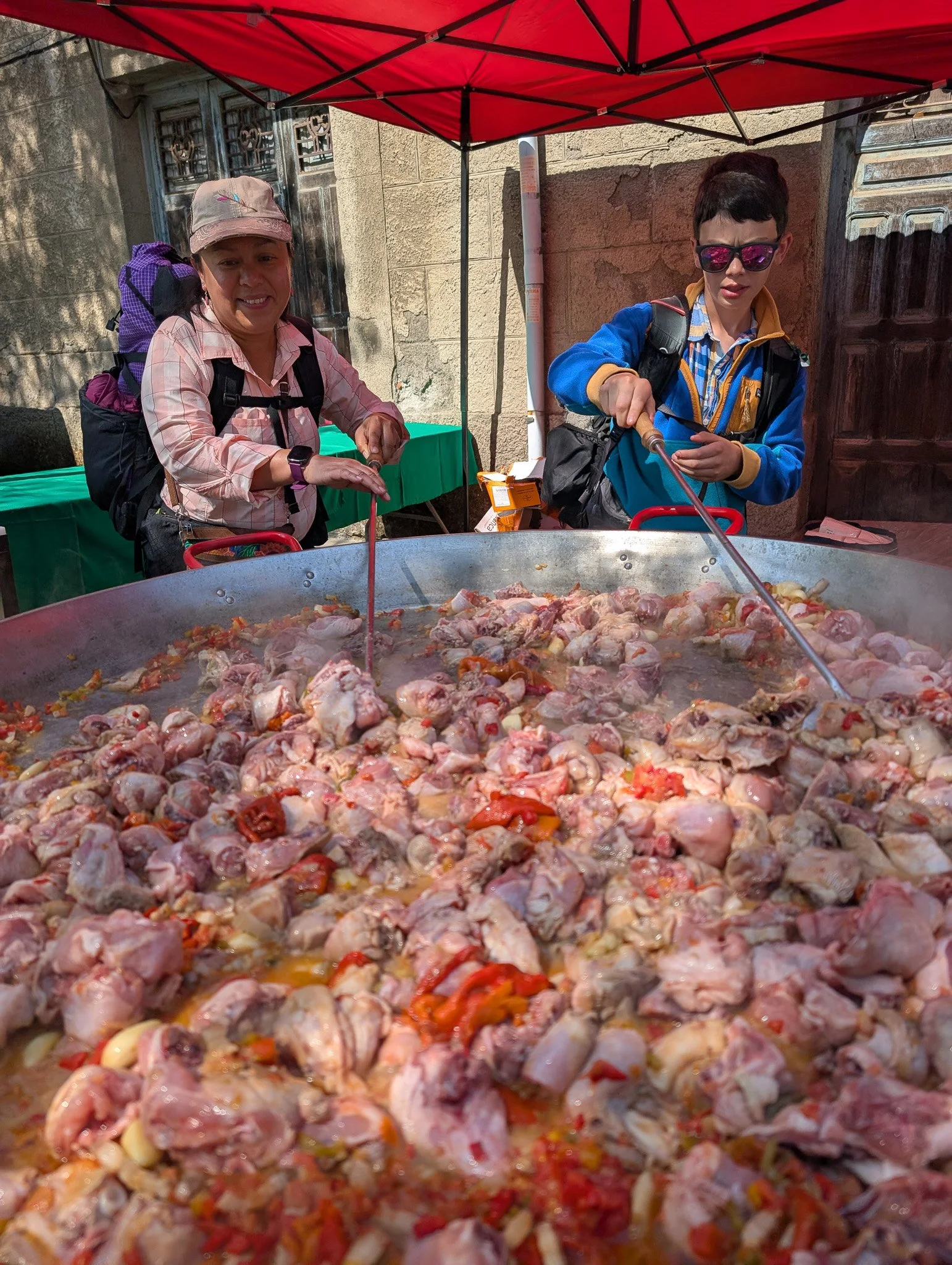
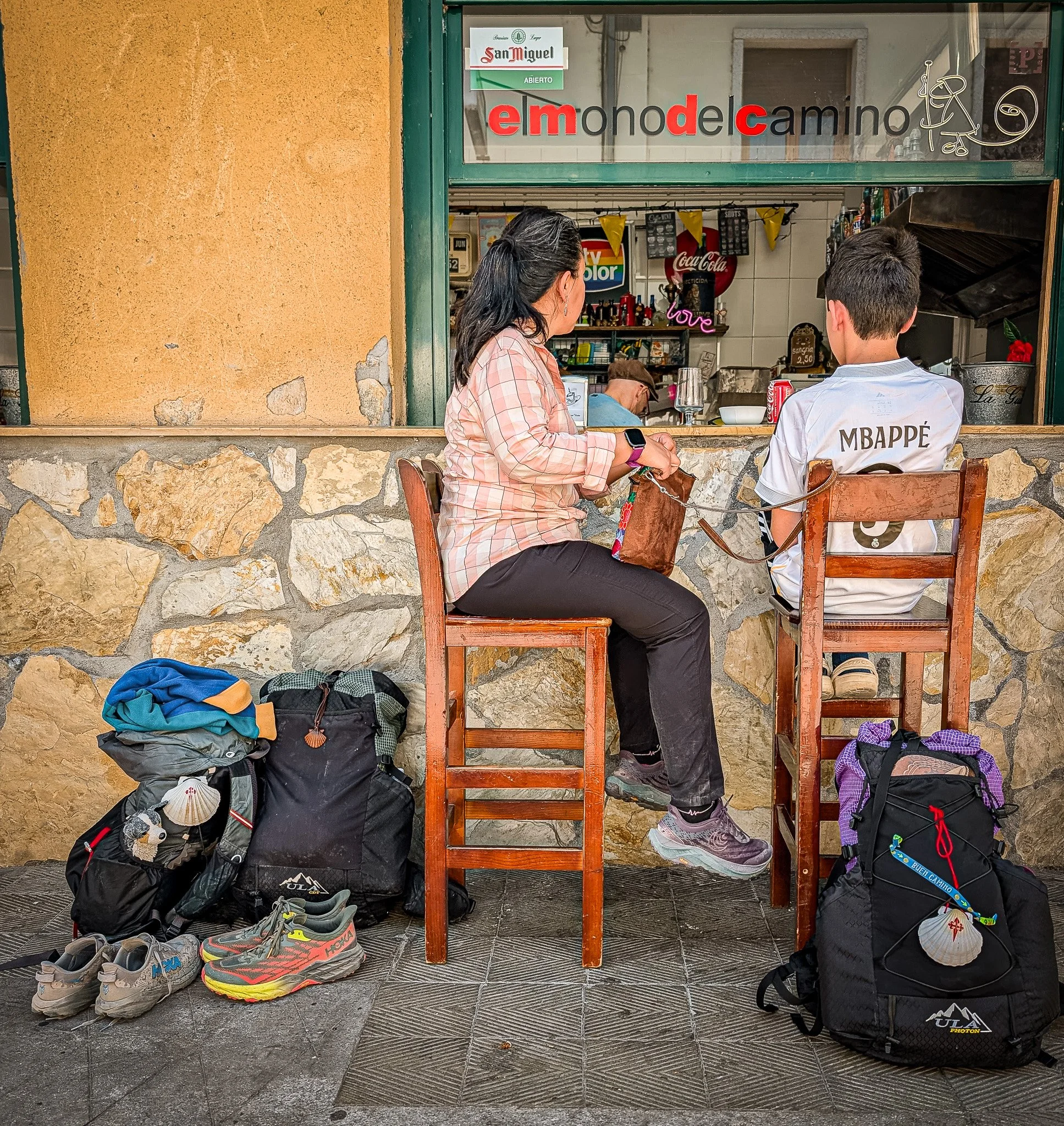
We arrived in Cacabelos late in the morning to find the whole town busy preparing for a fiesta. We hung out at the Mono del Camino and watched a local chef cook up a giant paella in the adjacent plaza. At that point there was no choice but to wait until 2:00 for the party. It was wonderful. The town leadership gathered all the kids and gave them books. Matthew carried his for the rest of the trip. We left charmed and satisfied, and perhaps a little too full.
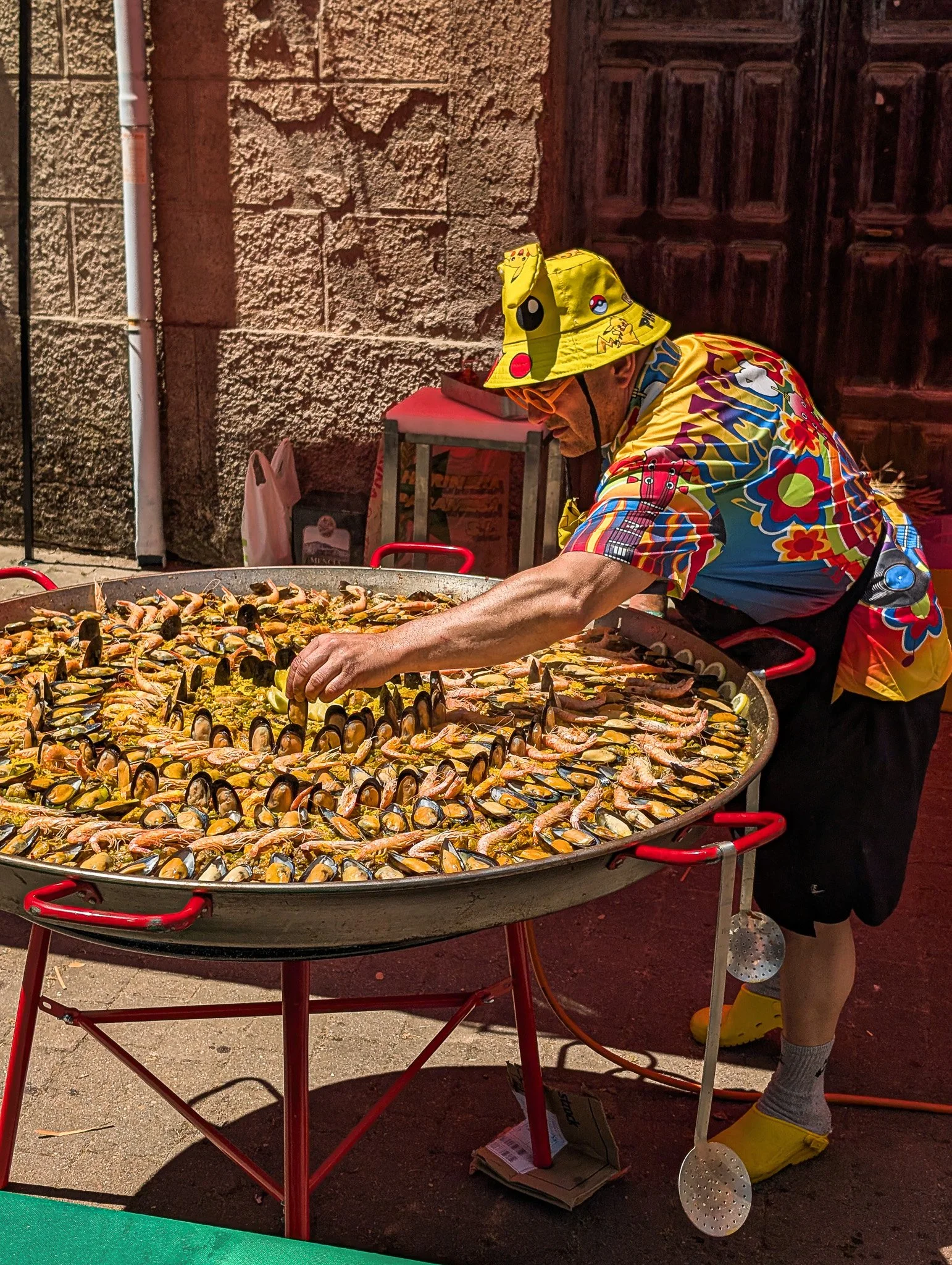
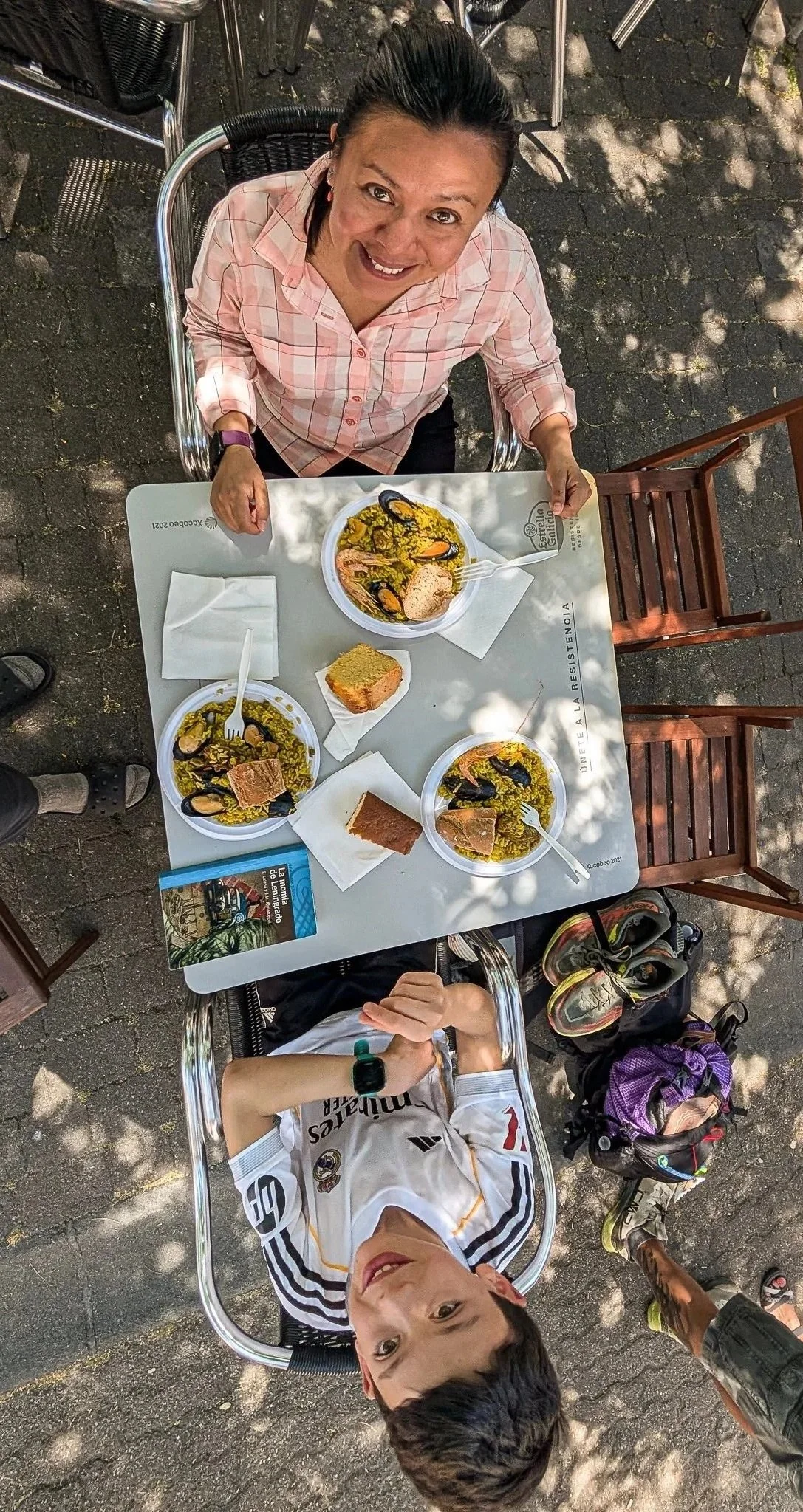
We paid the price. Determined to stay at an intriguing albergue in Valtuille de Arriba, we hiked the final 8 kilometers under a fierce sun, with temperatures close to 100. We resorted to dashing from one patch of shade to another until there was none to be found. Valtuille appeared around the corner just in time.
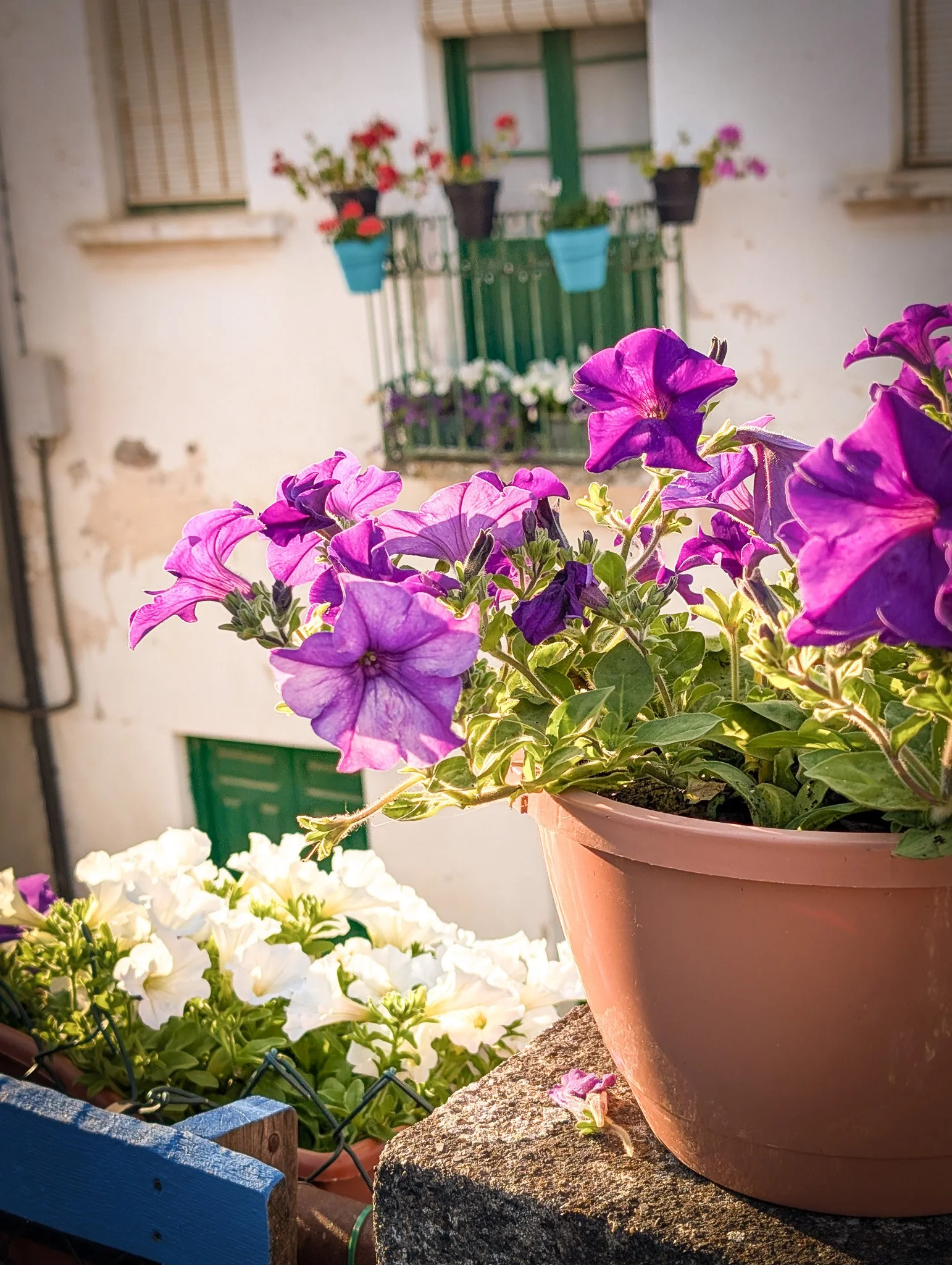
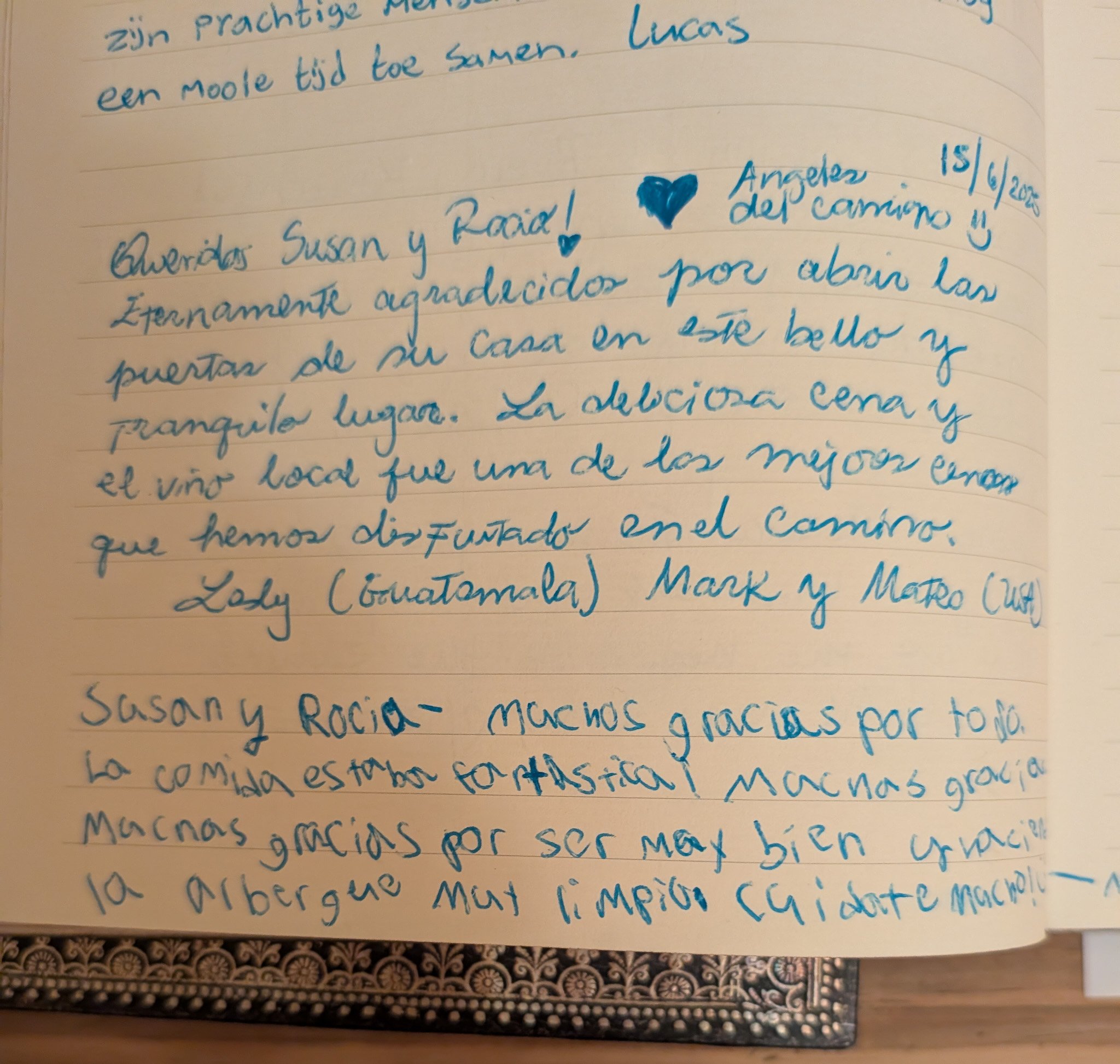
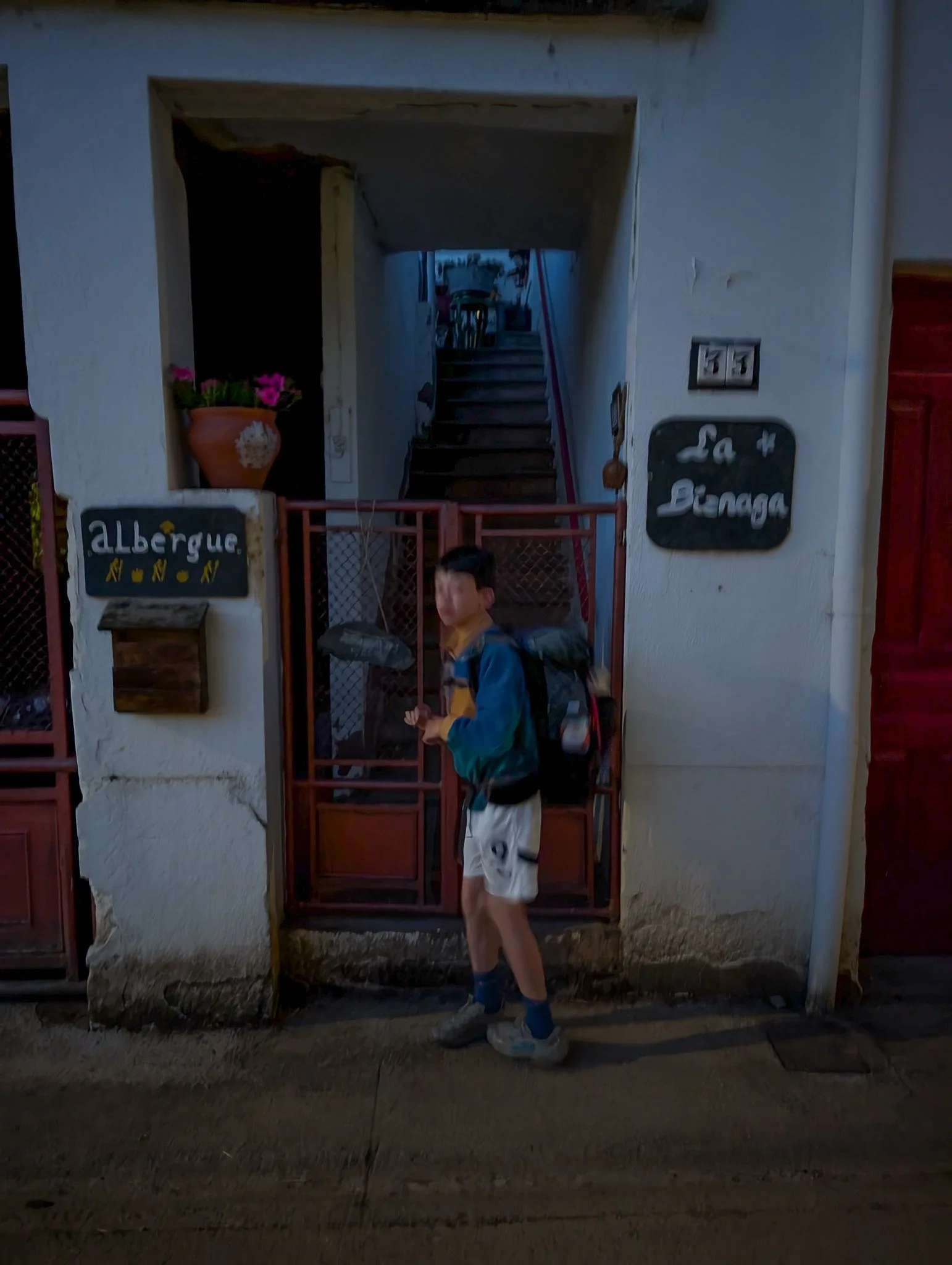
We stayed in Albergue La Biznaga, which was more of a donativo bed and breakfast than an albergue. A couple from southern Spain had moved to Valtuille and opened their small home to pilgrims; this was their main source of income. There were two small guest bedrooms, and we were the only guests. We hand-washed our laundry, and it dried under the hot sun in record time. Our hosts graciously served us a vegetarian dinner on the rooftop patio with fresh local fruits for dessert, afterwards chatting with us about the state of Spain and the world. Their gaggle of dogs kept us entertained.
Lesson: Speaking the local language makes a huge difference in the quality of your Camino experience.
Day 5 - Valtuille de Arriba to La Faba
33 km / +3,211 / -2,078’ / 7:32
Matthew and I reluctantly left the comfort of La Biznaga before dawn to get a head start on our biggest day so far. I knew from my last time in La Faba I wanted to stay there again, even though it was going to require some effort from this distance. Lesly opted to take the day off and meet us at the end of the stage.
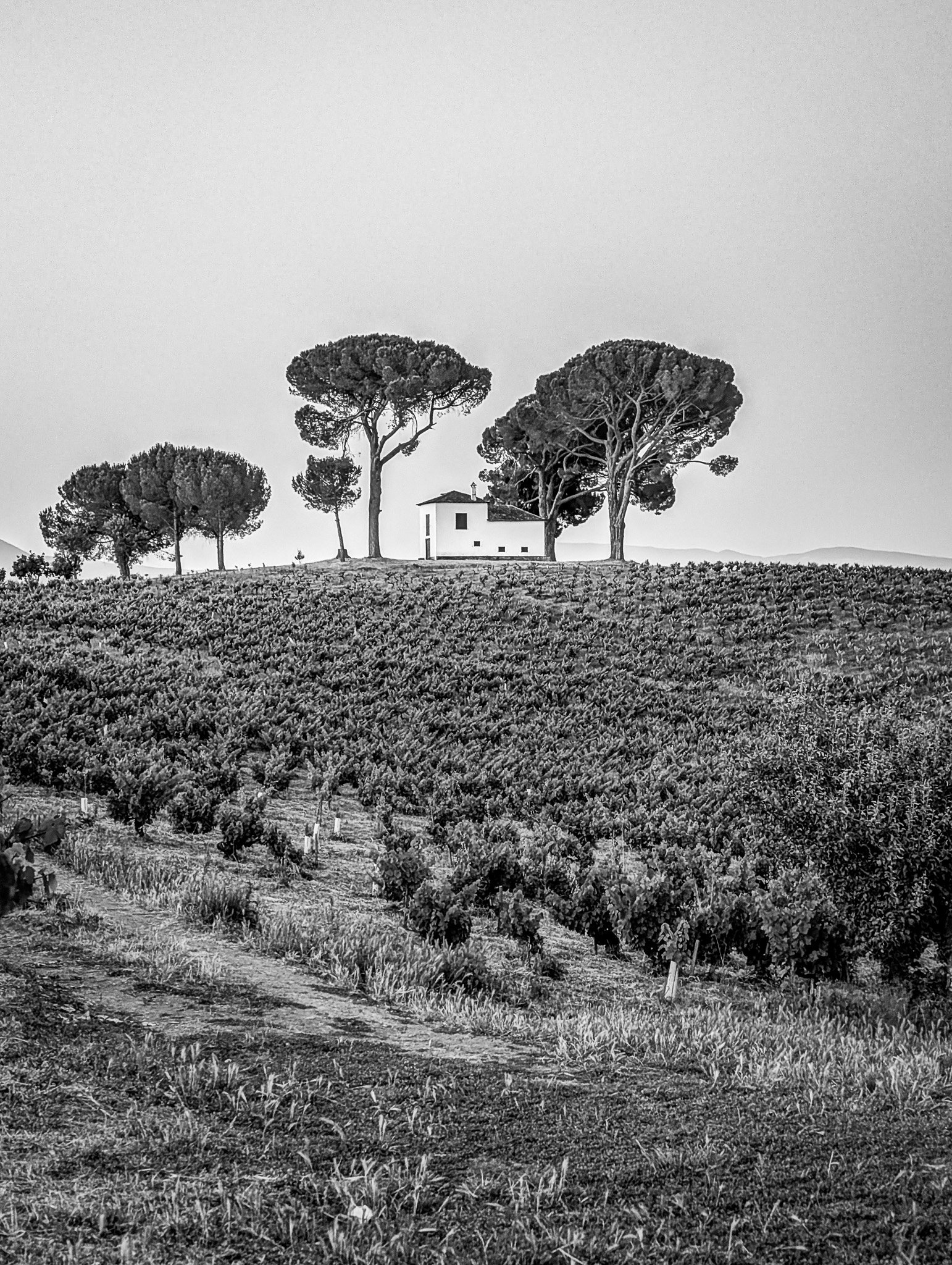
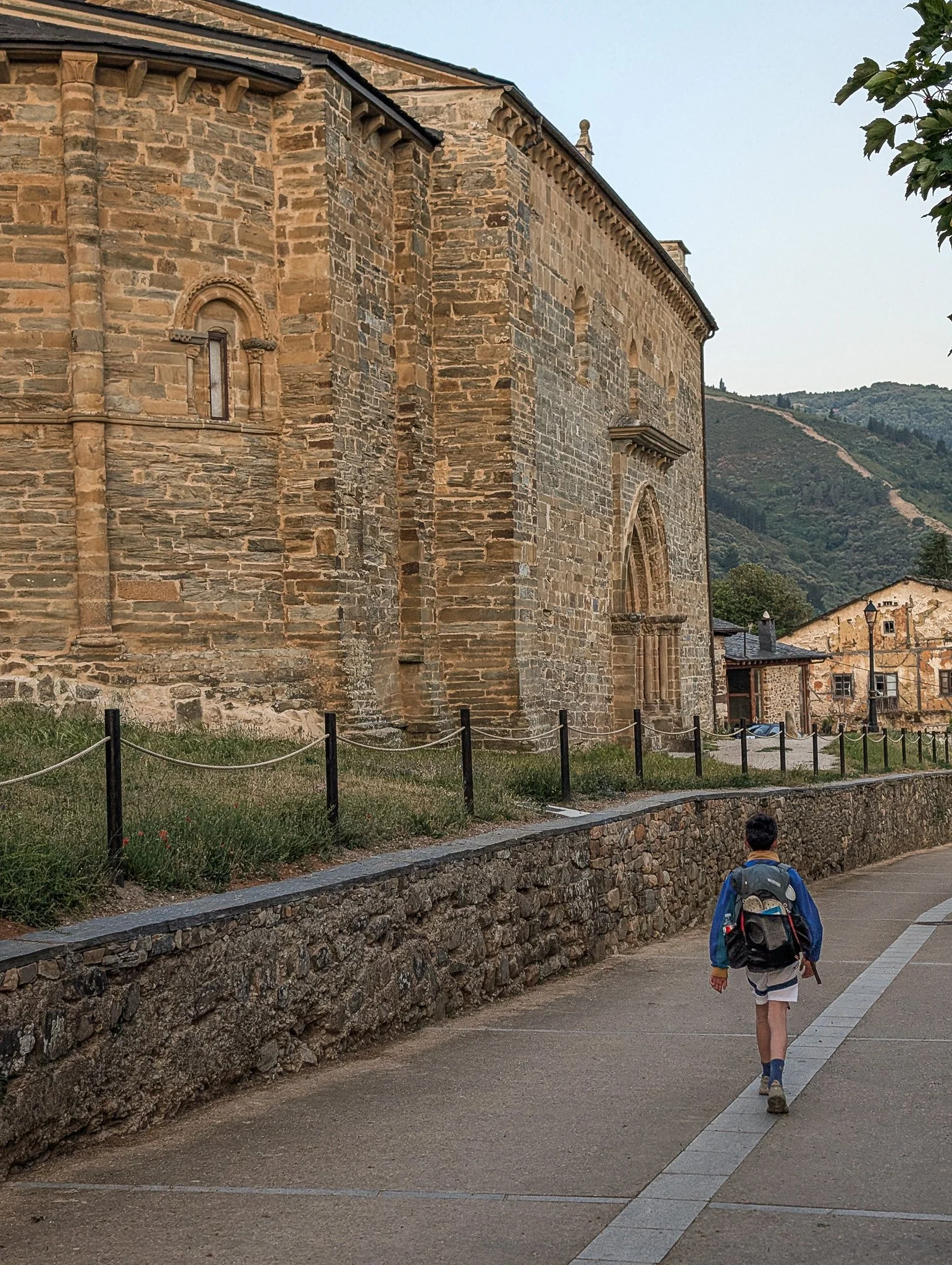
The sun rose as we strolled through Bierzo wine country. At Villafranca we had another breakfast for good measure. No wonder I never lose weight on the Camino.
Crossing the bridge at the far end of town triggered a memory from 10 years ago: the road-walk from Villafranca to Trabadelo was horrible. On a whim, we took a hard right onto the alternate high route. Before we knew it, we were breathing hard and looking back down at Villafranca 1,500’ below.
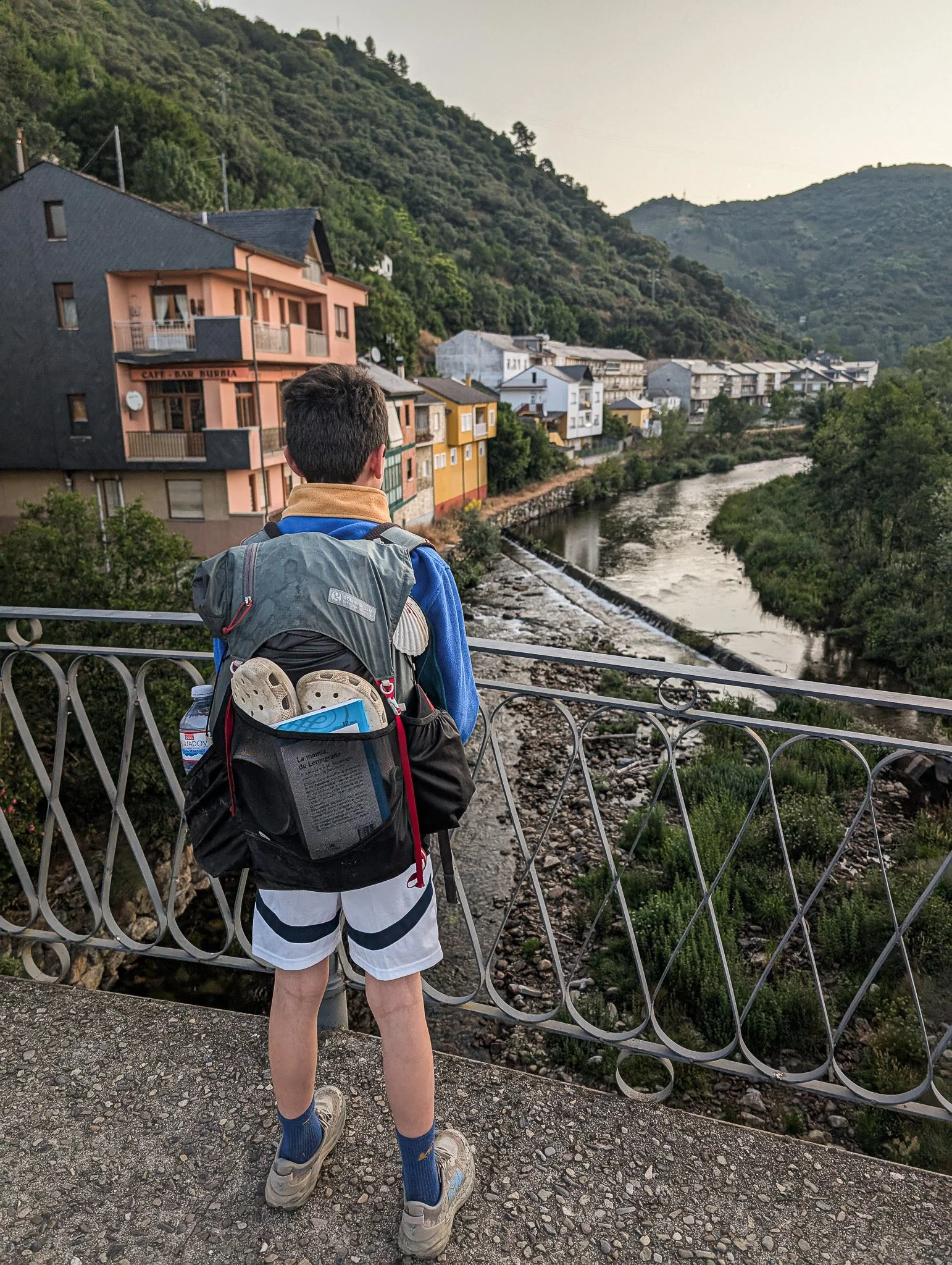
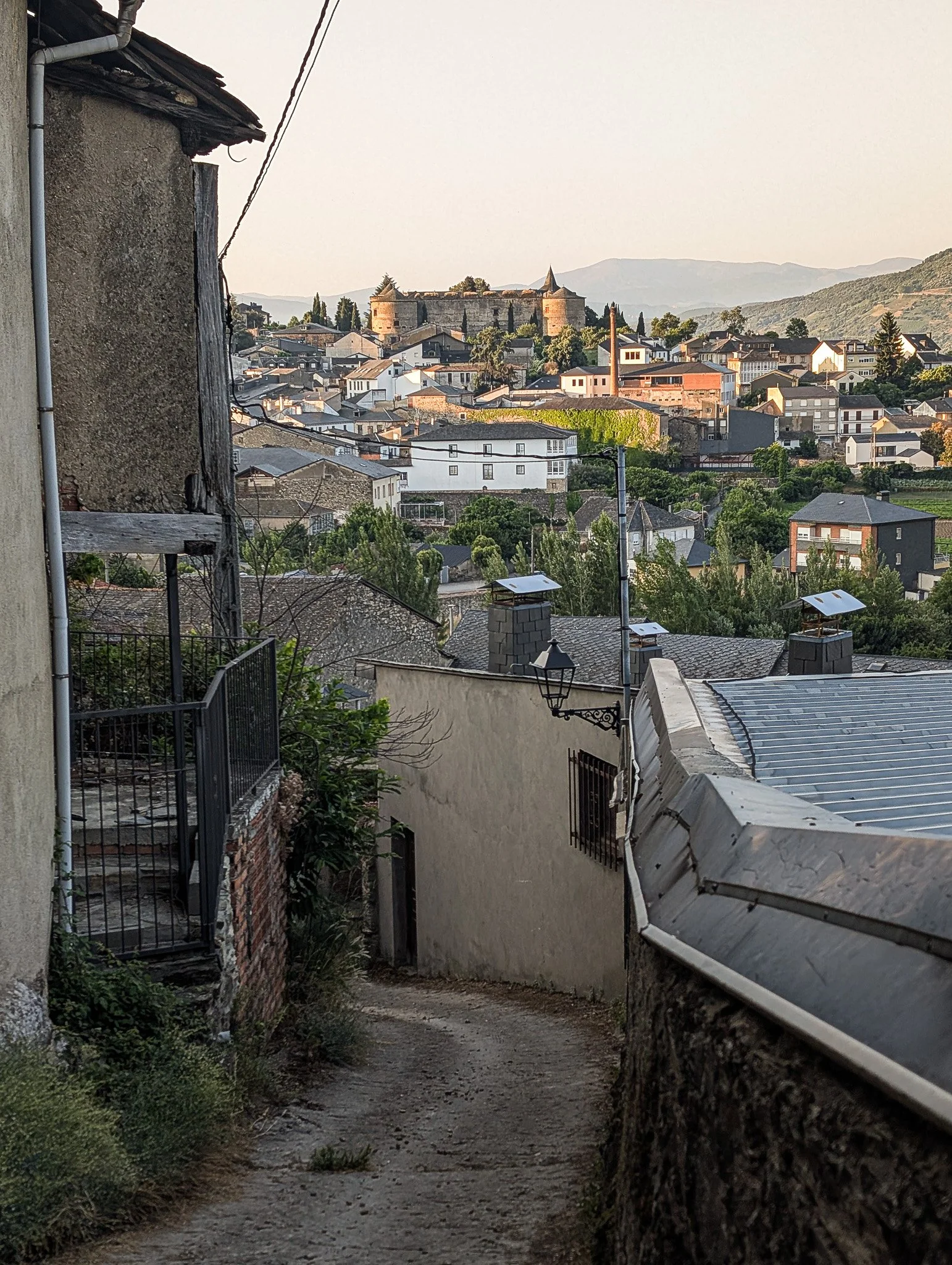
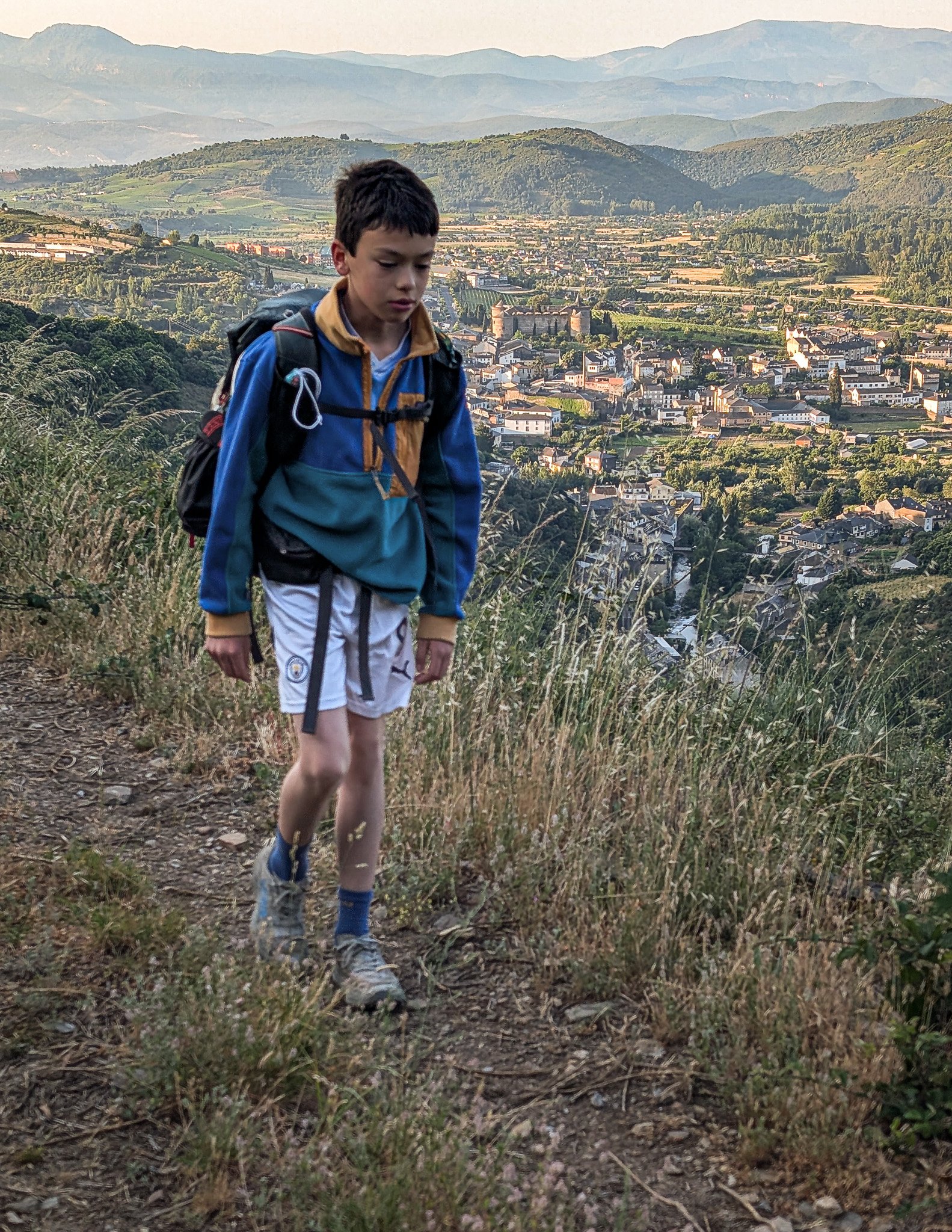
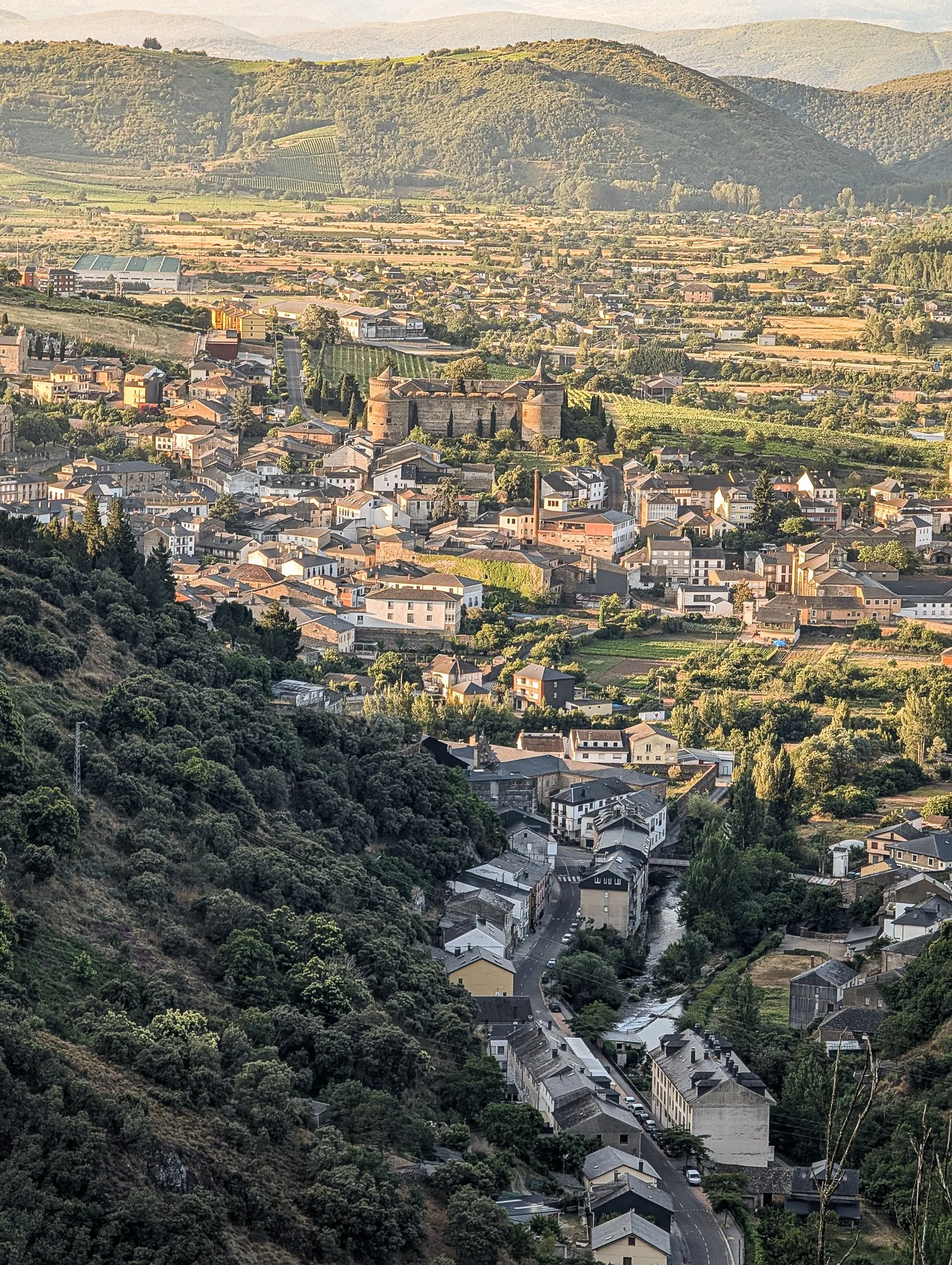
There was hardly a soul up there, likely due to the ridiculously steep trail. We relaxed with some scenic ridge walking before the trail dumped us back down an even steeper slope straight to Trabadelo. We wandered the streets of Trabadelo in the afternoon sun looking for a frozen treat, which we soon located. The detour was more effort than we had bargained for, but it did get us around road walking along the A-6.
From Trabadelo there was another 1,000’ of elevation gain to La Faba, but the path was more civilized. It was very hot, so we took our time. We found an air conditioned bakery just east of Las Herrerias for lunch and cold drinks. Thus fortified, we started the final climb to La Faba, which was fortunately shaded by trees. We met Lesly and checked into Albergue La Faba, one of my favorite spots on the Camino Francés.
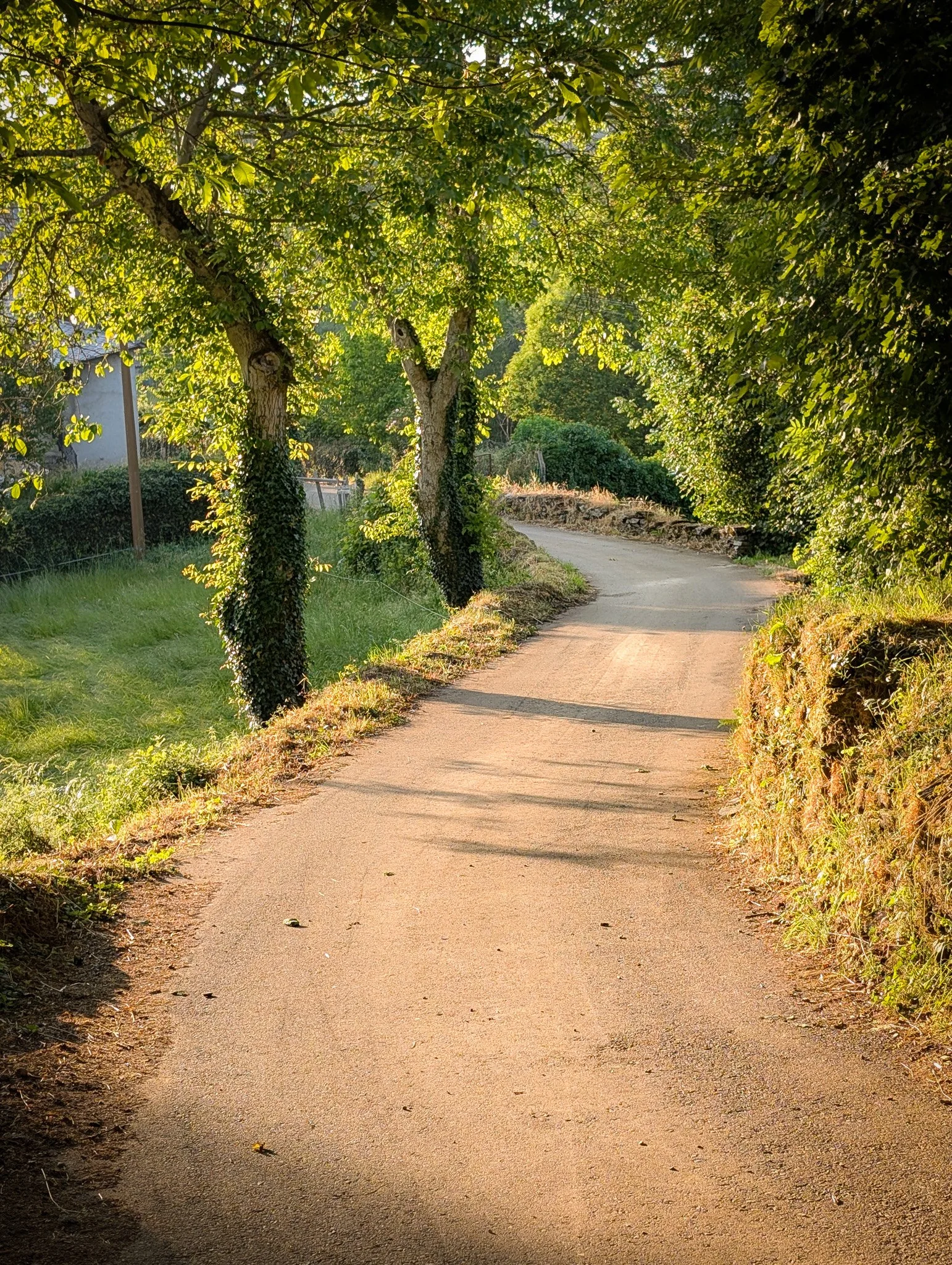
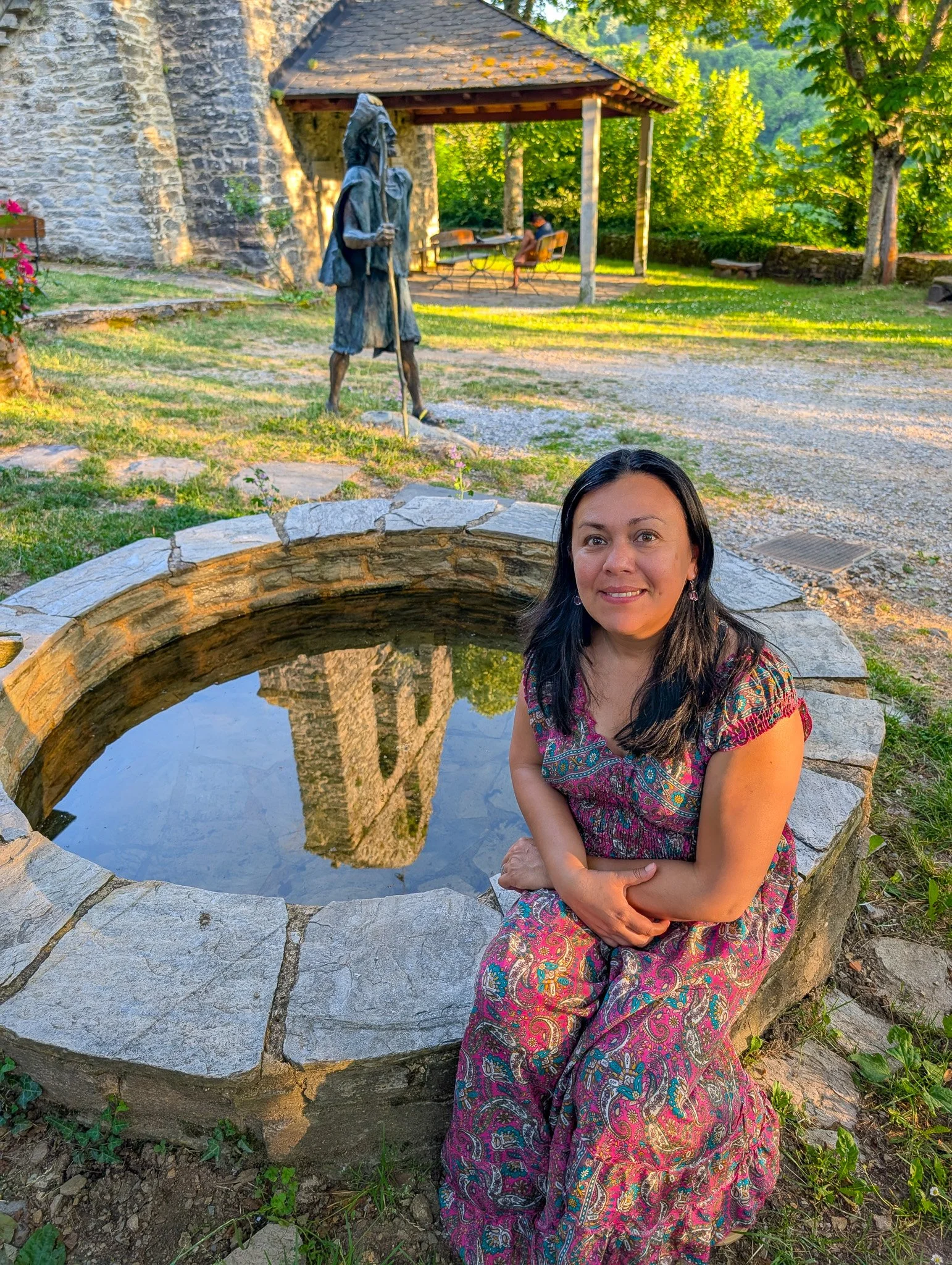
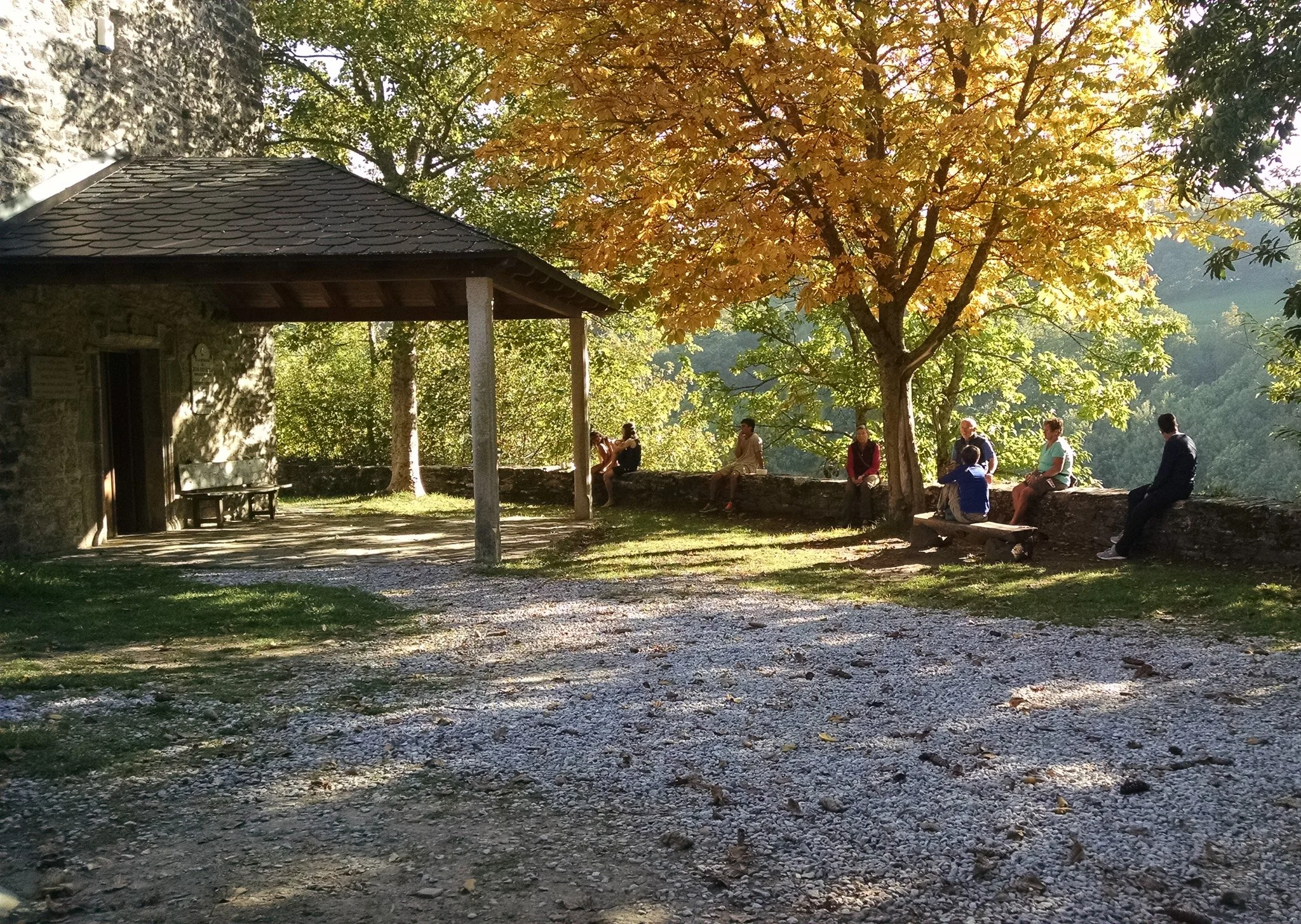
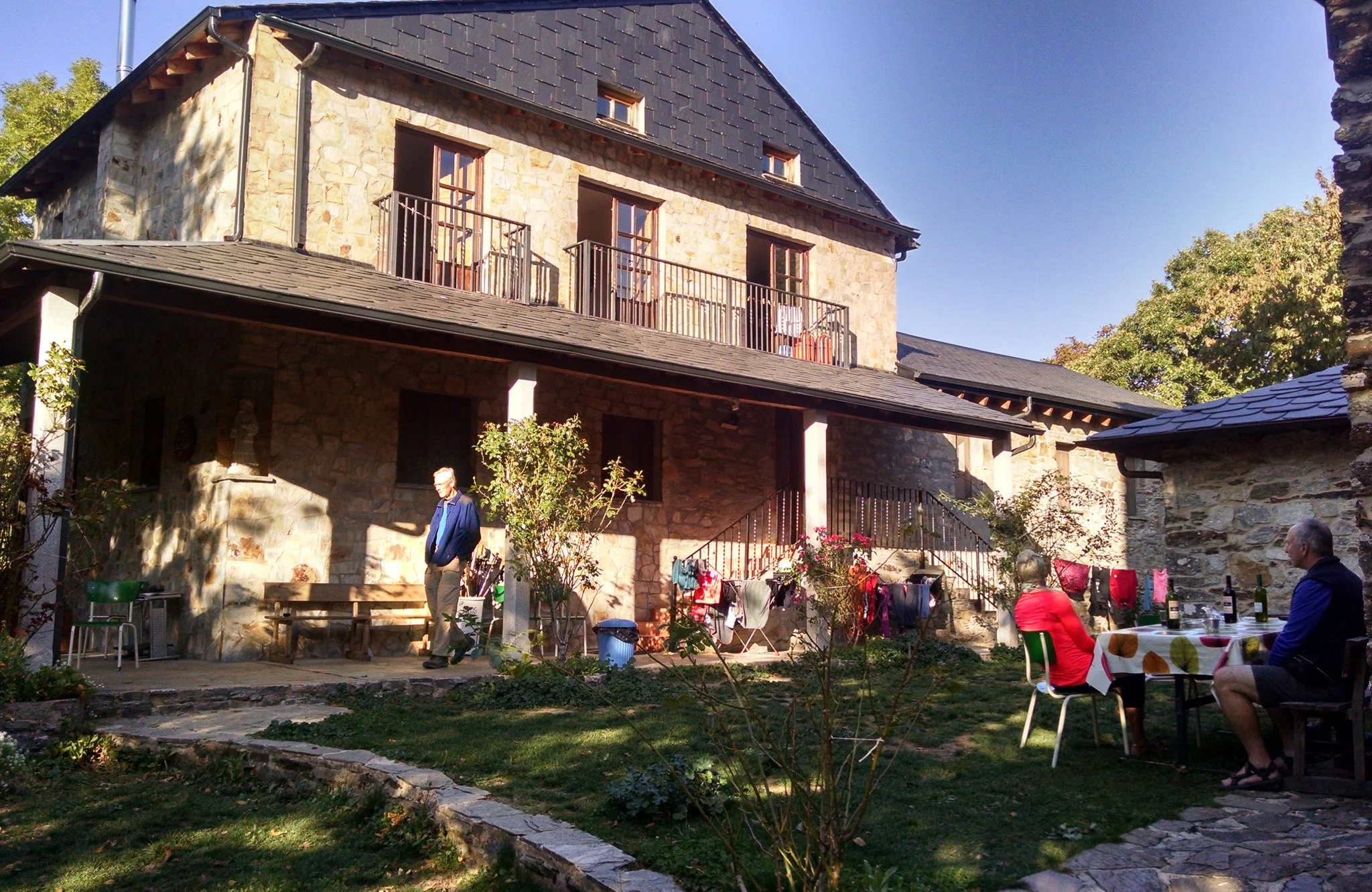
Albergue La Faba is run by a welcoming German volunteer group from Stuttgart. During the check-in process on the front porch we were offered fresh lemon water and delicious German biscuits somewhere on the spectrum between cookies and crackers. The 16th-century Iglesia de San Andrés was just across the garden.
La Faba was one of those rare albergues which prioritized comfort over maximizing occupancy. They easily could have doubled the bed count, but instead opted to provide space, privacy, and a better chance for pilgrims to actually get some sleep.
La Faba in September, 2015:
We headed to the center of town for dinner, which was memorable for the restaurant’s just-in-time food production. After we ordered a meal with green salads, the waiter/chef/proprietor went out to the garden to pick the lettuce. The salads were tolerably fresh, to say the least.
Day 6 - La Faba to Triacastela
29 km / +2,375 / -3,157’ / 7:25
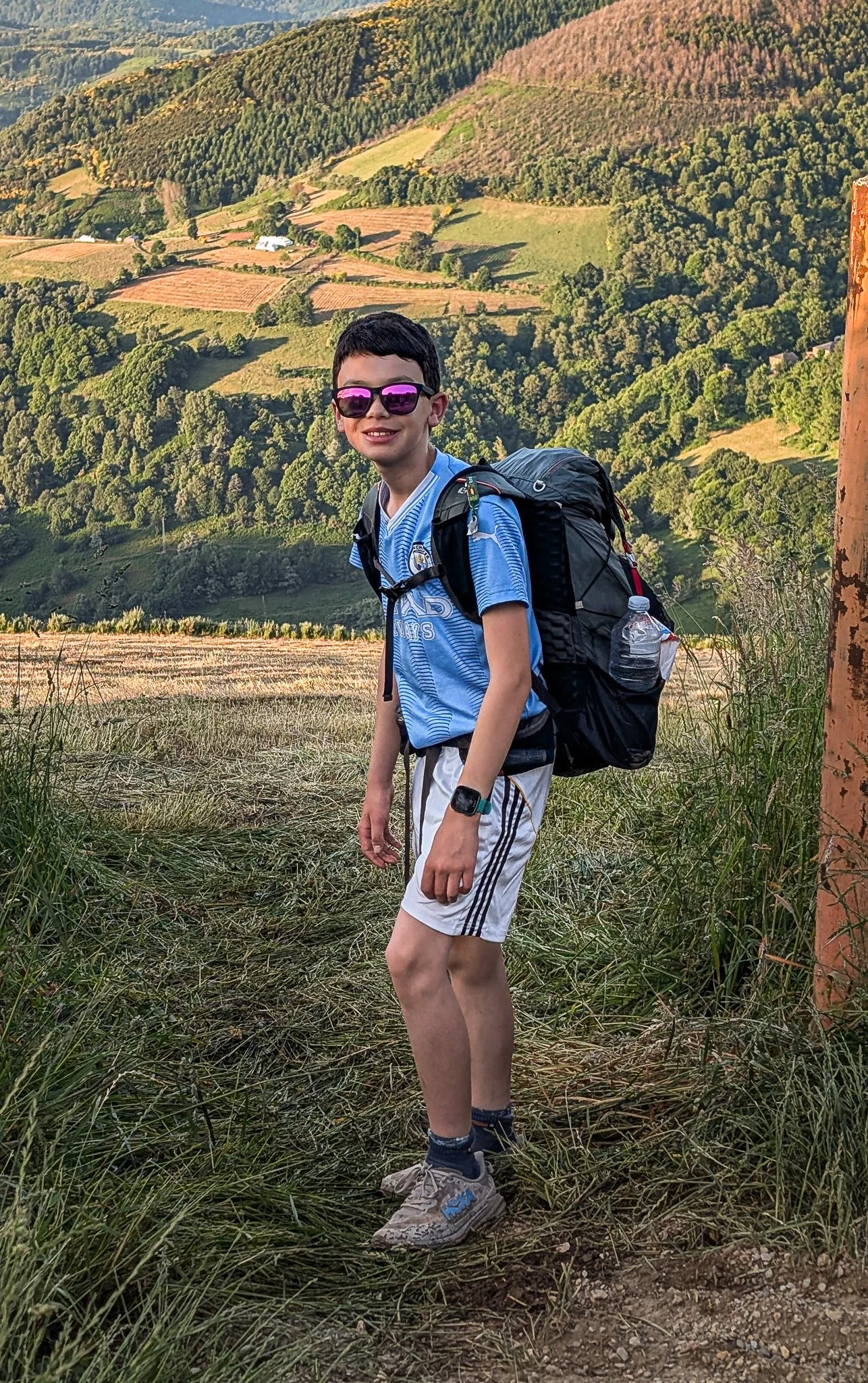
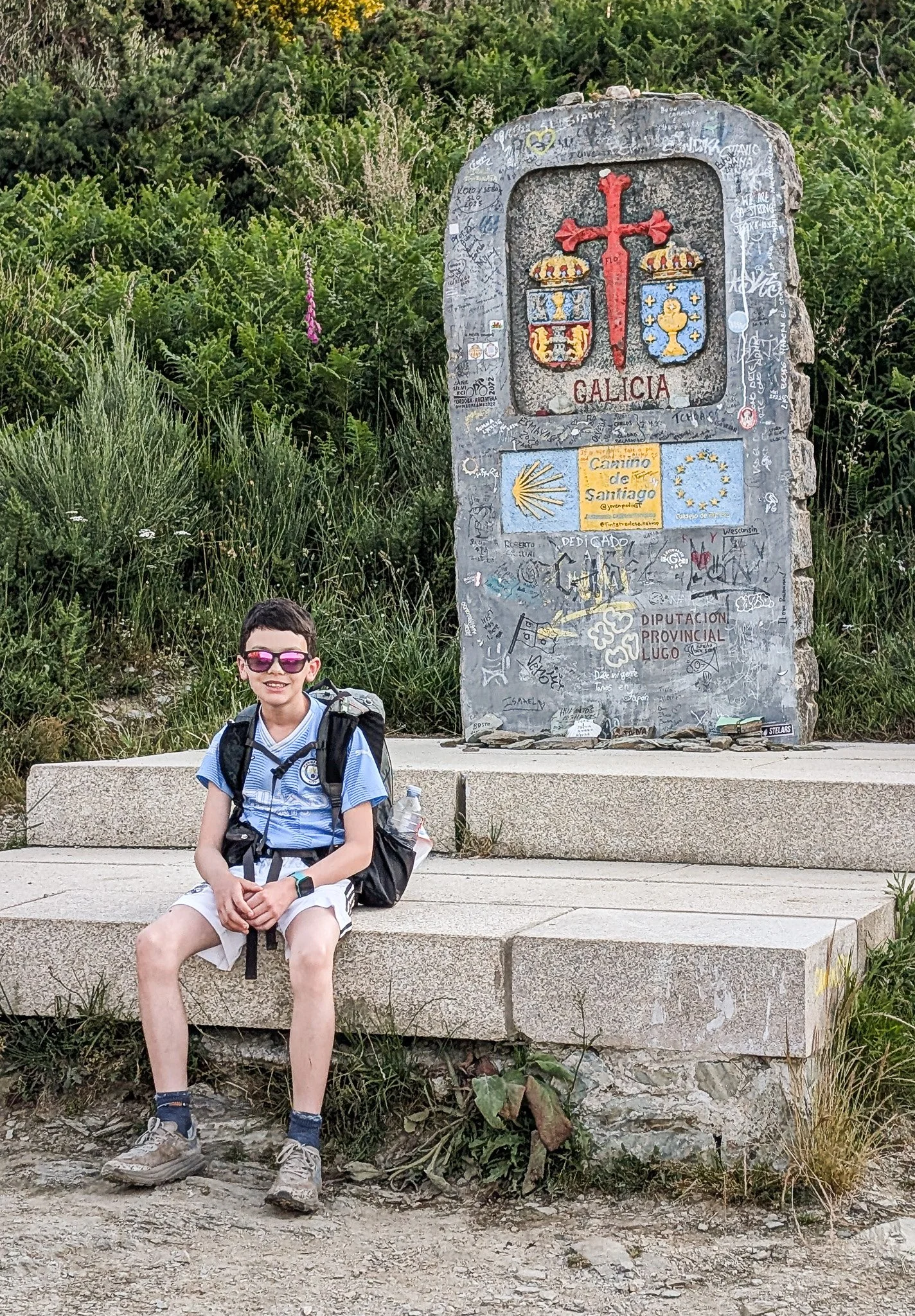
If most of the elevation change the day before had been optional, today every vertical foot was required. On the plus side, most of the route was above 3,000 feet in elevation, which kept things cooler. The morning fog also helped. When you enter Galicia, you enter another climate. We spent the first few hours climbing towards O Cebreiro, perched in the fog at 4,200’.
Into Galicia!
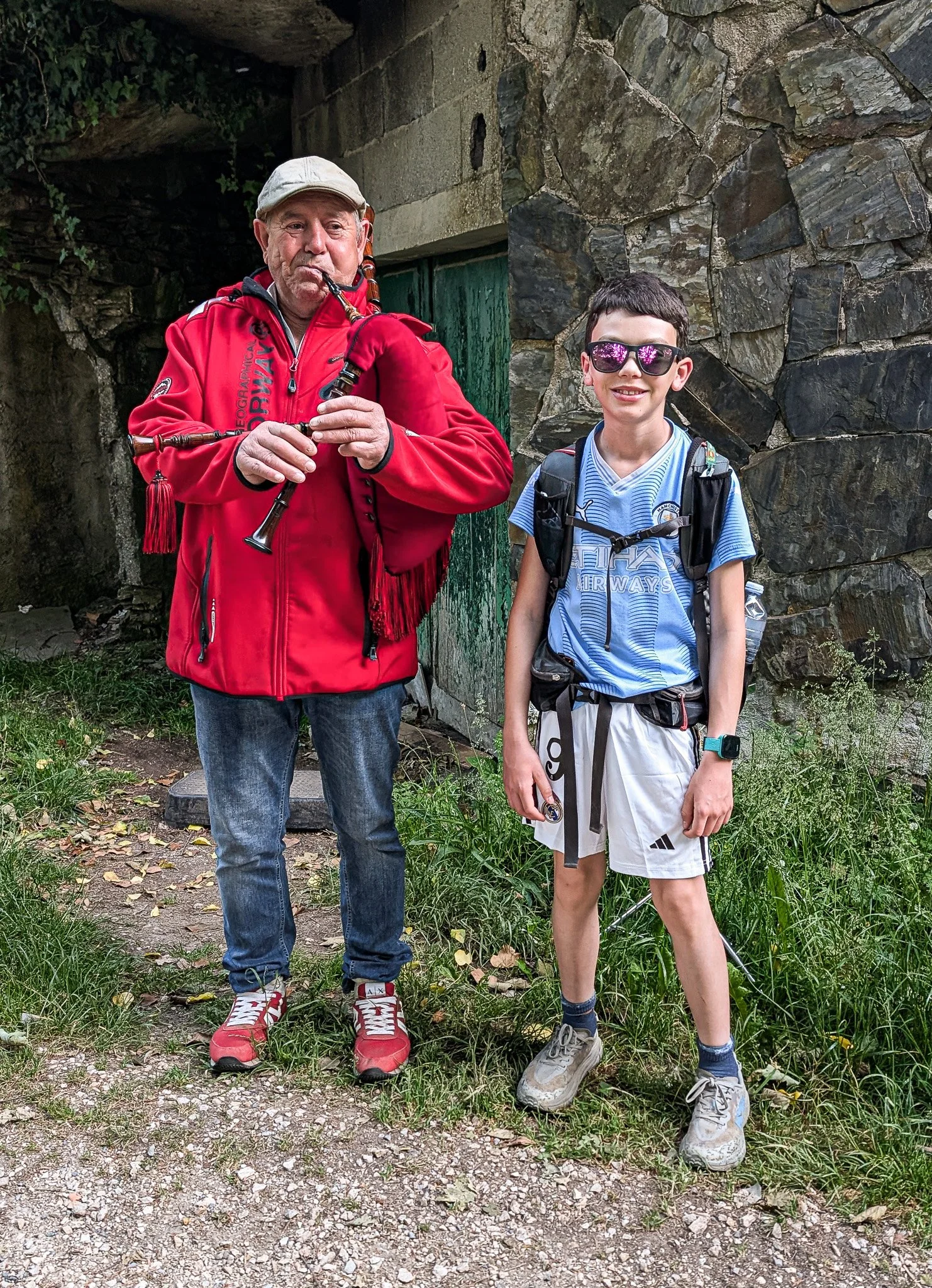
We were welcomed to Galicia by a lone bagpiper. Walking in the foggy early morning beauty made us a little sensitive, and the tones of the bagpipe kind of choked us up. We listened appreciatively, gave him a tip, and continued on our way. He generously piped us out of sight.
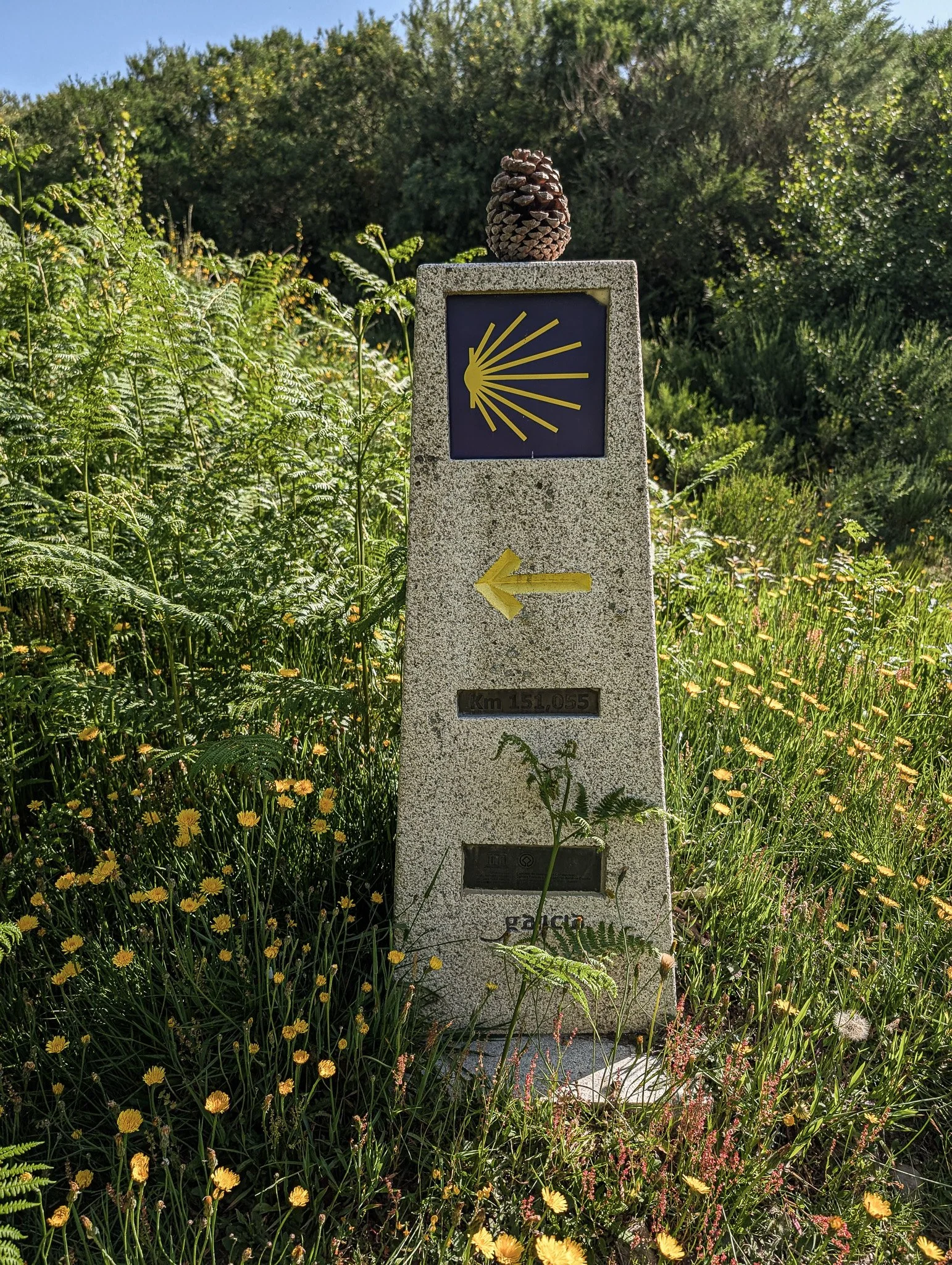
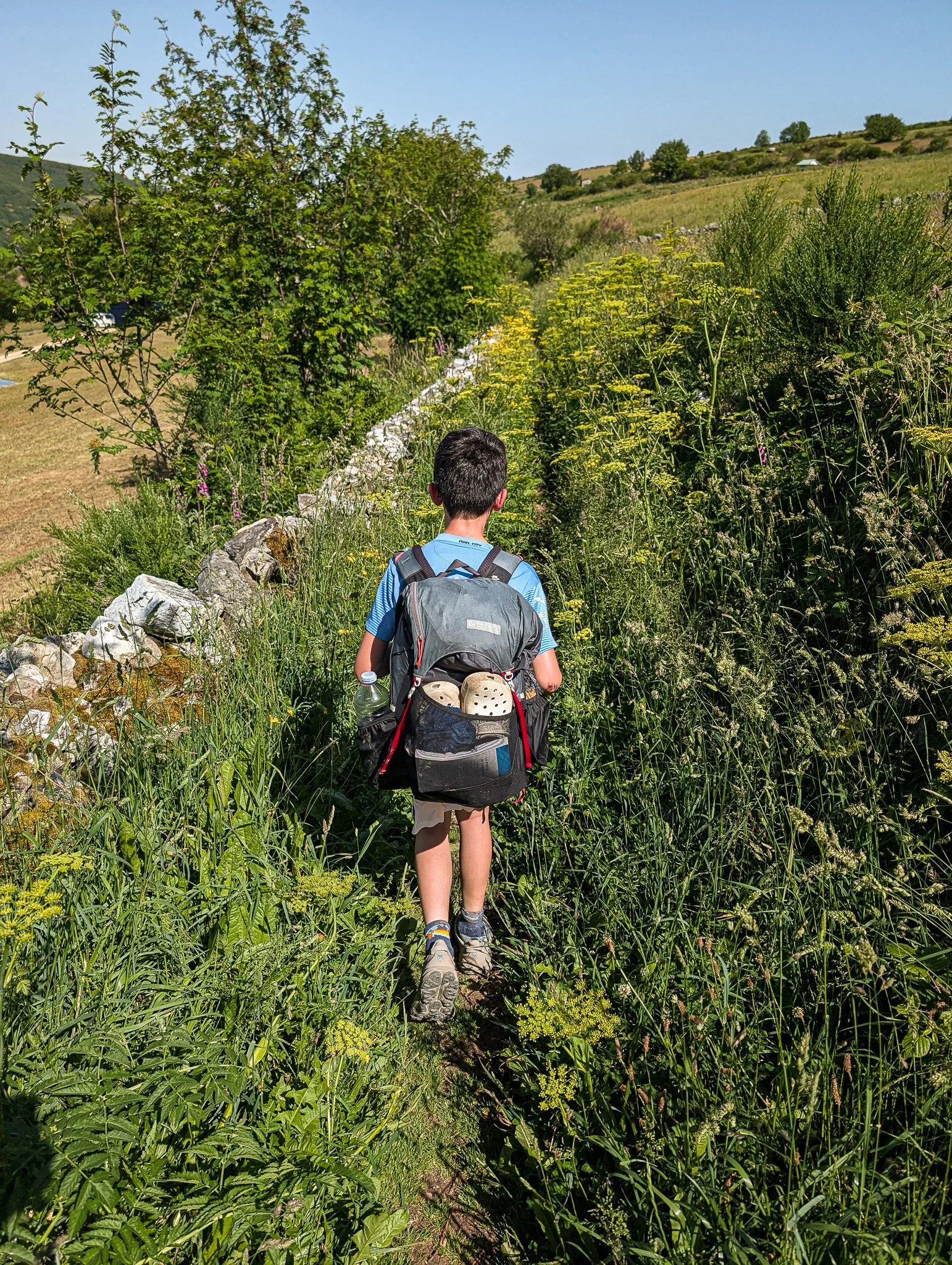
In O Cebreiro we ate toasted Galician bread with local butter and jam, washed down with steaming café con leche at an outdoor table in the foggy morning air. I had been looking forward to my first bite of authentic pan de Galicia and was not disappointed. Re-energized, we spent the rest of the day walking up and down the rolling hills leading to Tricastela.
I had a vivid memory of Triacastela from 2015. Dad and I were hungry and low on food, but as we passed through town no stores or bars were open. Just as we resigned ourselves to push on to the next village, we spotted a small open-air structure with some horses tied up. We headed straight for it.
Inside, there were vendors and locals conducting a brisk business. In one area a lady had a large pot of pulpo going over a burner. Our search was over. Dad wasn’t keen on the idea of eating octopus, but in the end hunger won out. We each had a wooden plate of paprika-dusted pulpo straight from the pot, accompanied by fresh bread and a bottle of red wine, all for a few euros per person. It remains one of my favorite meals of all time.
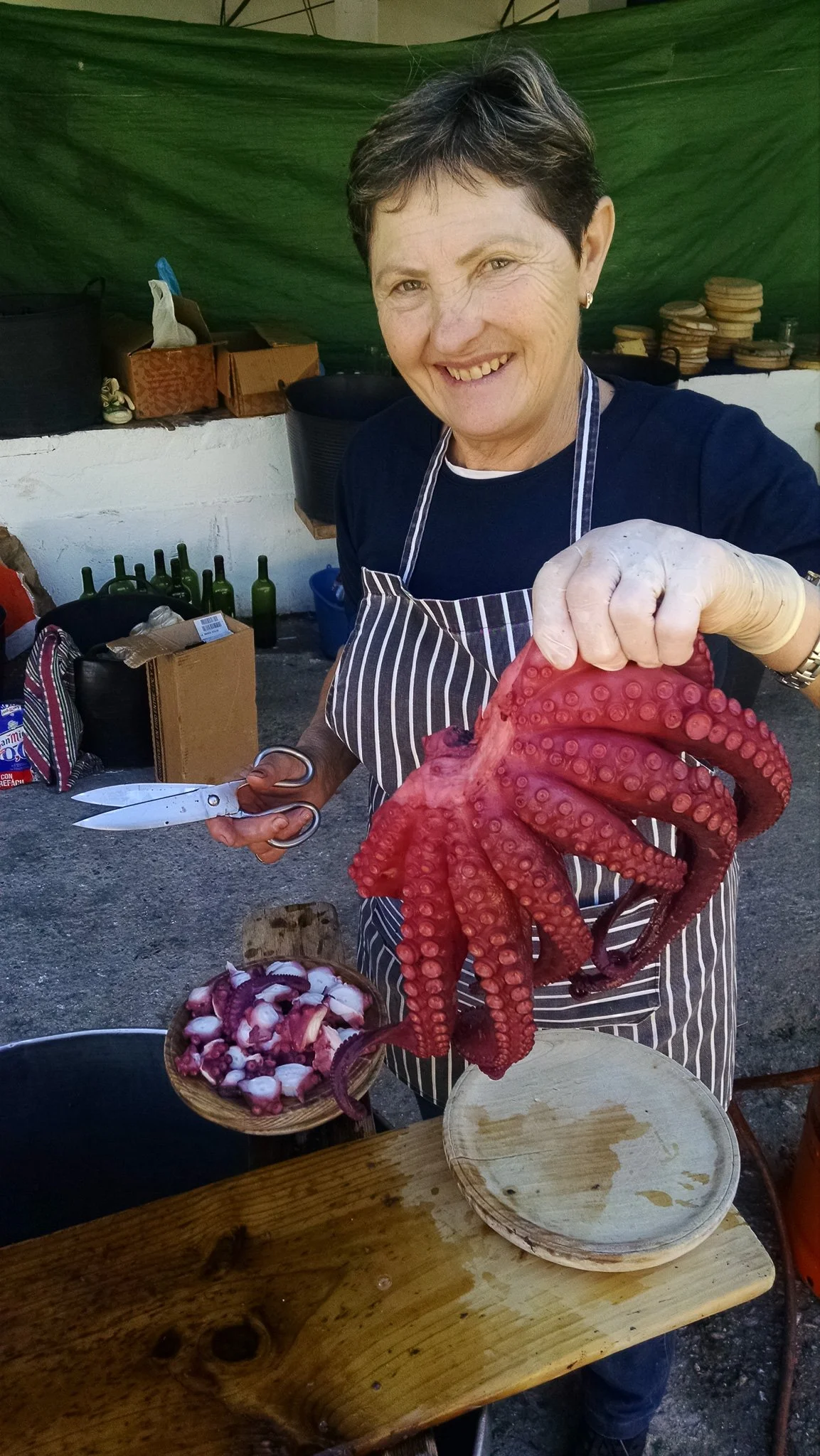
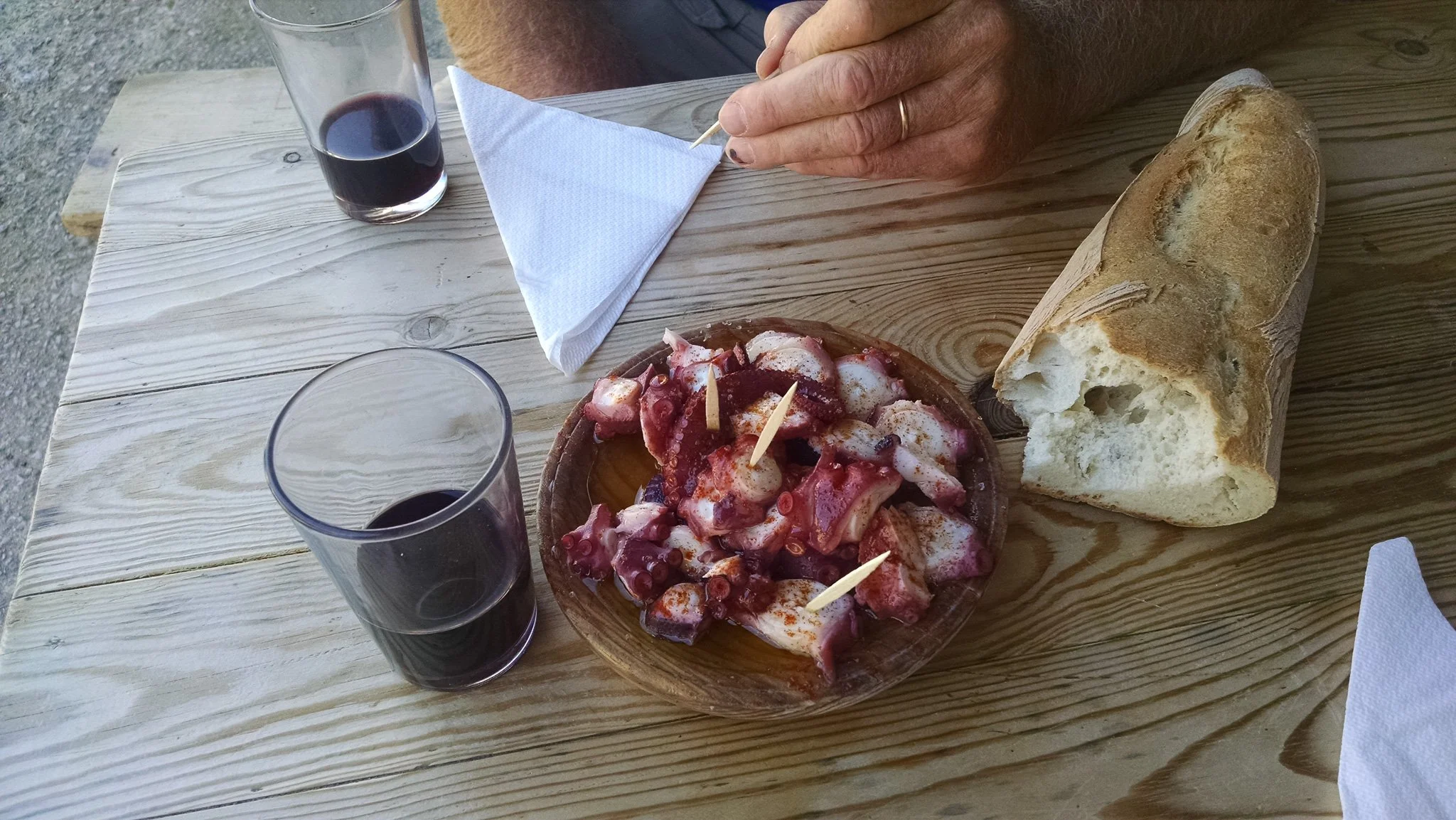
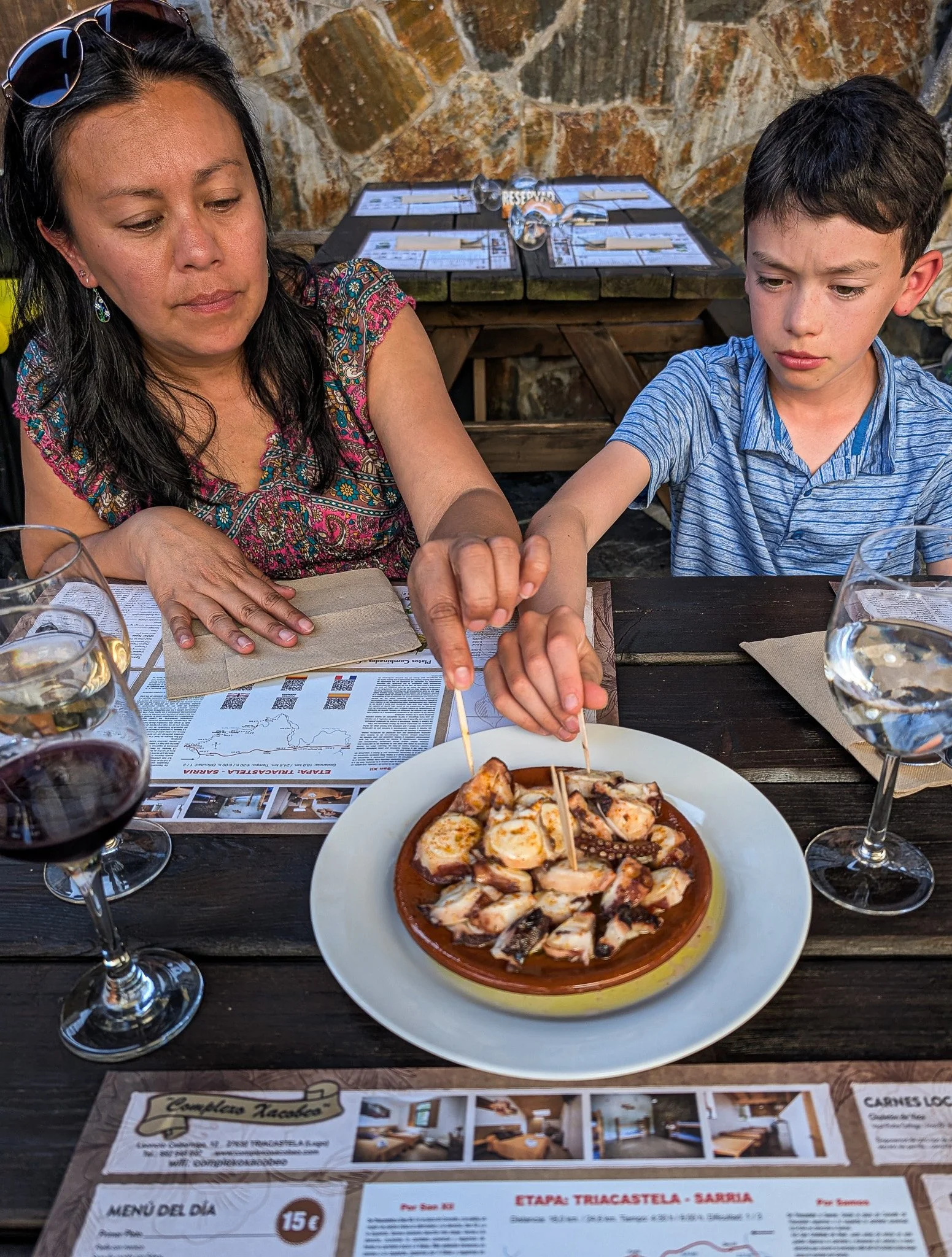
We were determined to celebrate our first day in Galicia with pulpo, ideally at the same place. We had no idea how lucky we were back in 2014 – we learned that the outdoor market was held only one day each month. We found a fancier (and more expensive) option in town to commemorate the experience.
We stayed at Albergue Atrio, a rustic place with the best tintos de verano of the trip. We were lucky to get a dorm room with just three beds, and slept soundly our first night in Galicia.
Day 7 - Triacastela to Sarriá
19 km / +1,262 / -1,966 / 5:45
We were prepared for this to be our last quiet day, since more pilgrims walk the final 100 km of the Camino from Sarriá to Santiago than any other portion. Why? It’s the minimum distance required to qualify for a Compostela, a certificate of completion.
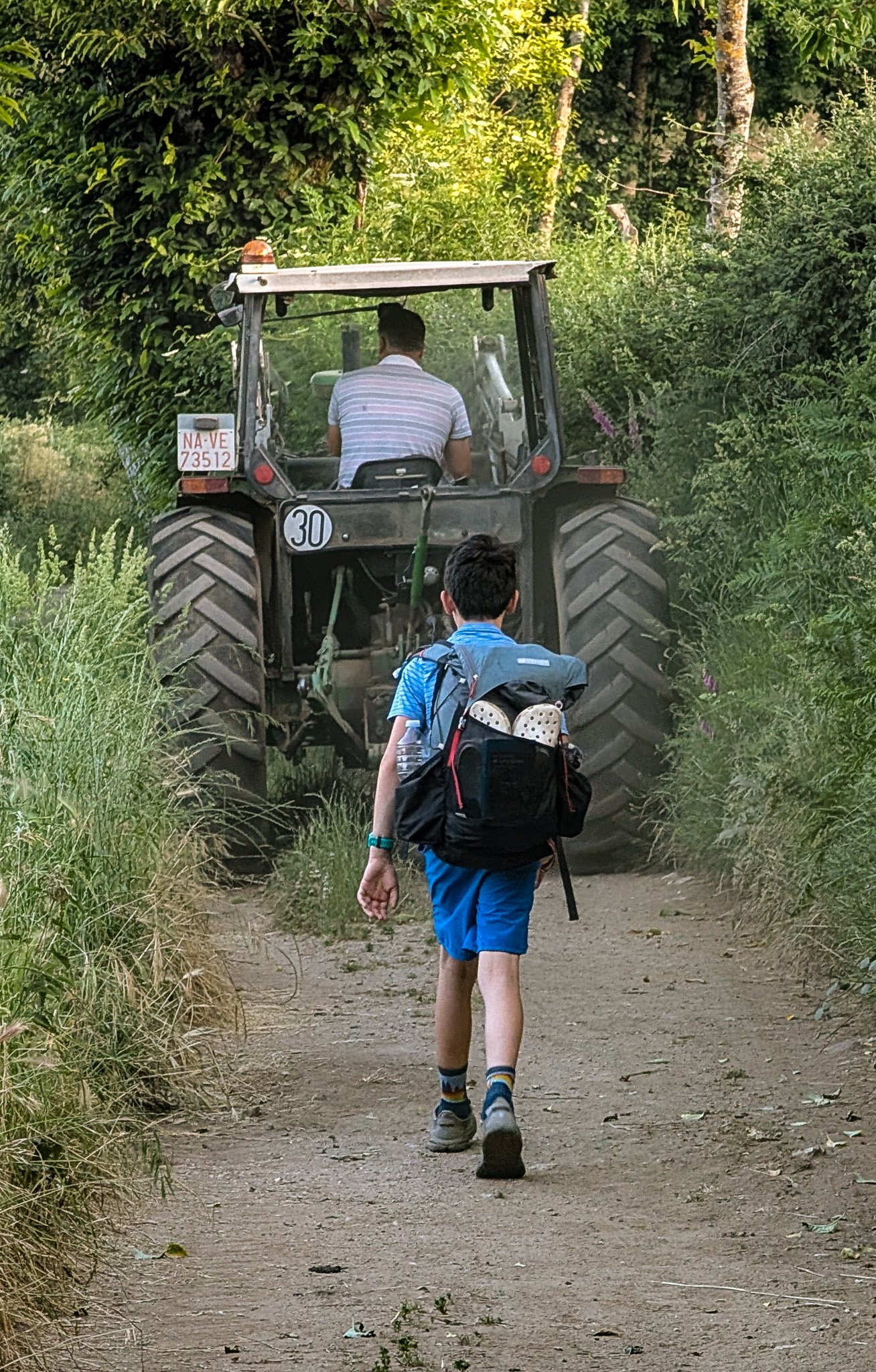
Morning rush hour in Galicia
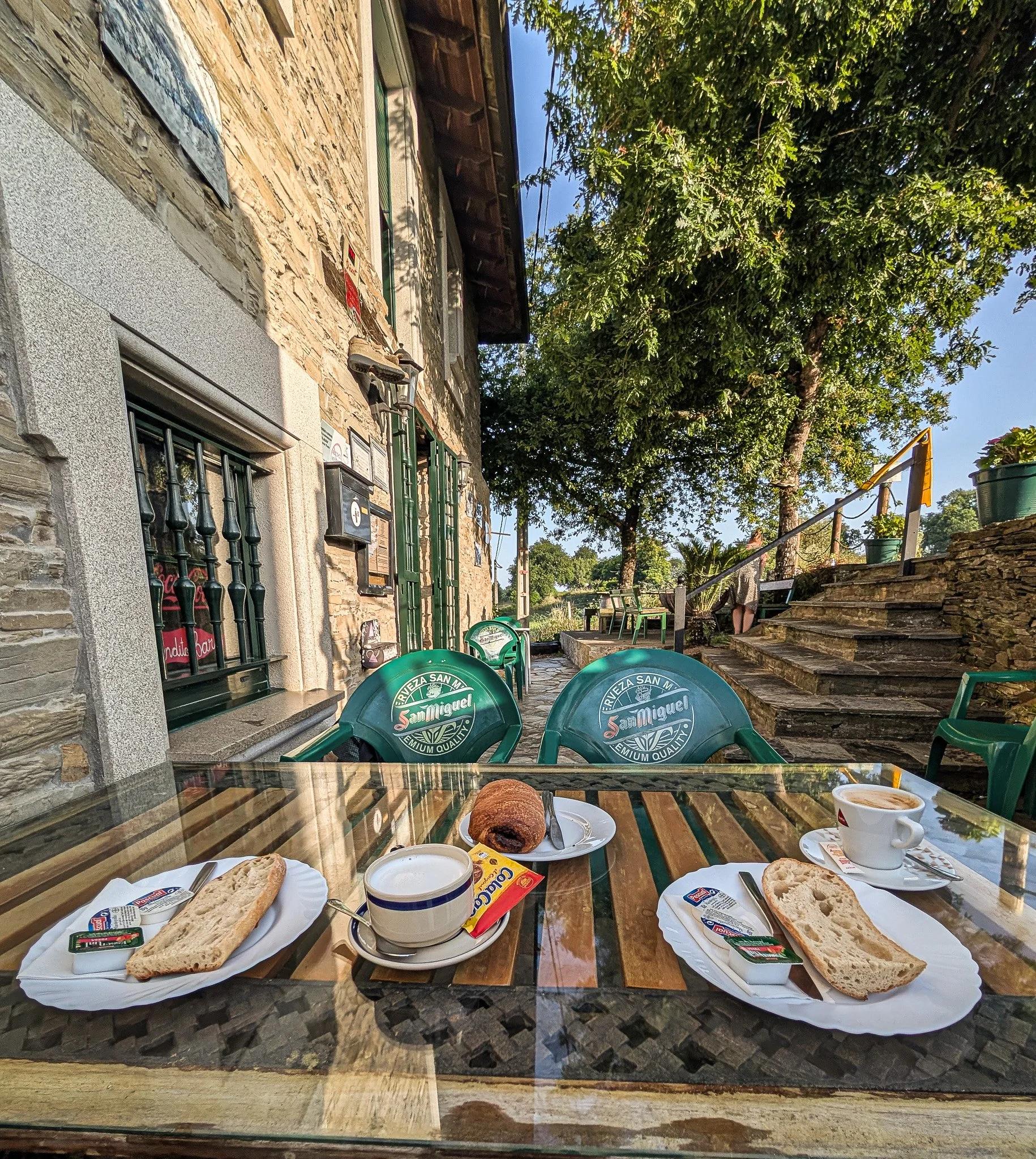
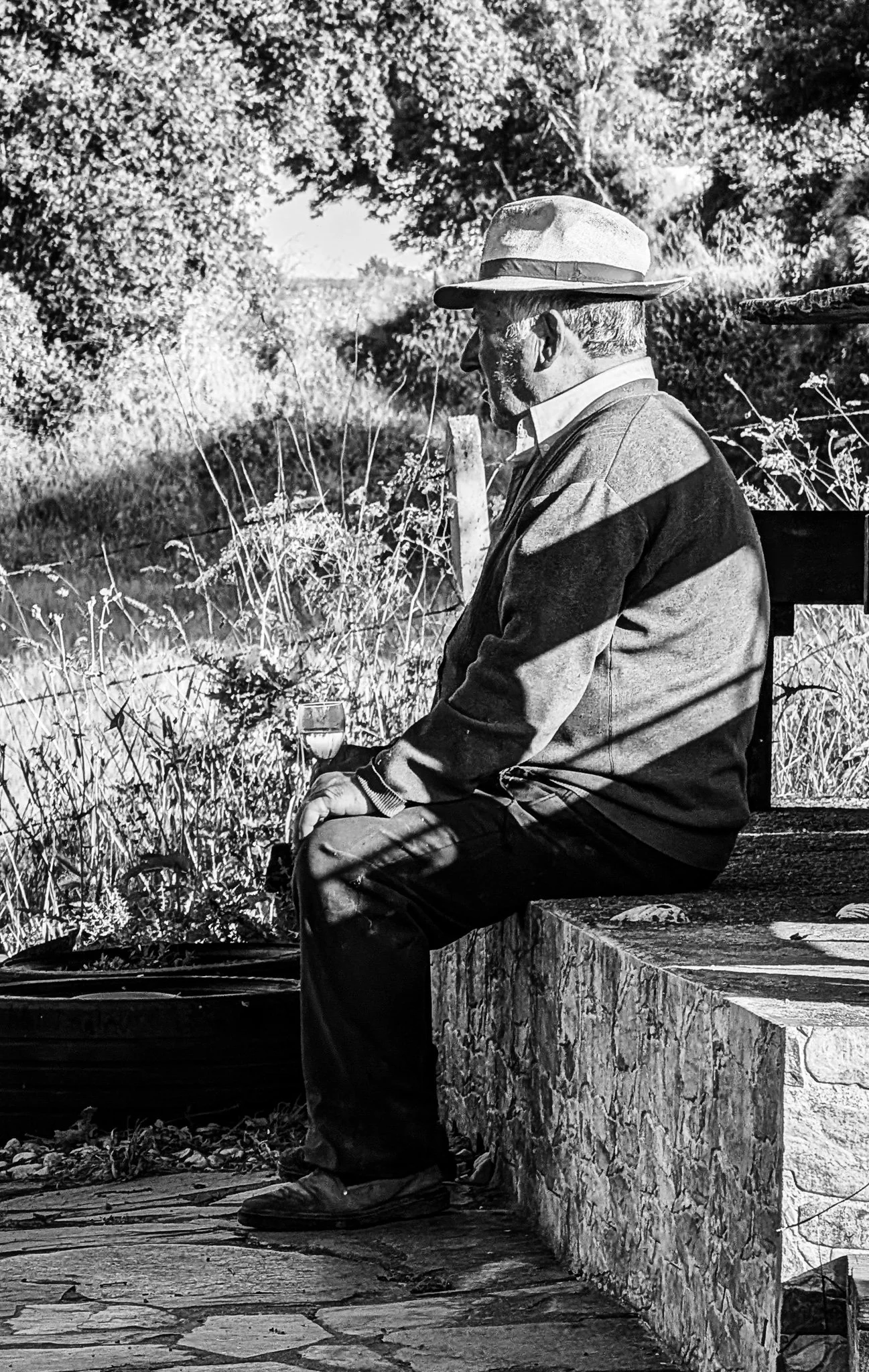
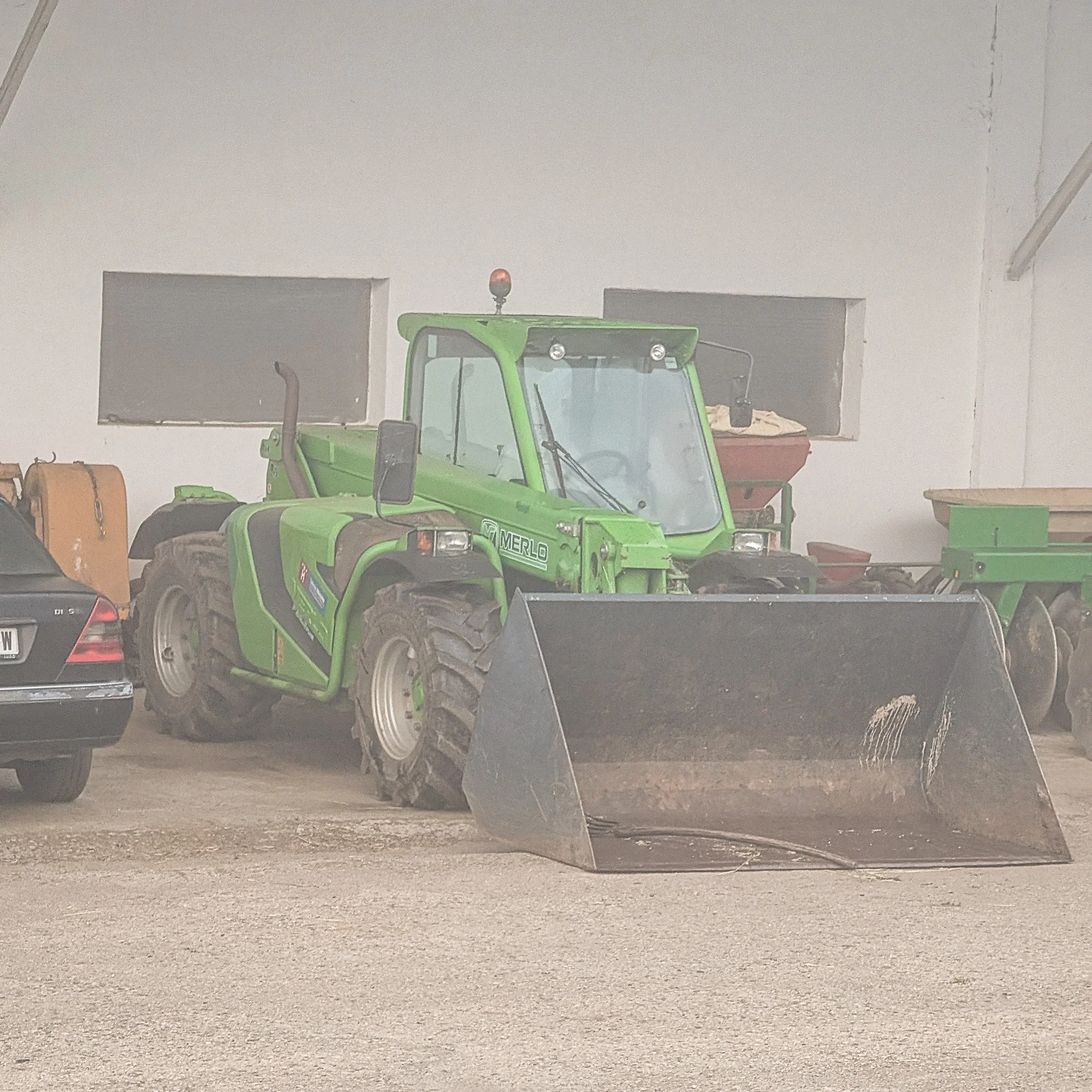
We relished the tranquility. We saw hardly anyone except farmers, and few vehicles except tractors. We stopped for breakfast on the patio at Bar Casa do Franco, which was empty except for a farmer relaxing with his morning sherry. As we lingered, he paid his bill and headed off in his tractor. Another world.
Sarriá was nicer than I remembered, and we enjoyed our time there. We certainly ate well. The huge group of students reappeared but didn’t stay at our albergue, gracias a Dios.
Day 8 - Sarriá to Portomarín
23 km / +1,482’ / -1,702’ / 6:06
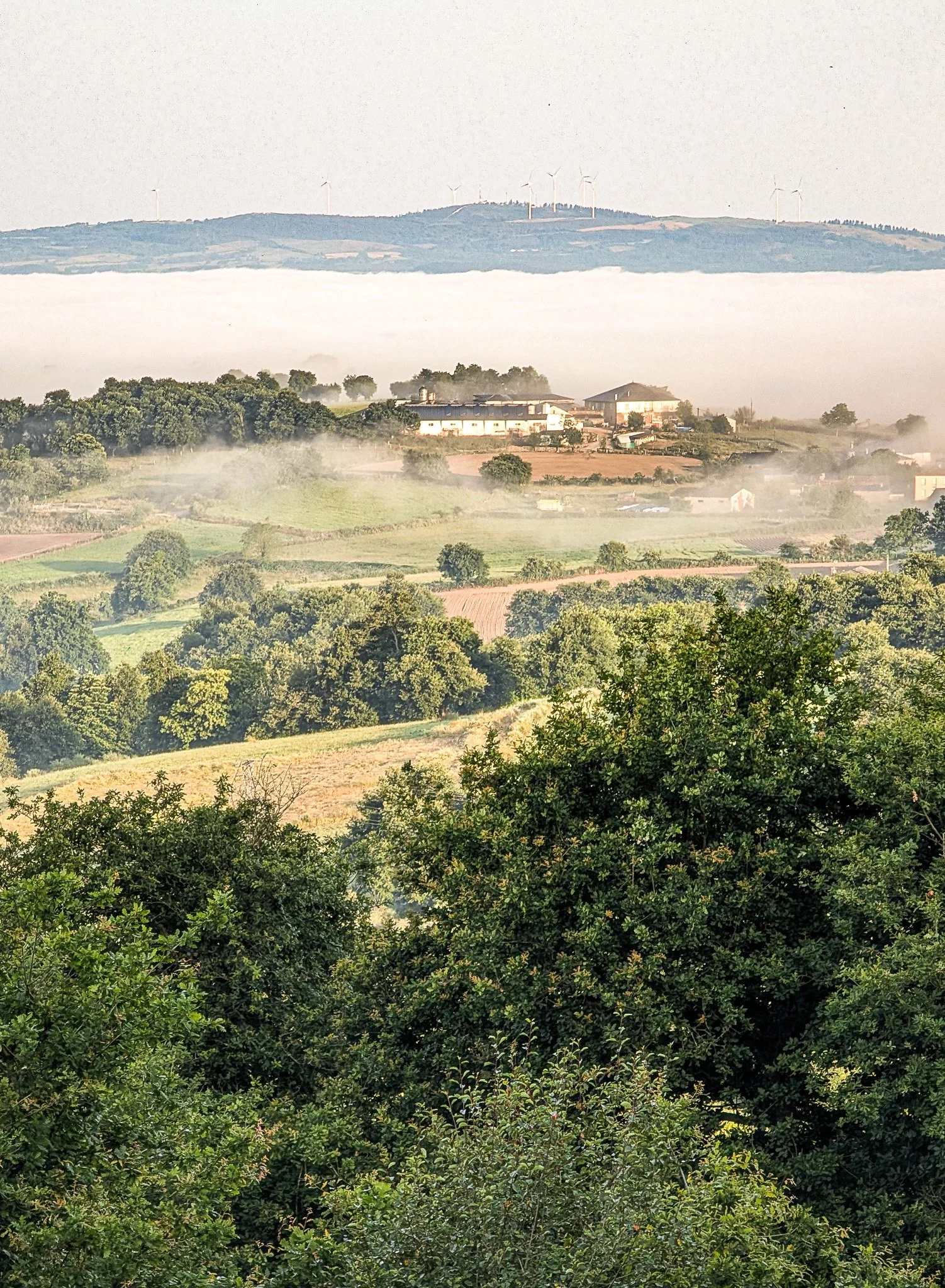
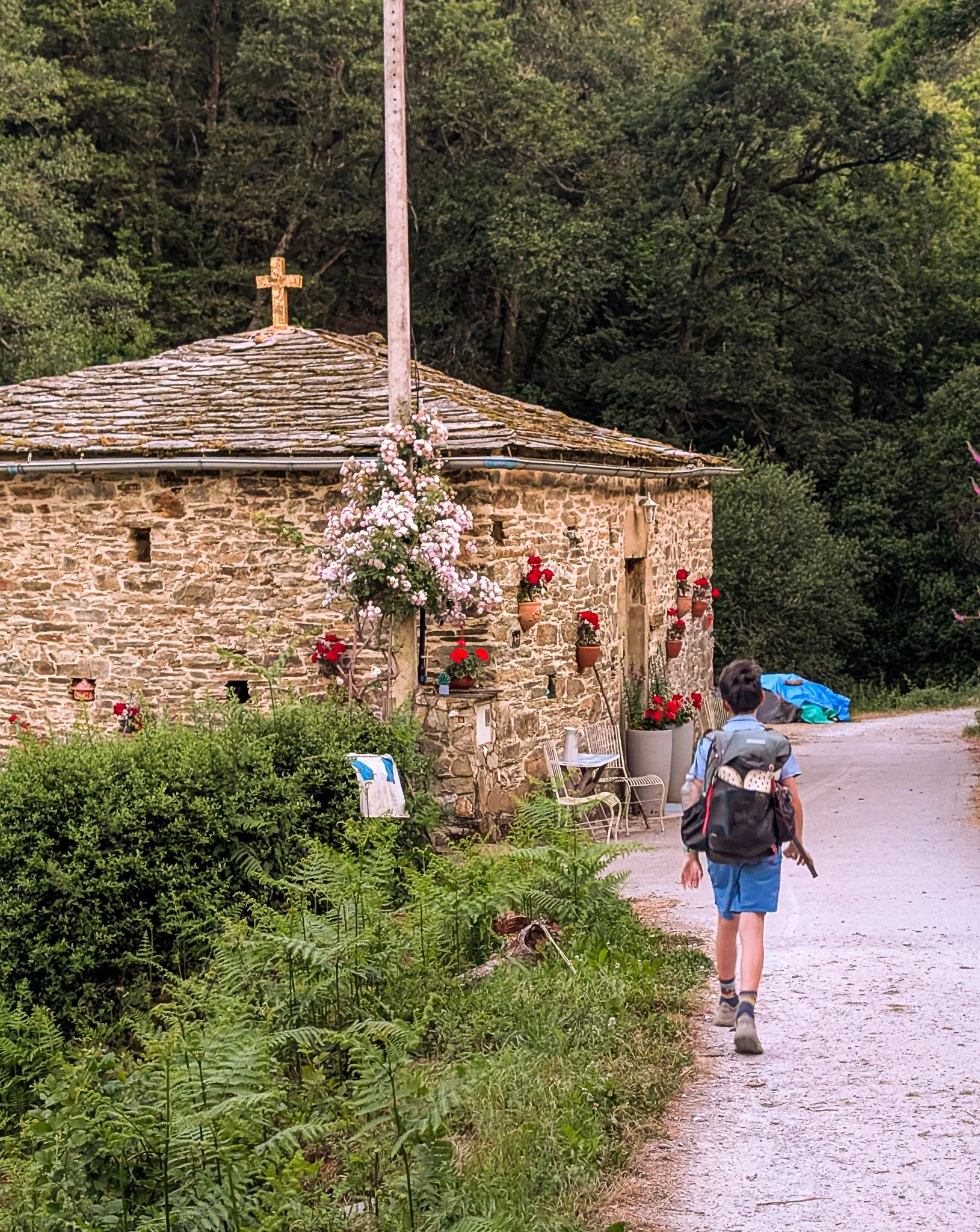
An early departure from Sarriá. We quickly found ourselves back in quiet pastoral landscapes. It wasn’t actually that crowded – we saw more livestock than pilgrims.
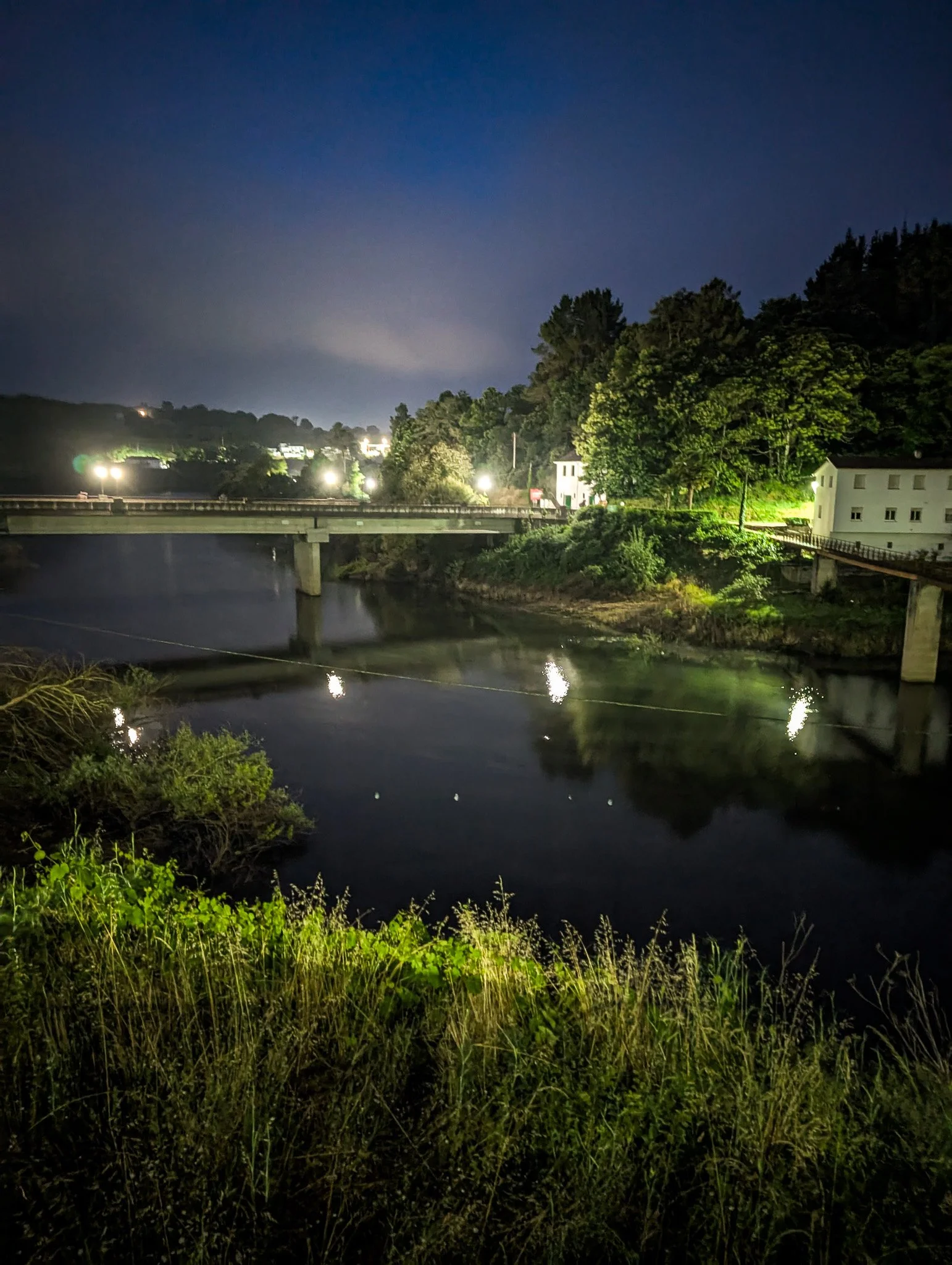
We crossed the river into Portomarín in time for lunch. Weary pilgrims struggling up the steep staircase from the river watched in disbelief as Matthew ran laps on it. There was just no wearing him out.
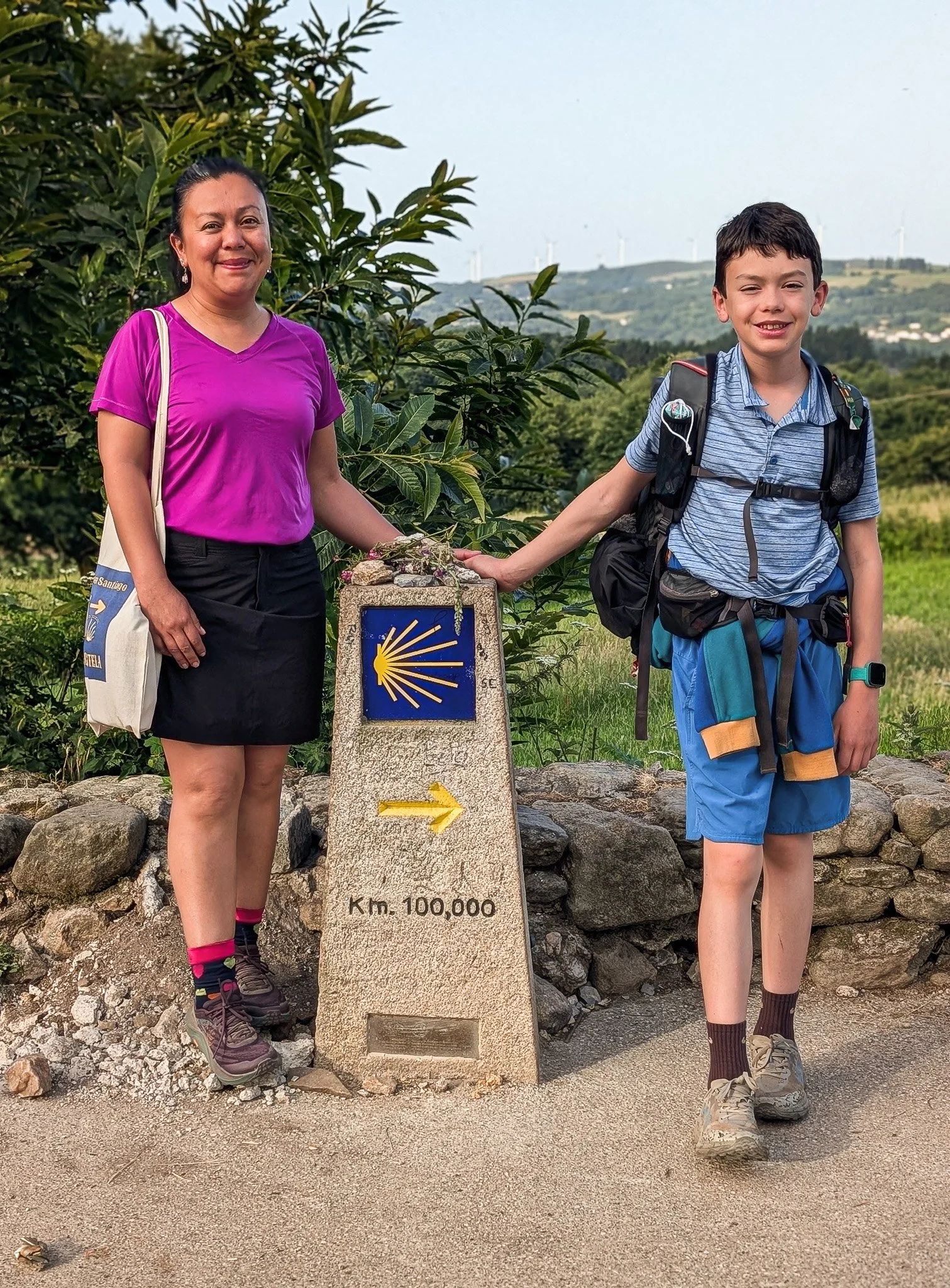
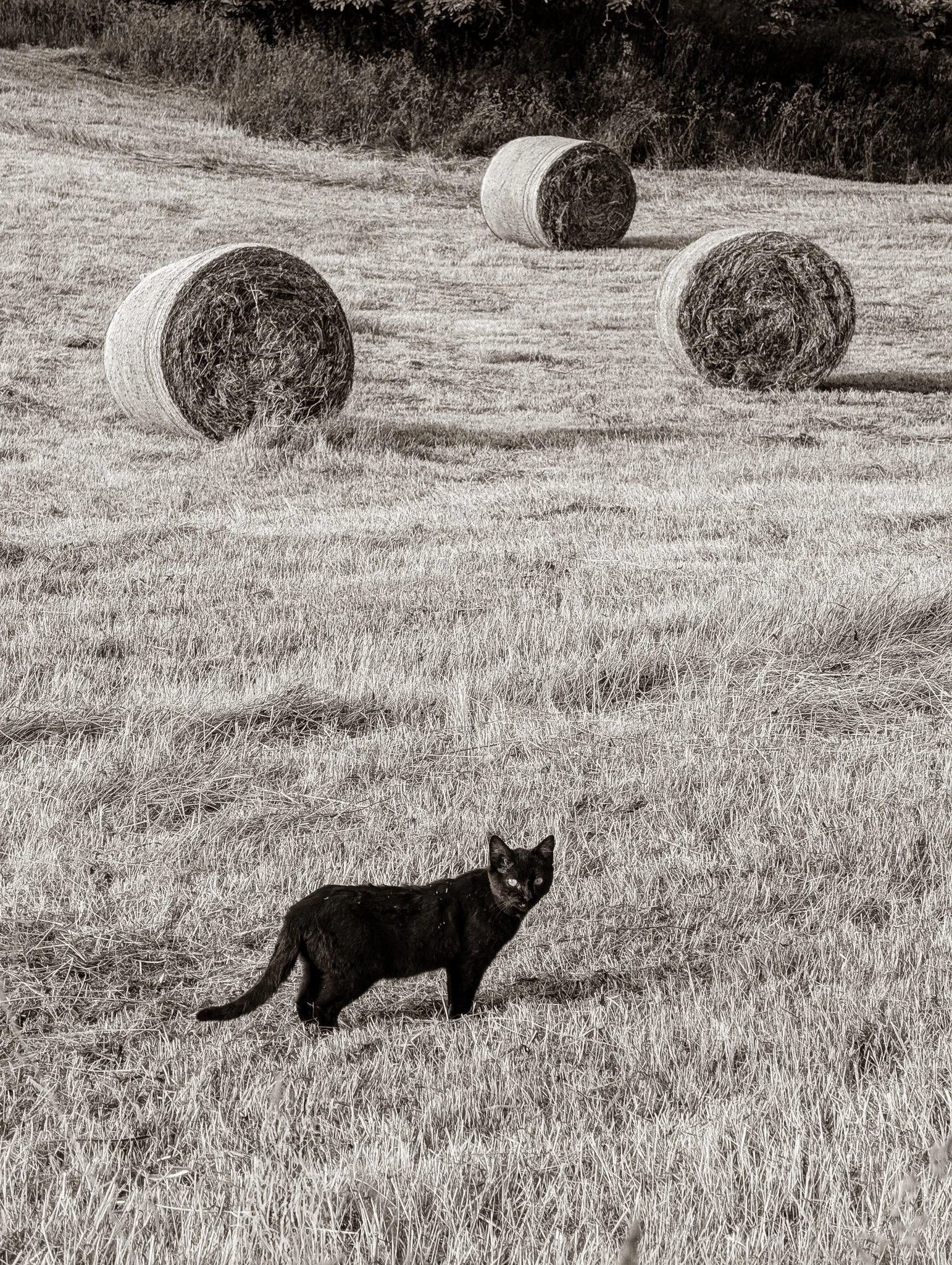
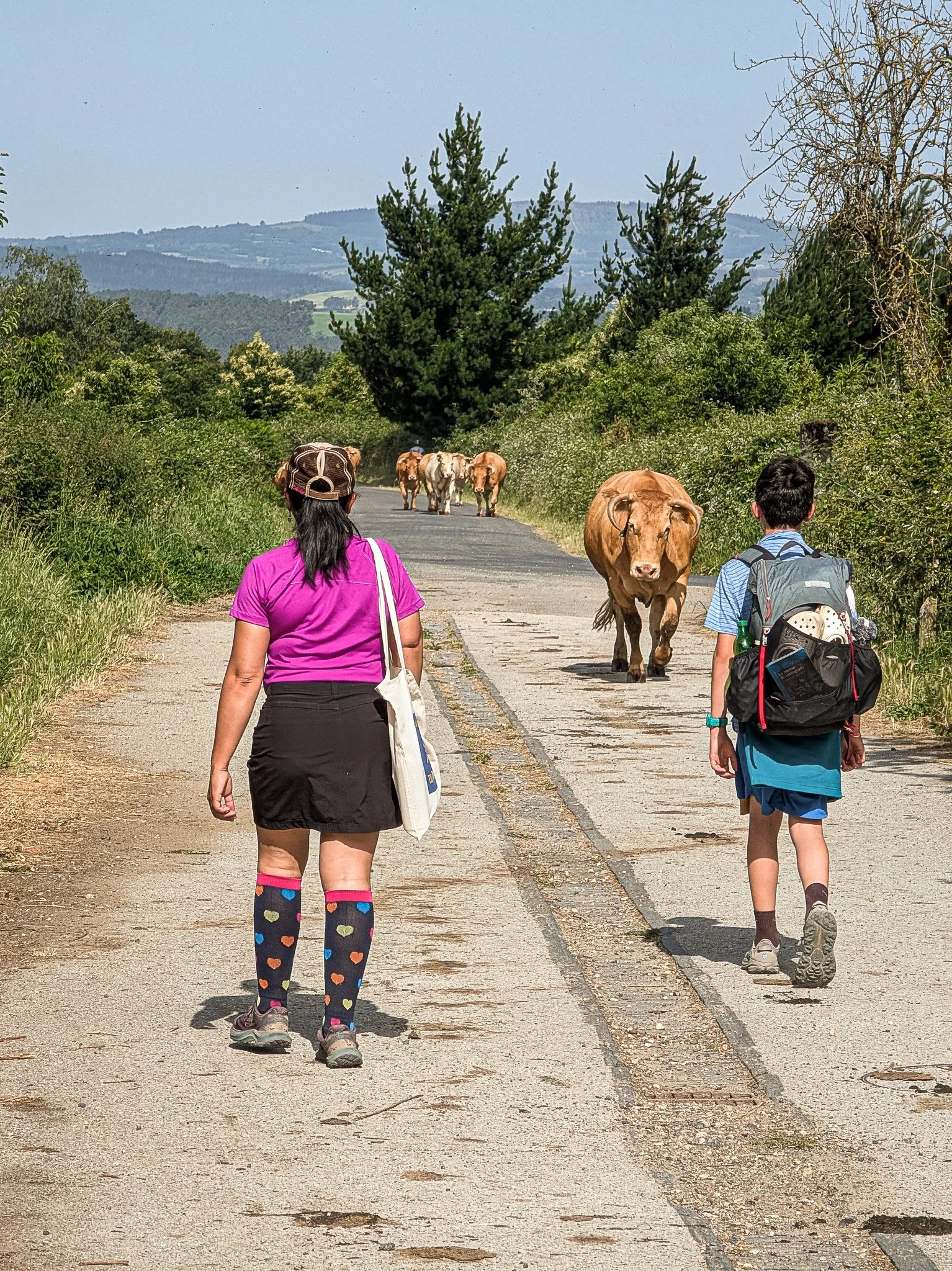
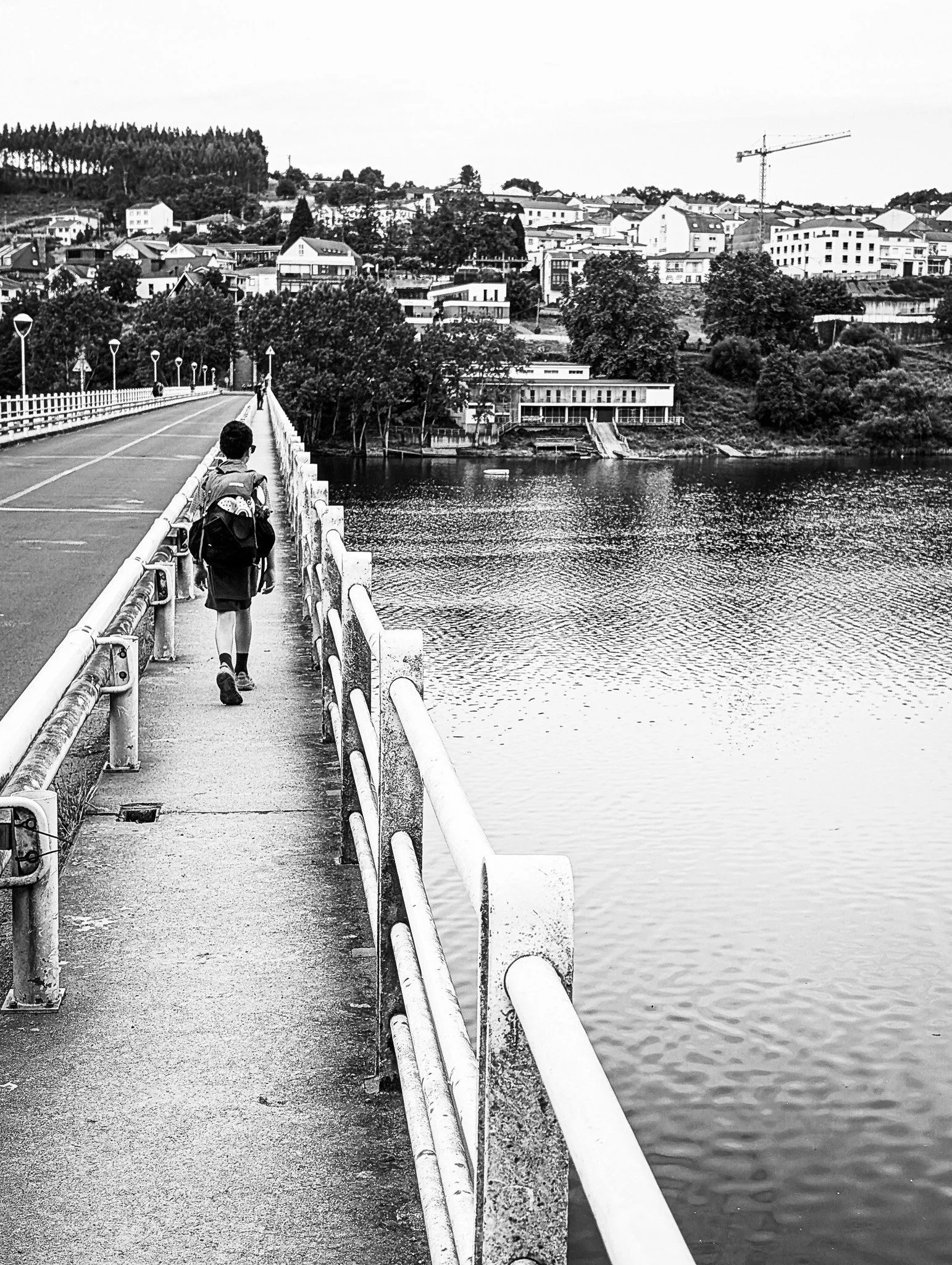
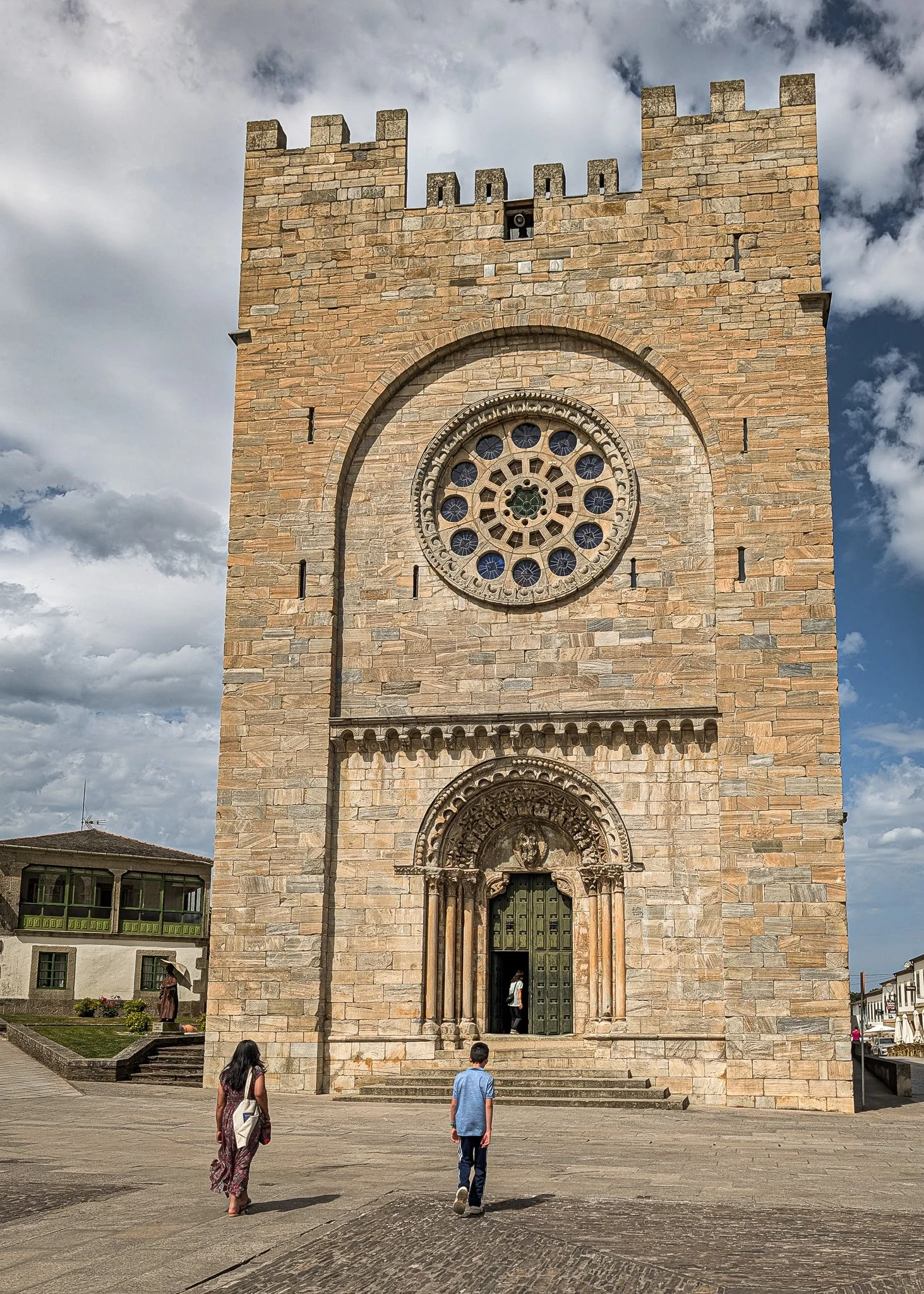

We toured the 13th century Church of San Xoán, a cool refuge from the afternoon heat. Previously located in the valley below, the fortress-like structure was moved stone by stone and rebuilt in the current location before the valley was flooded for a reservoir.
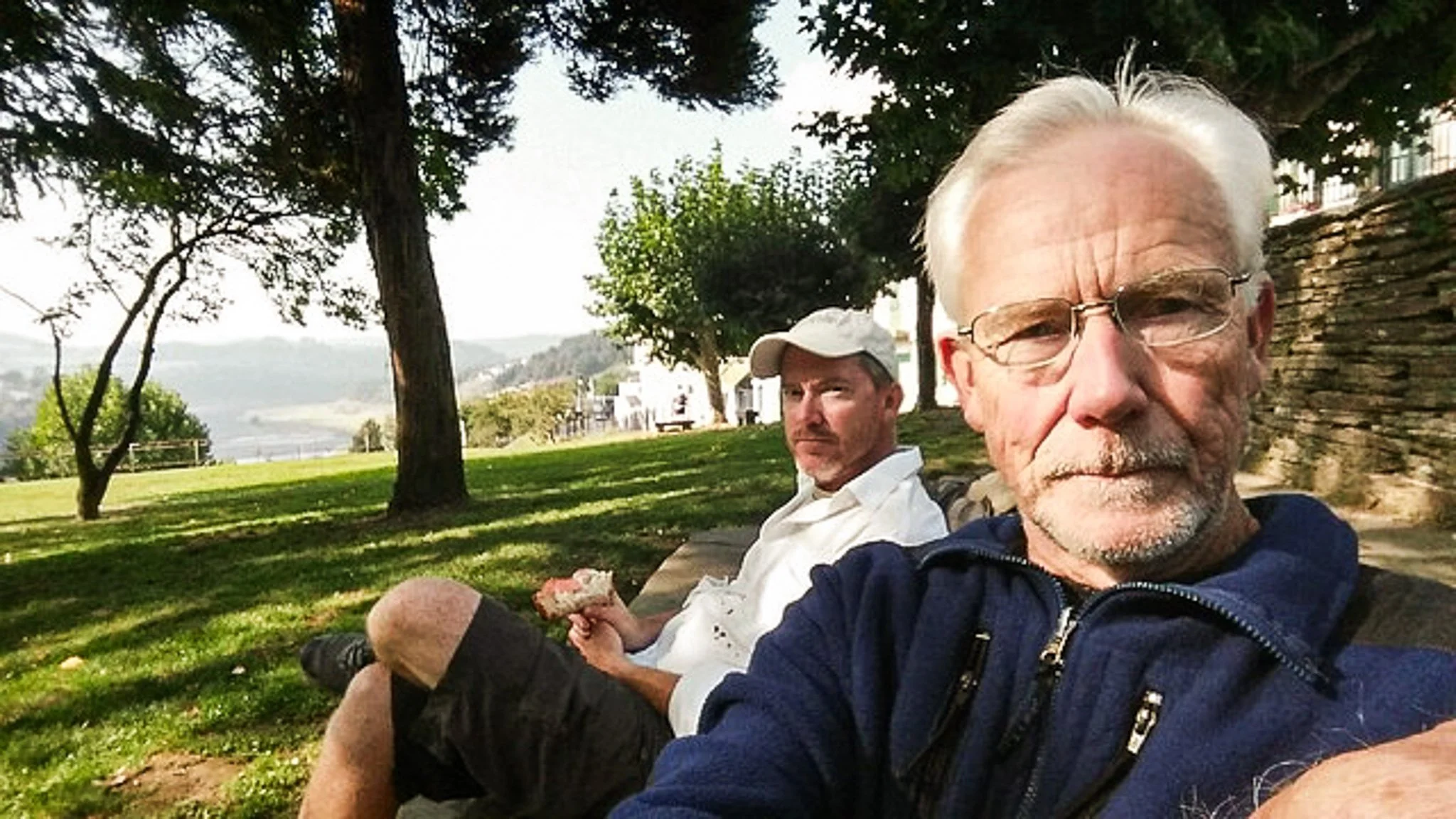
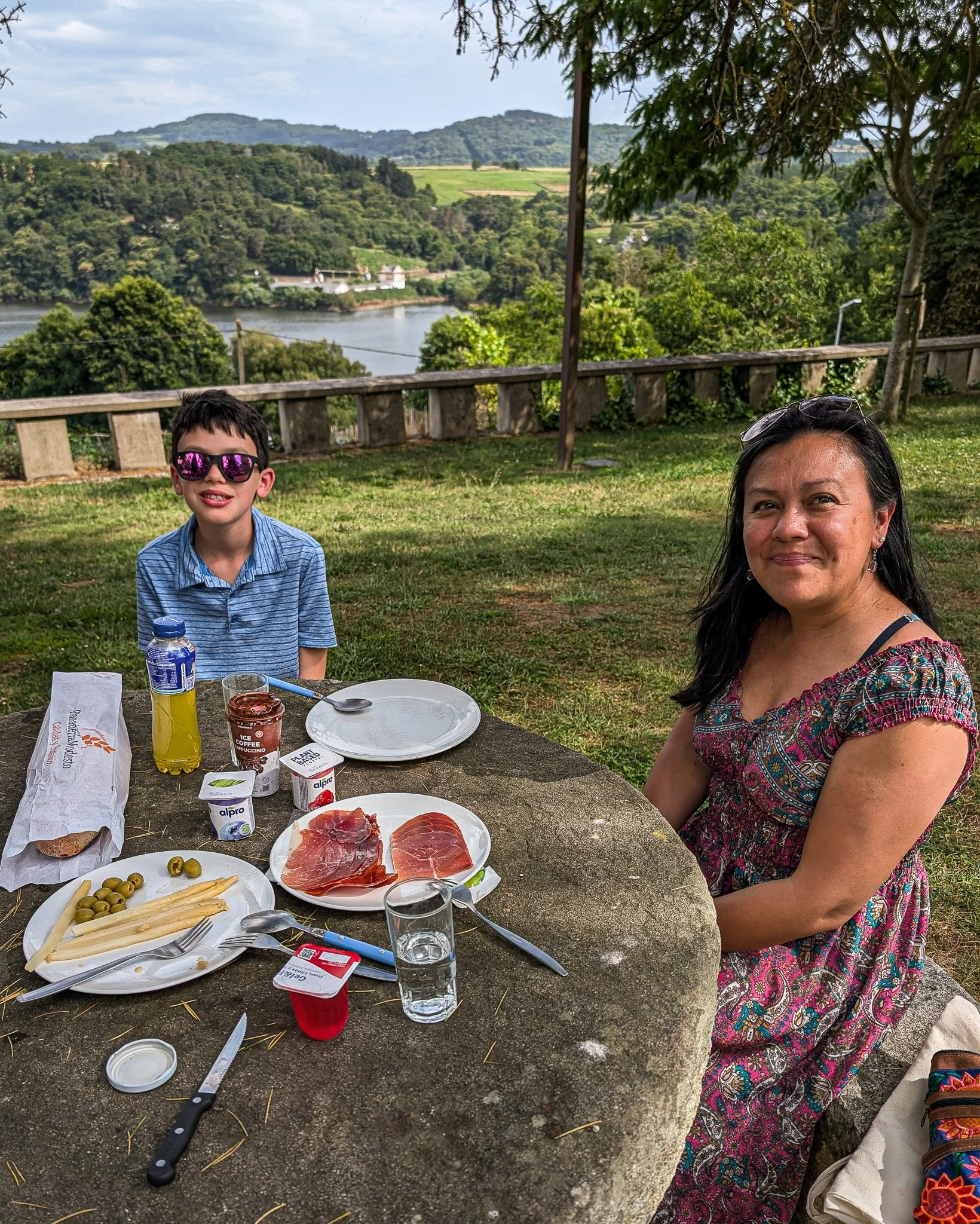
For dinner we had a picnic in the same park where Dad and I had lunched in 10 years prior, with the same basic food groups: freshly sliced ham, fresh bread, and yogurt.
Day 9 - Portomarín to San Xulián do Camiño
30 km / +2,091’ / -1,775’ / 7:40
Pre-dawn start. Standard issue fog-filled Galician morning. We were beginning to make a real effort to stay off the major stage points now that we were with the final-100-km crowd. Our target was a rustic albergue in San Xulián.
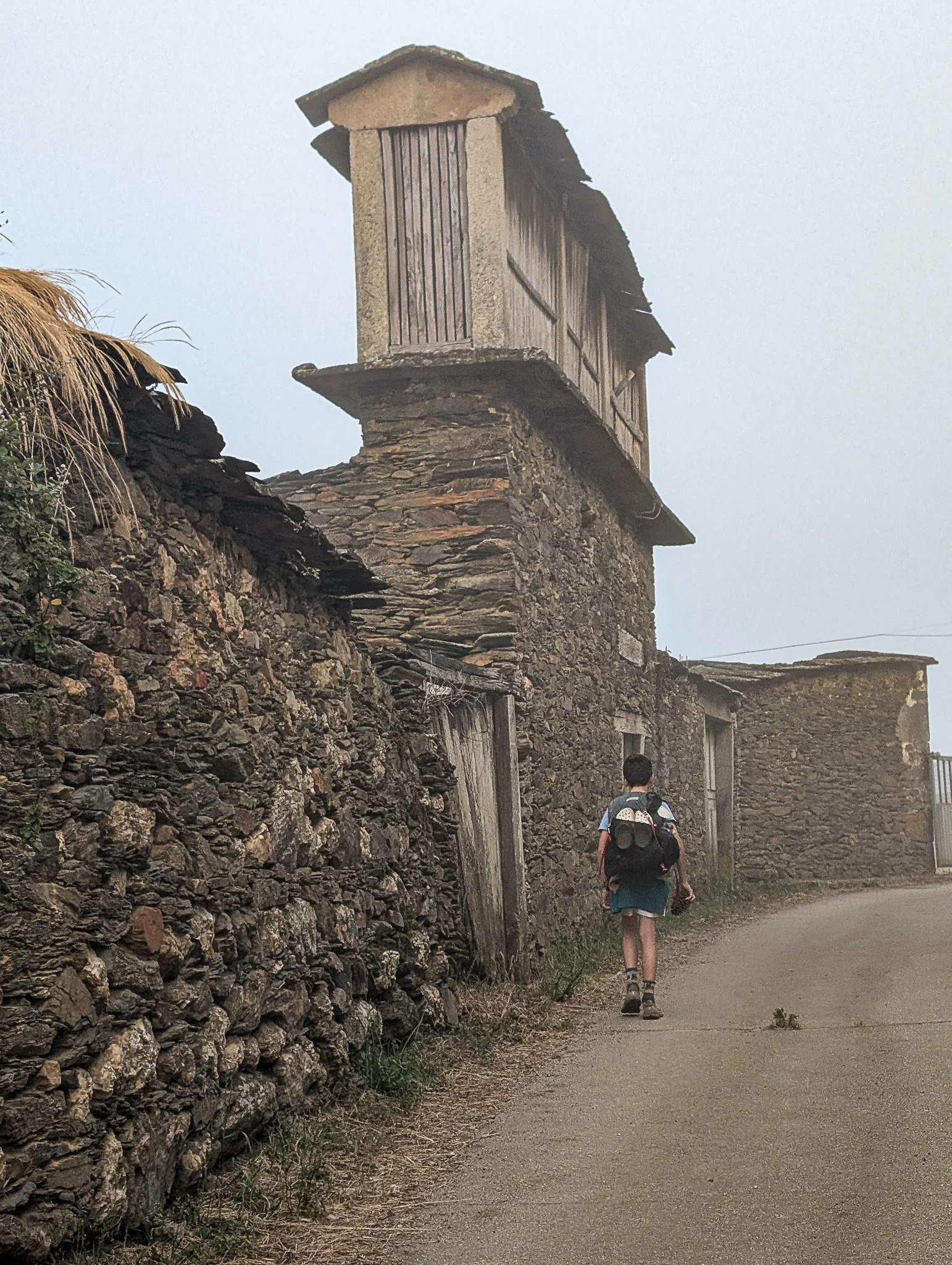
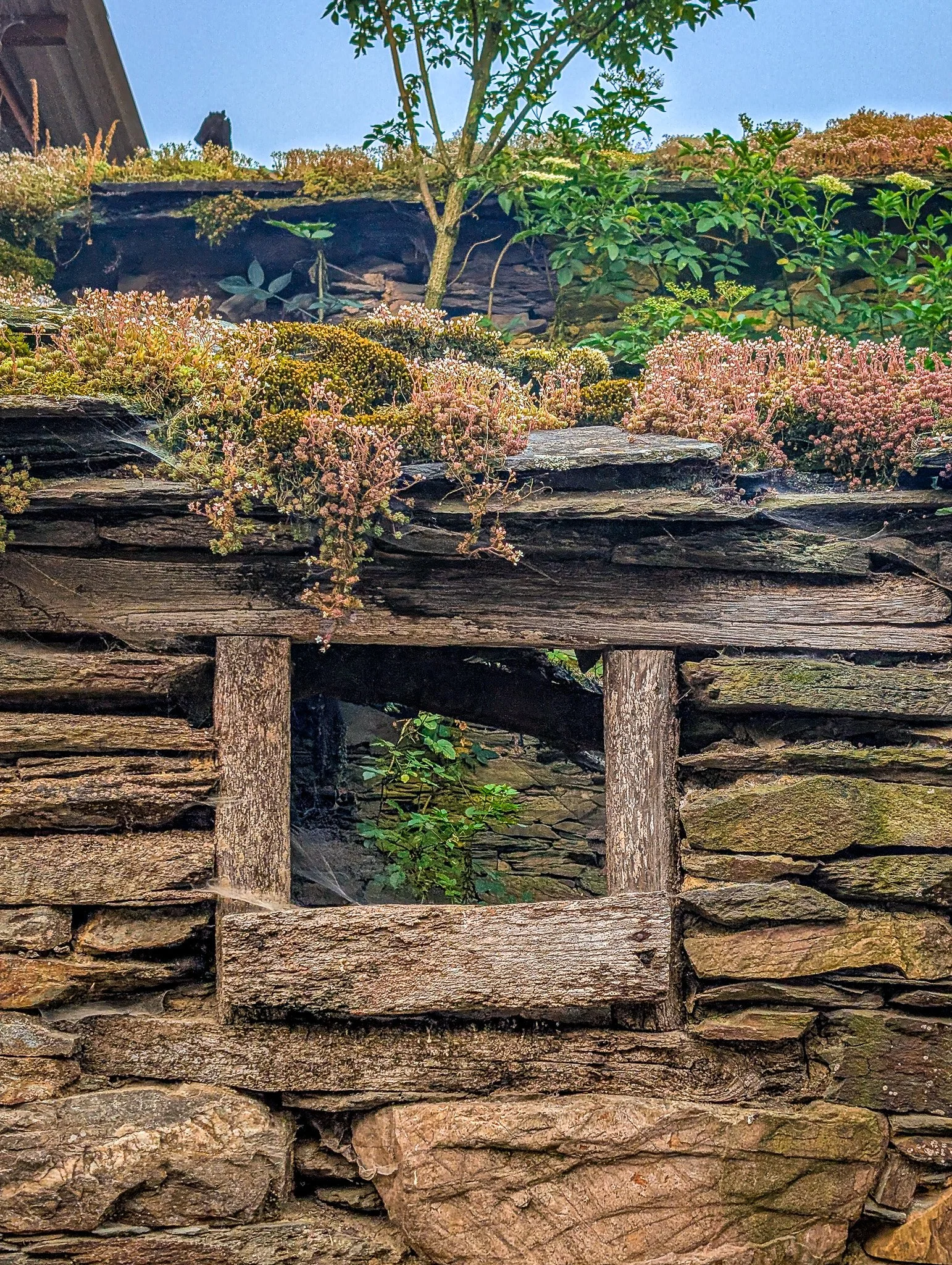
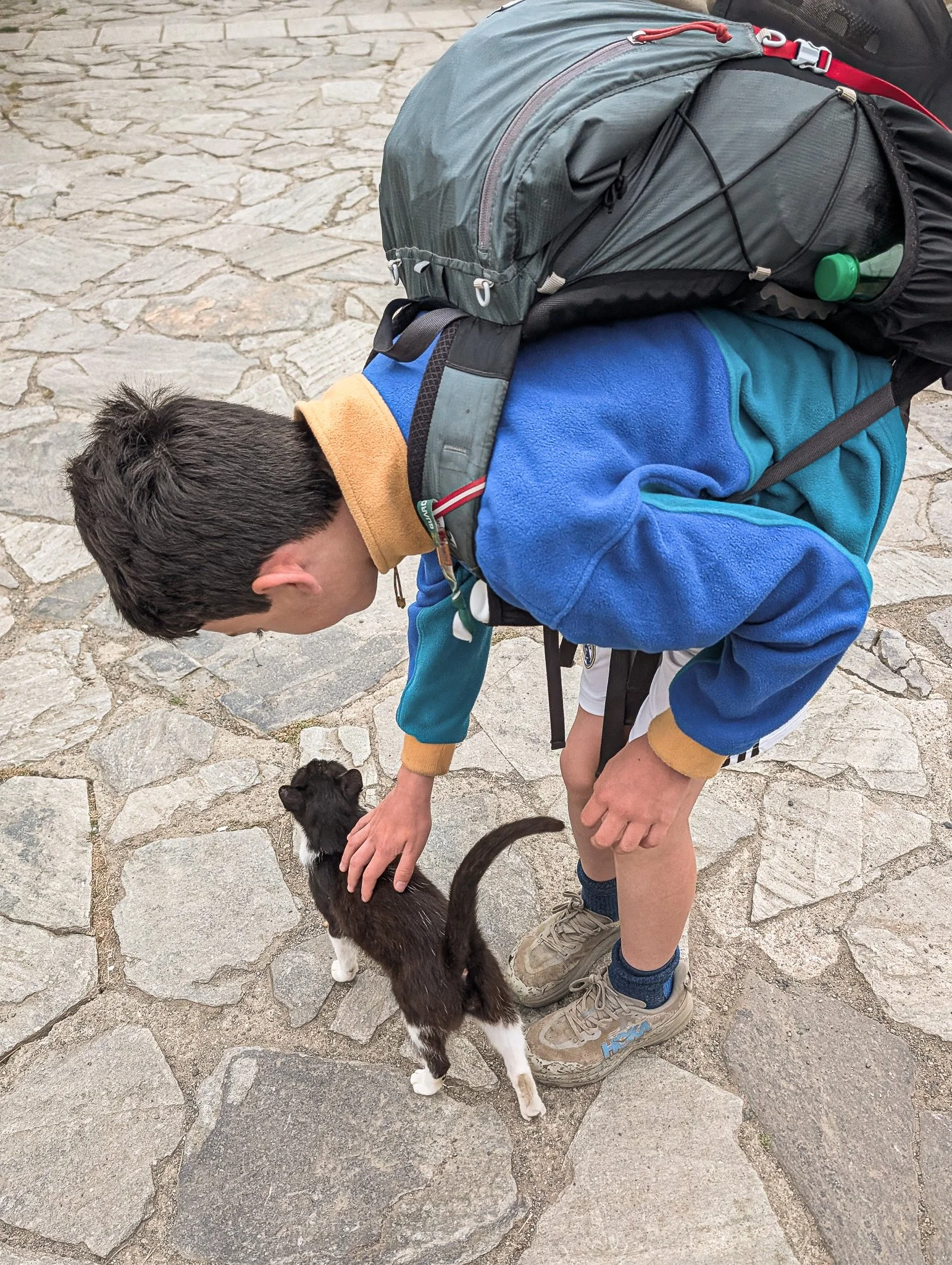
We passed lots of horreos, elevated Galician granaries which reminded us of the Valais region of Switzerland. More tractors. The fog burned off and the morning warmed up. Somehow it never felt busy. In San Xulián we checked in to Albergue O Abrigadoiro, a small place with a friendly feel and good food. Highly recommended.
Carb-loading at Albergue O Abrigadoiro
Day 10 - San Xulián do Camiño to Arzúa
29 Km / +1,965’ / -2,208’ / 9:05
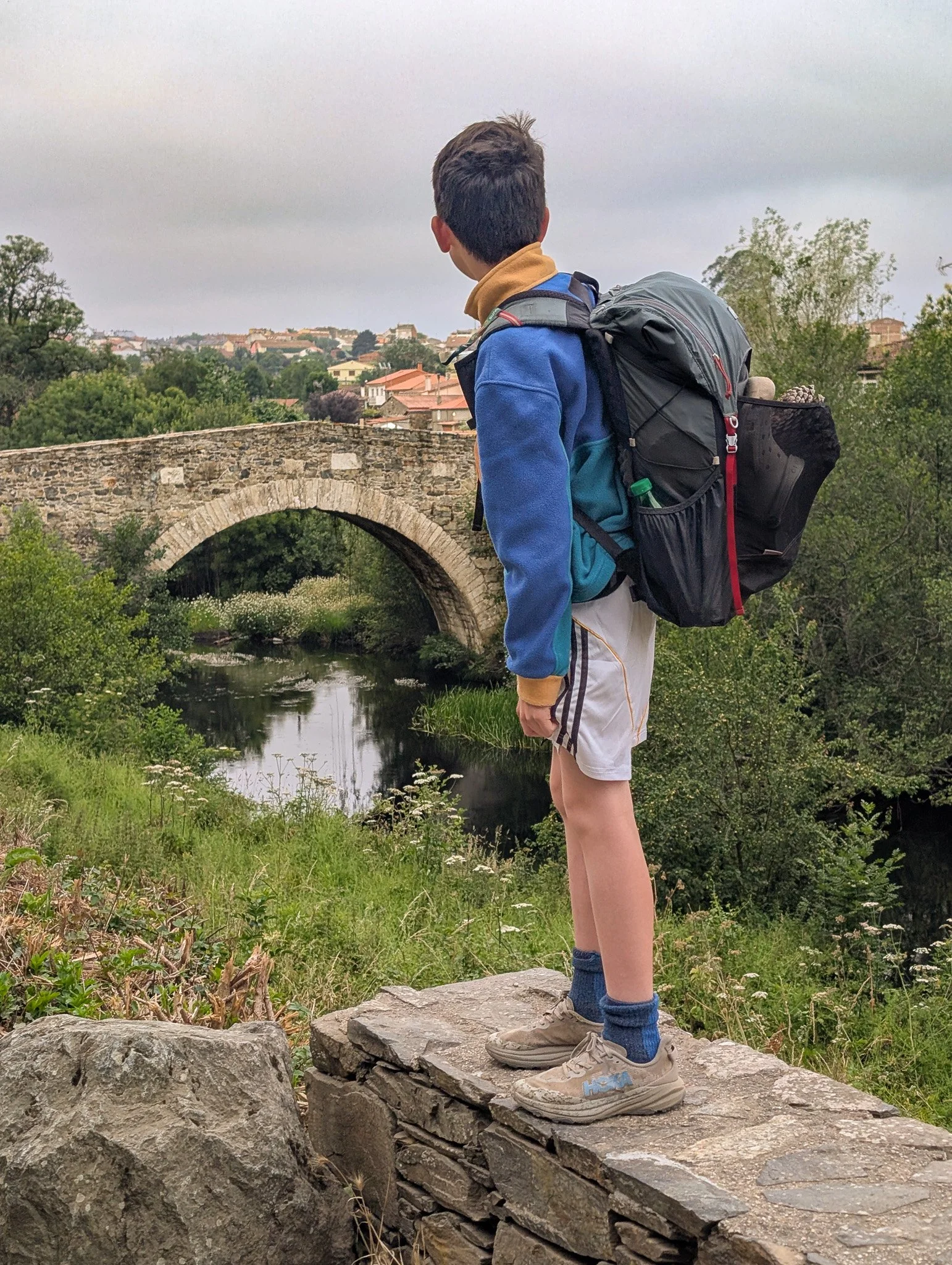
Bridge to Melide
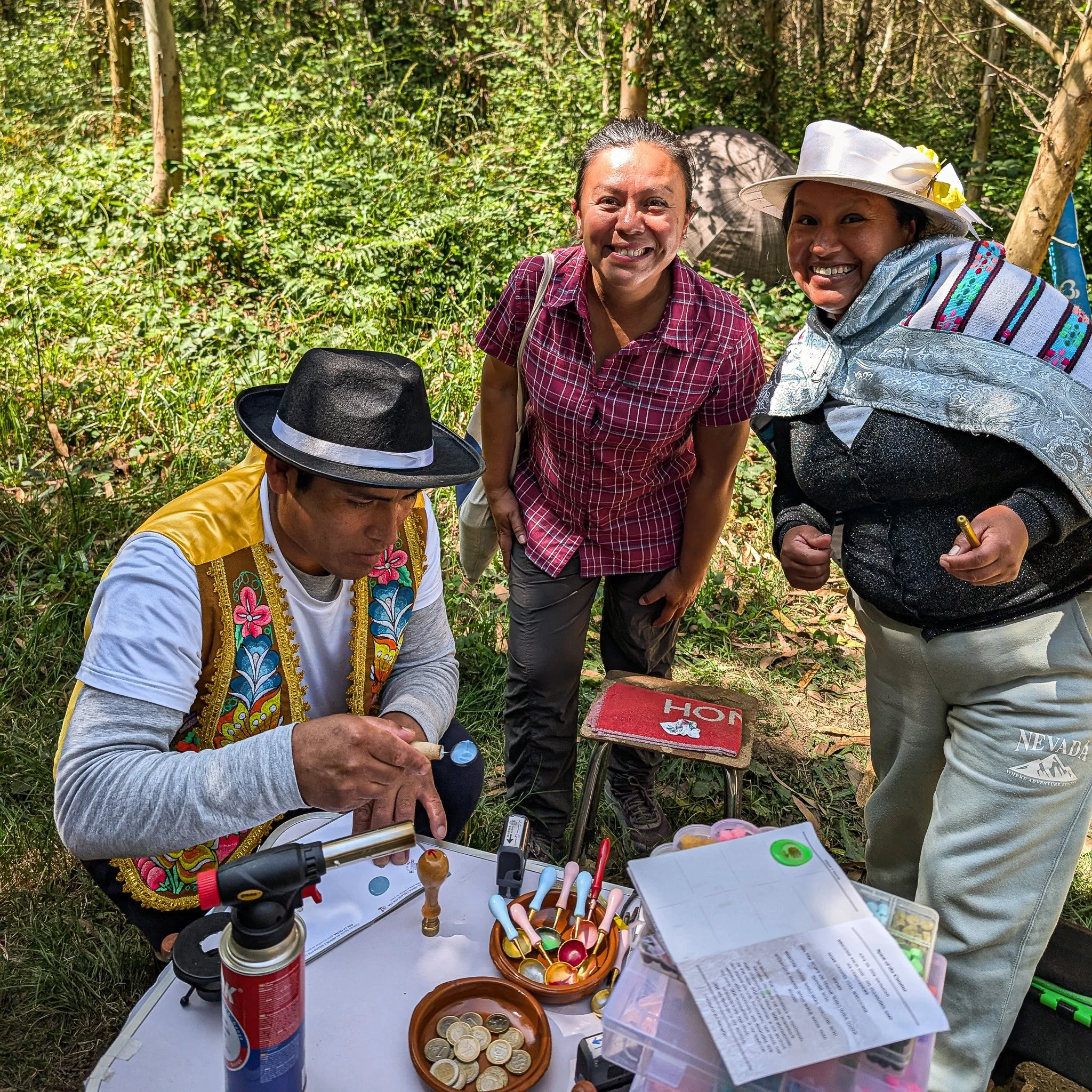
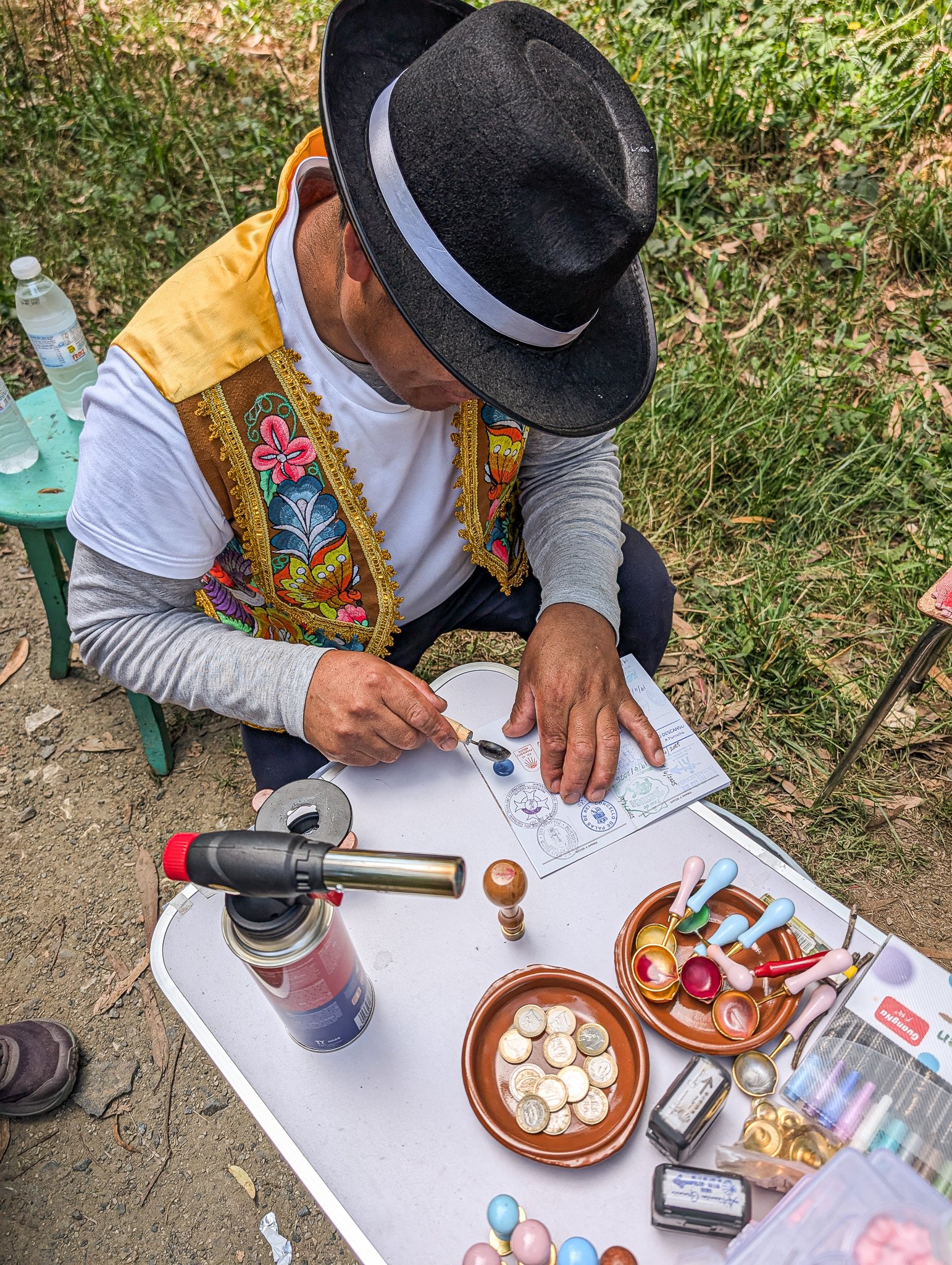
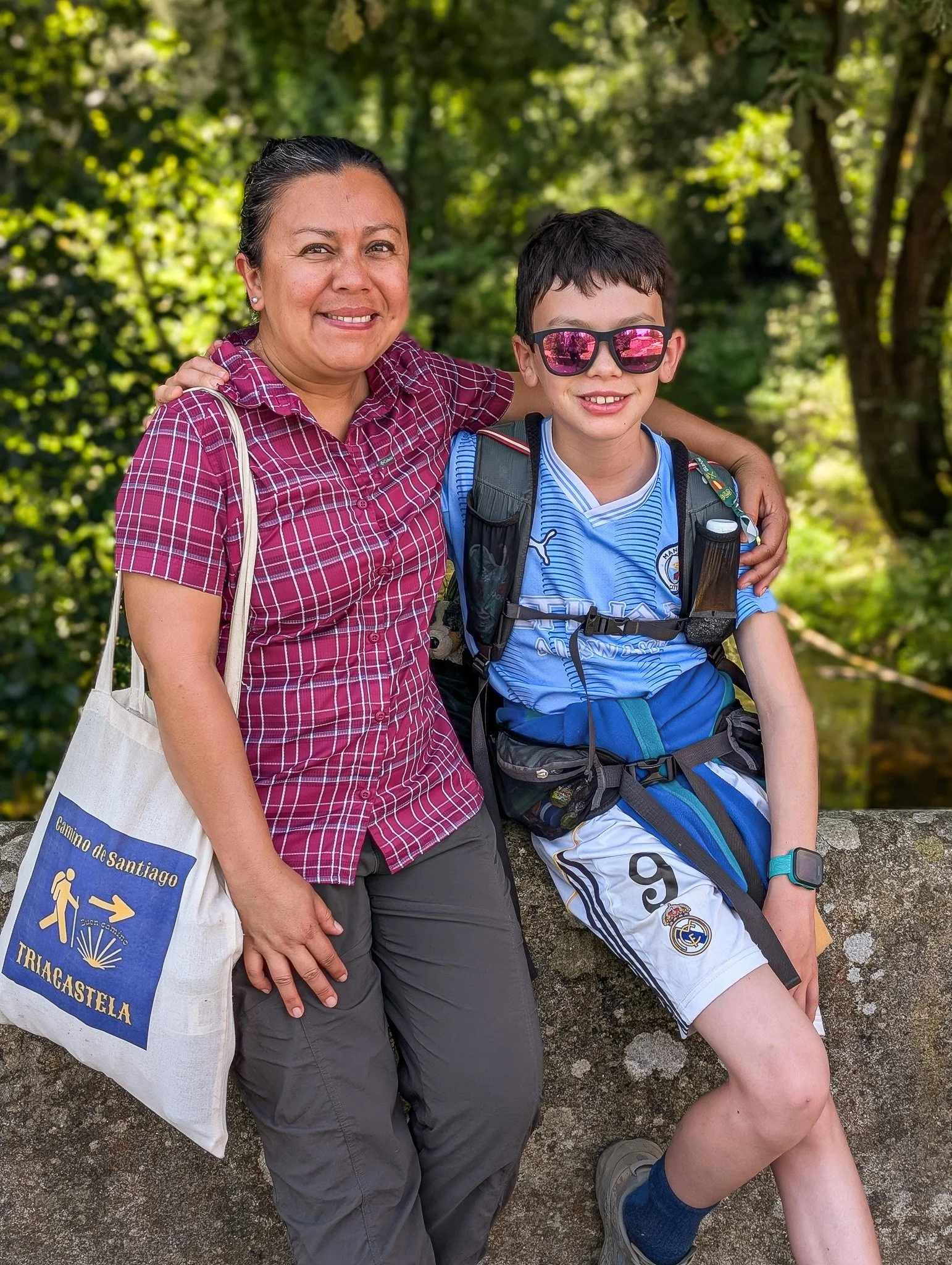
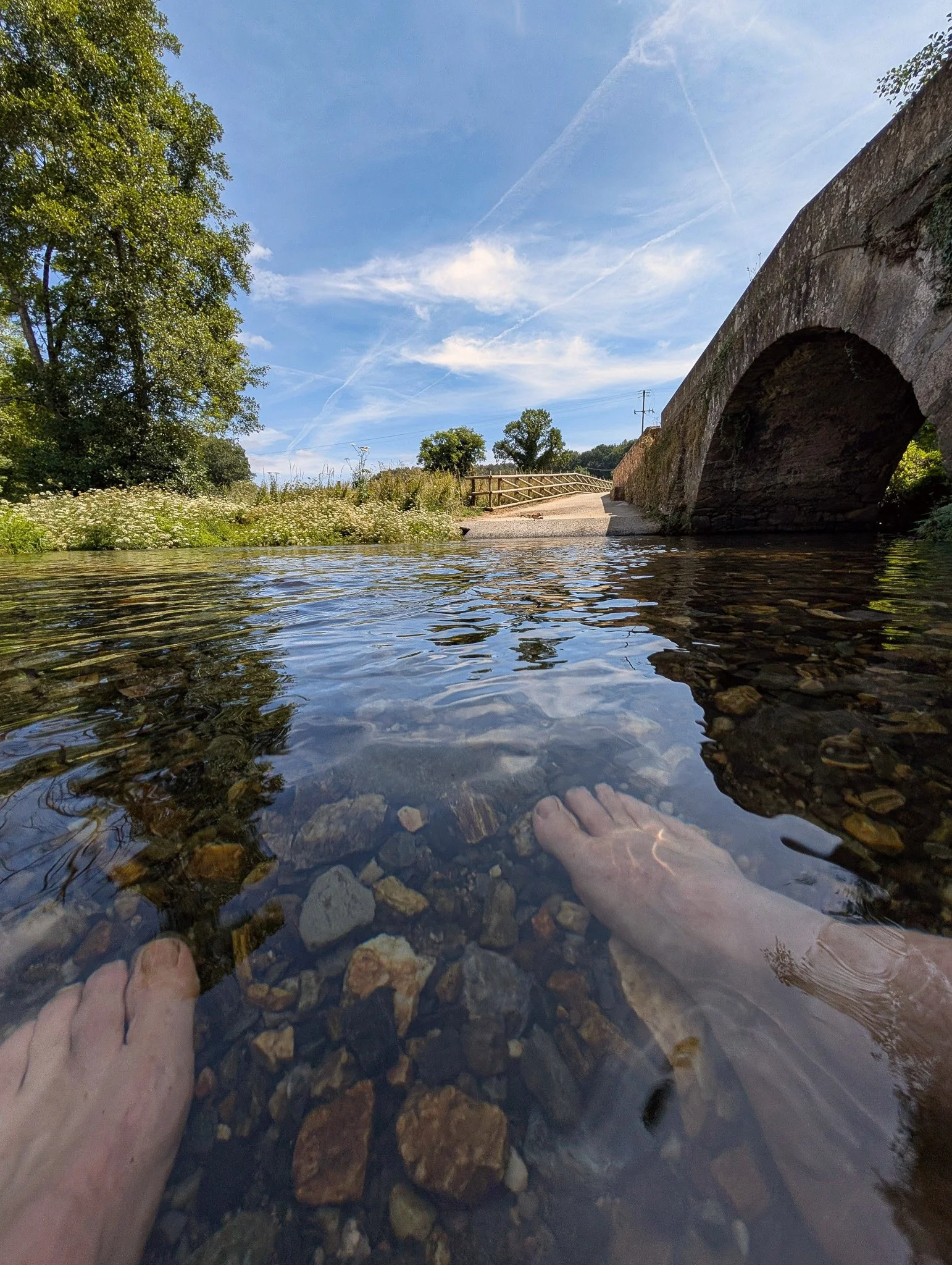
Pre-dawn start again to beat the heat. Another up-and-down day in the Galician hills. Stone bridges. Bolivian wax-stamp vendors. Foot dip in the river at Ribadiso. Quiet walk in the back streets of Arzúa.
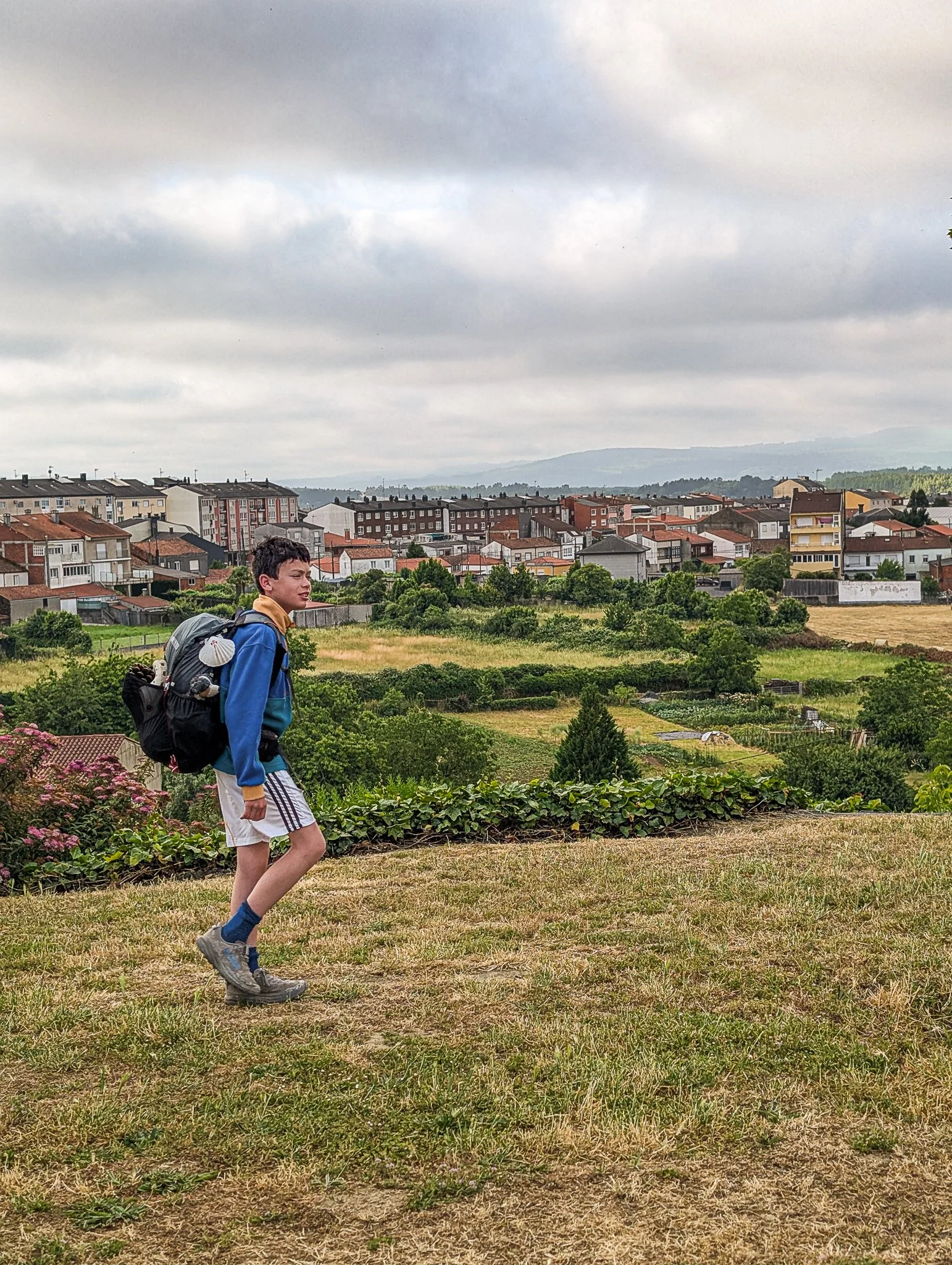
Day 11 - Arzúa to Lavacolla
30 km / +1,849’ / -2,137’ / 7:00
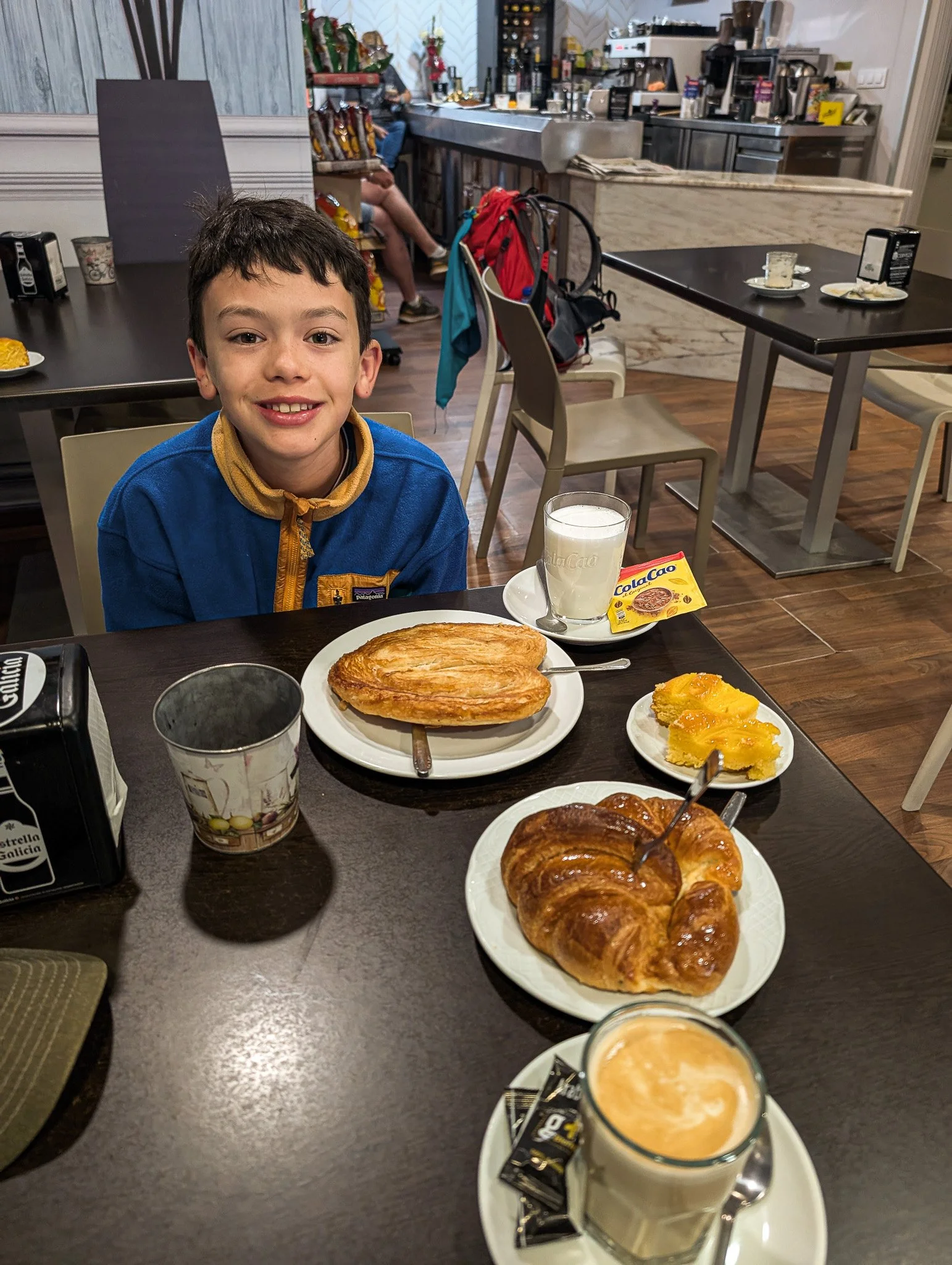
Fog? Check. Tractors? Check. Café con leche and chocolate croissants? Check.
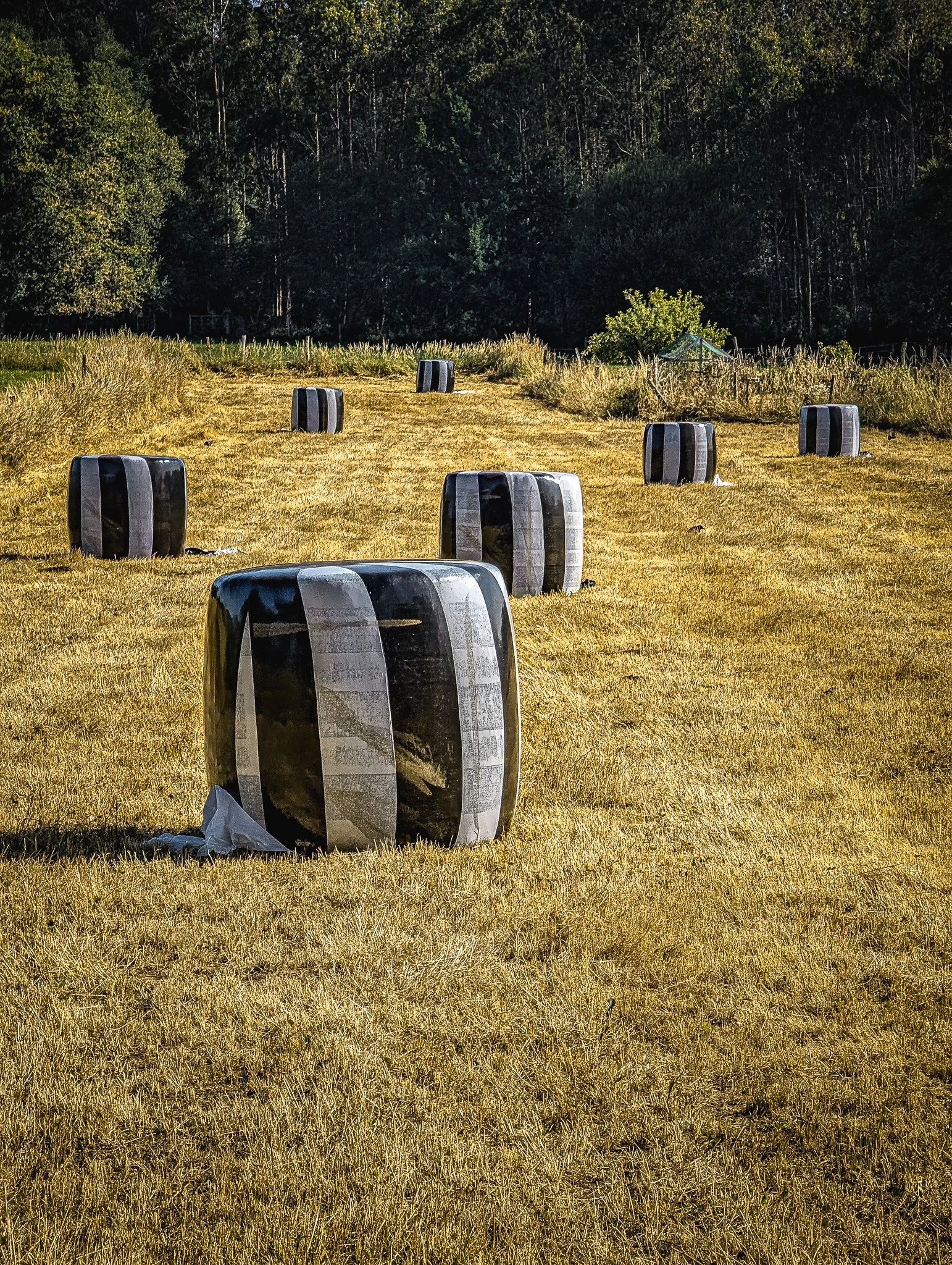
Spain or Middle Earth?
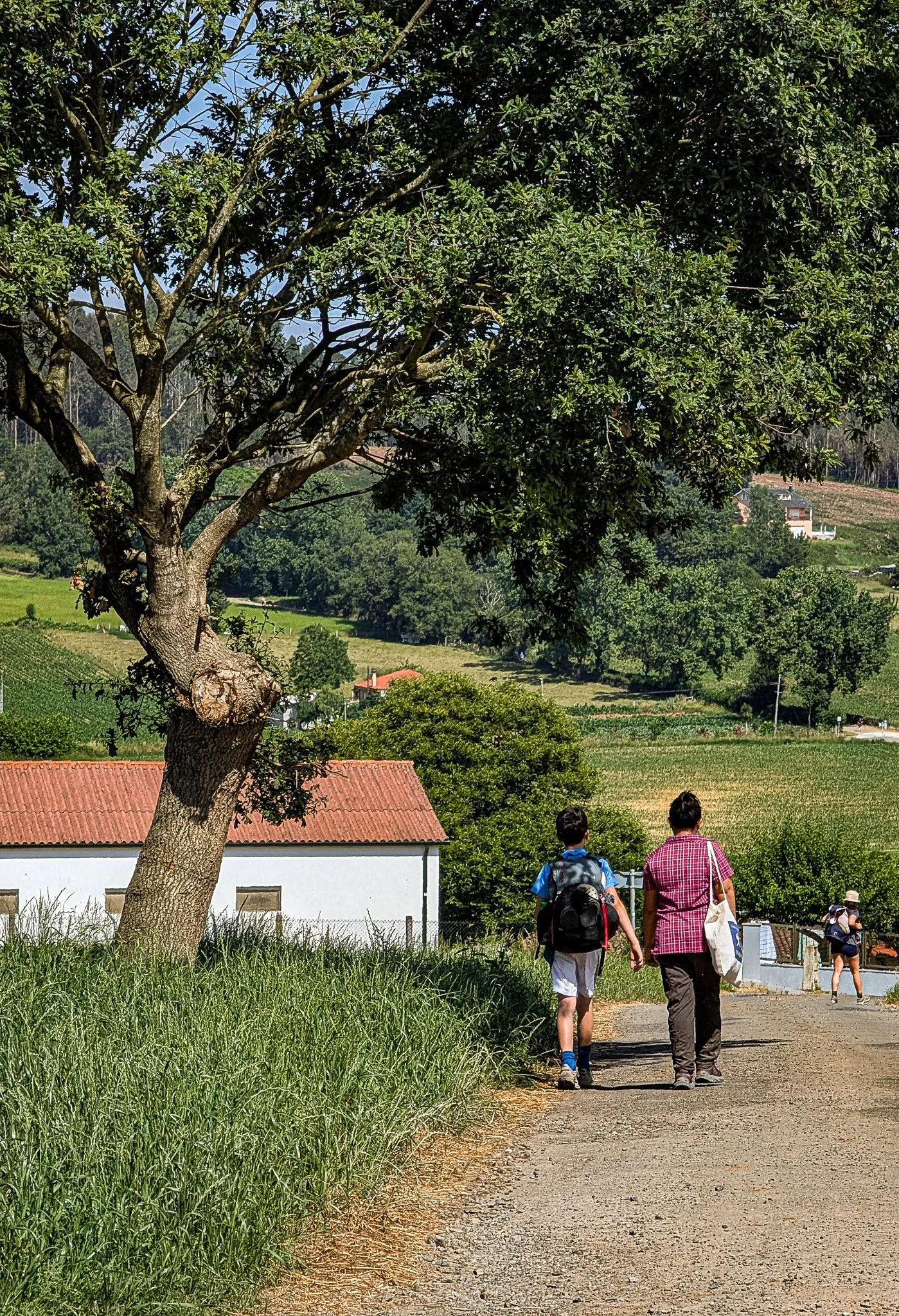
The idea was to make one final push to get us close enough to Santiago so that we could savor the walk to the Plaza de Gloria the following day. The way was still very quiet, except for occasional groups of e-bikers who viewed walkers as slalom gates. We made a mental note to be more considerate when we returned on bikes some day.
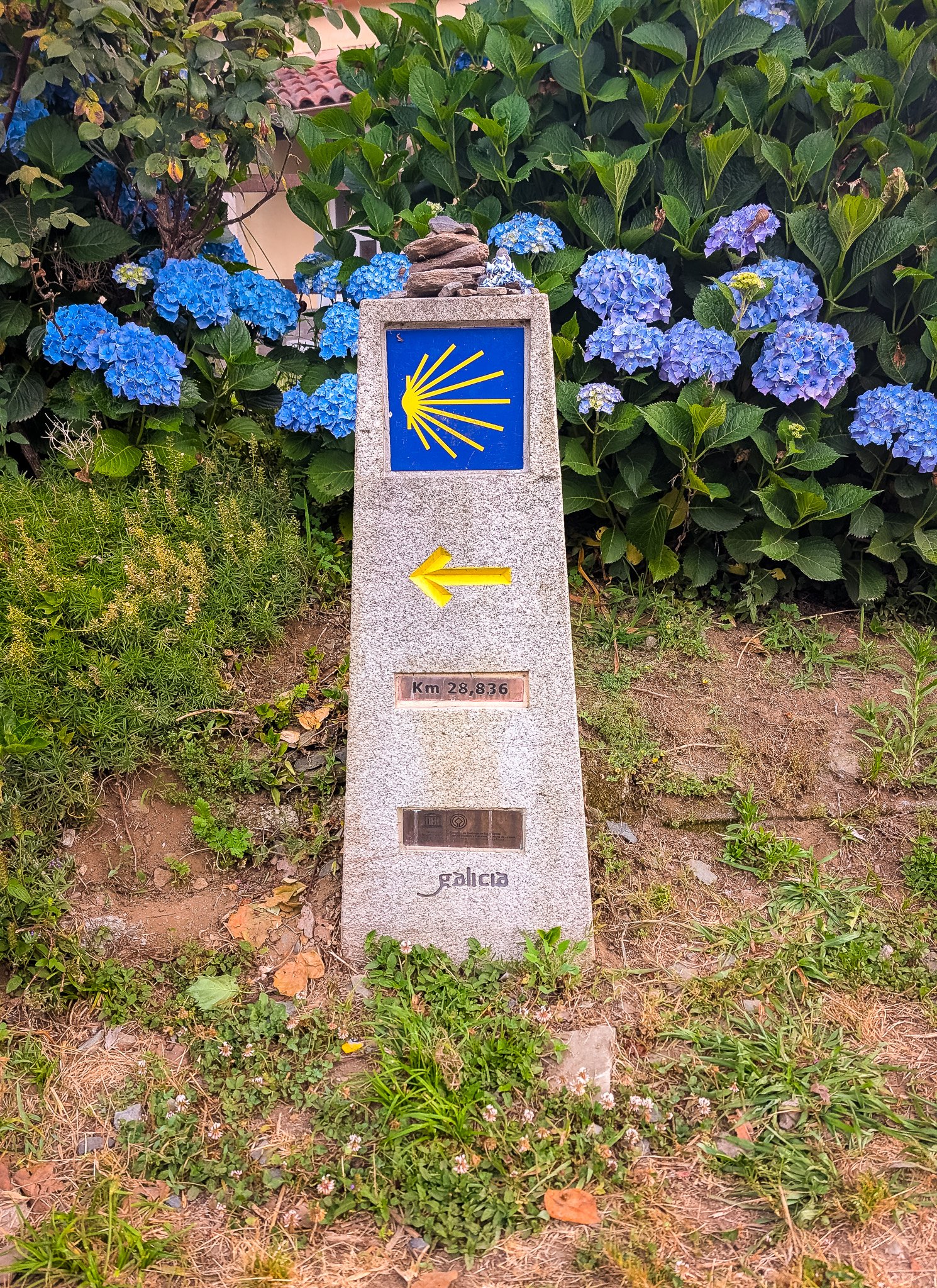
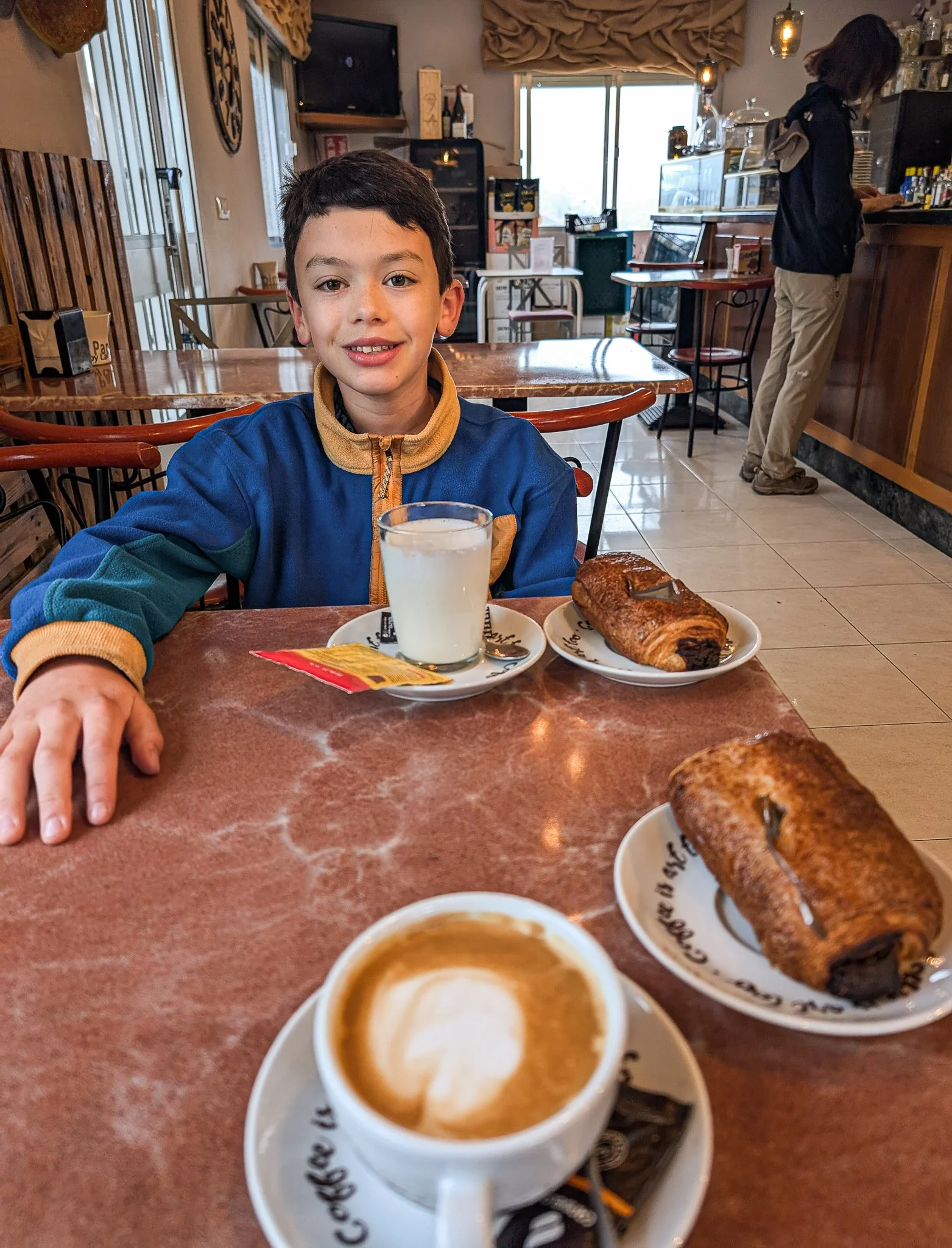
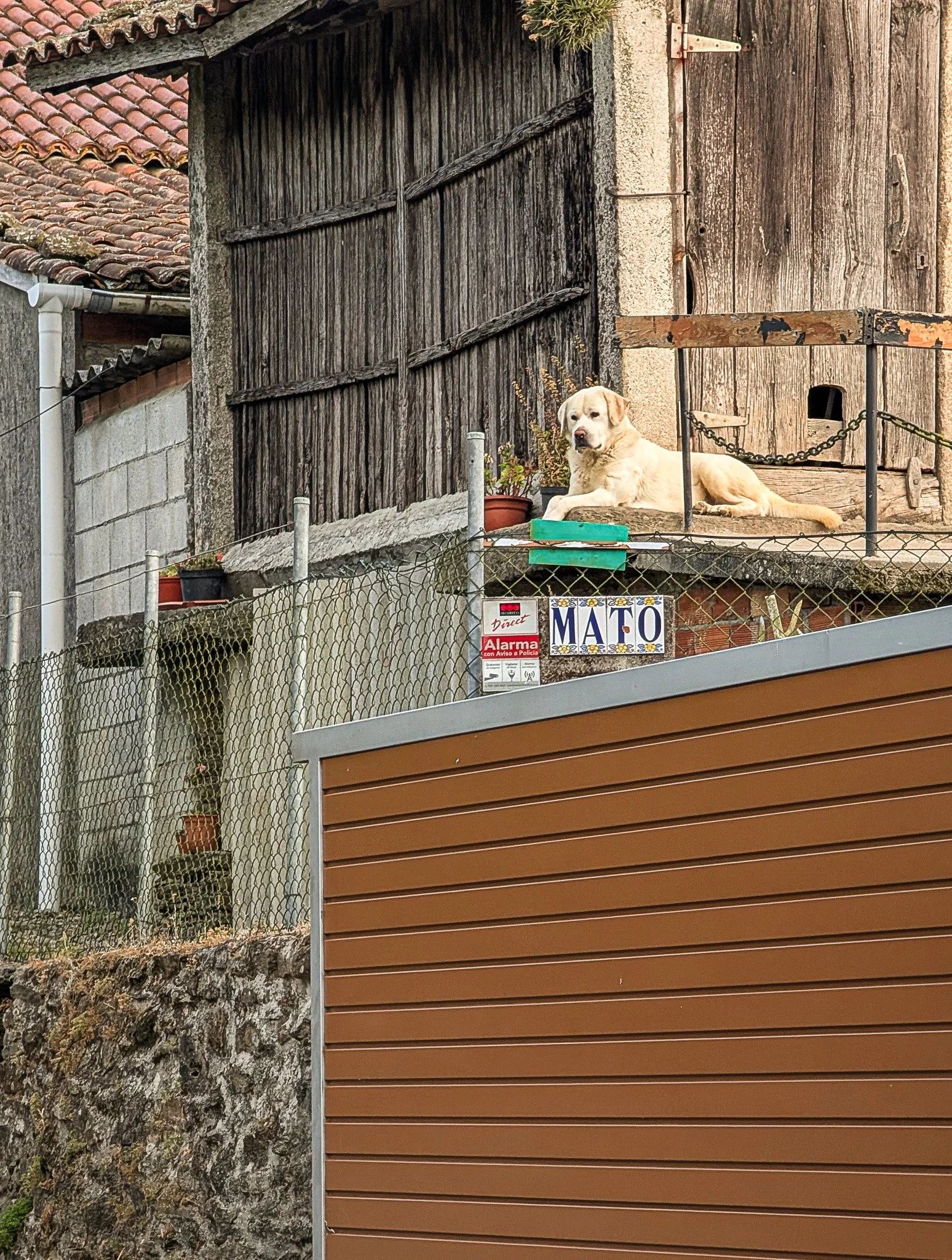
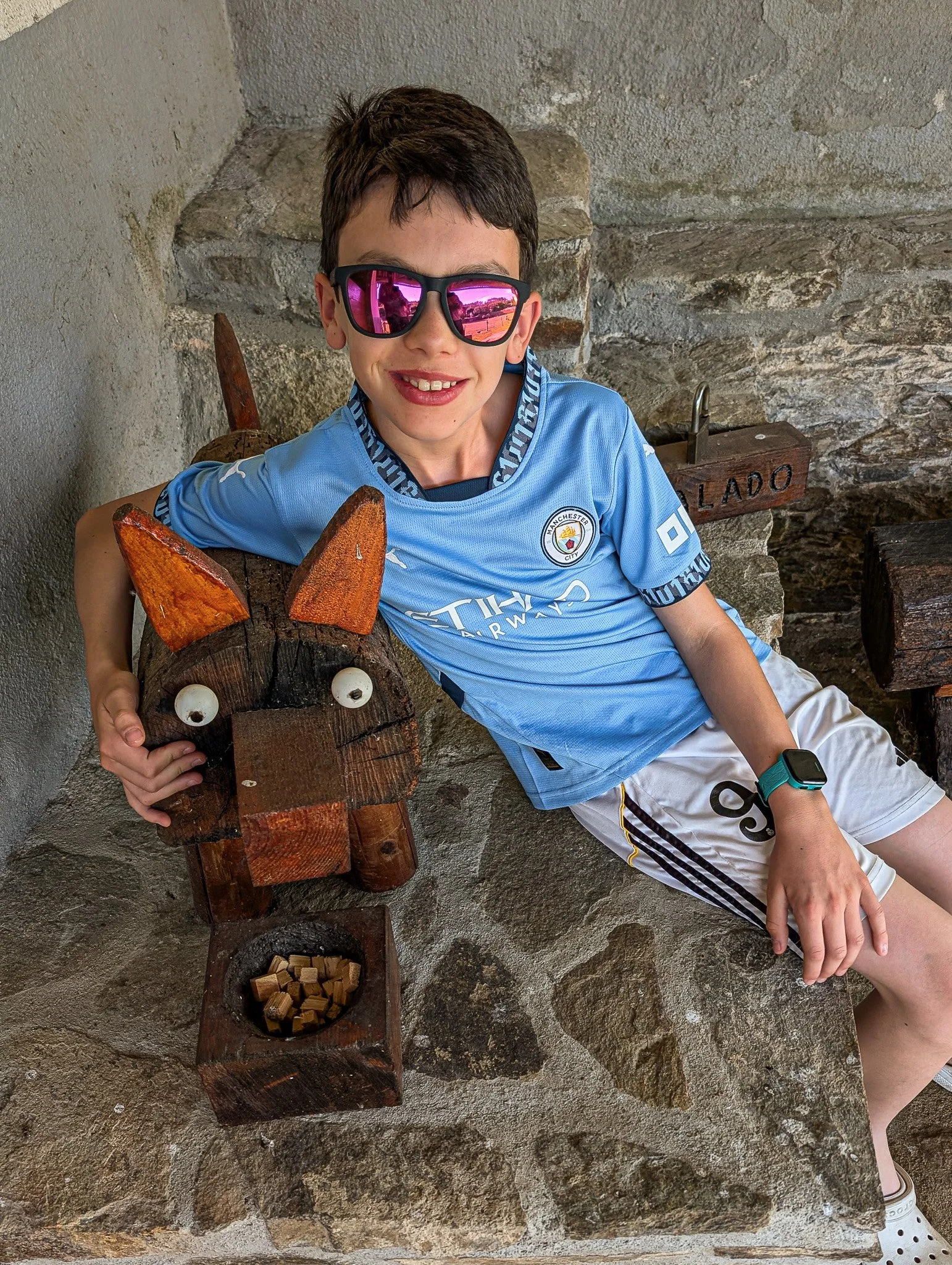
The Camino doglegged around the end of the SCQ runway, which felt like pointless busy work. Nevertheless, it was still really peaceful considering how close we were to the big city. The town of Lavacolla was off the main stage itinerary, so it wasn’t overwhelmed. Lavacolla’s name comes from its historical status as a site for ritual washing. After a long and arduous journey, pilgrims would bathe and wash their clothes in the nearby river, preparing for their final approach to Santiago. We had a similar plan.
We stayed at A Fabrica, a modern albergue with some nice touches, if a somewhat prickly hospitalera. I sympathized — usually after just a few weeks of the Camino I was pilgrimmed out. I don’t know how full-time hospitaleros kept it together for months at a time dealing with their tired, needy, and smelly guests.
Lesly soon warmed her up, as she does. The place managed to preserve the spirit of the Camino, no small feat in the final 100km where things can often feel Disneyfied. Especially nice were the laundry and hot showers, a distinct advantage over what 11th century pilgrims had access to.
Day 12 - Lavacolla to Santiago de Compostela
12 km / +1,231’ / -1,234’ / 3:30
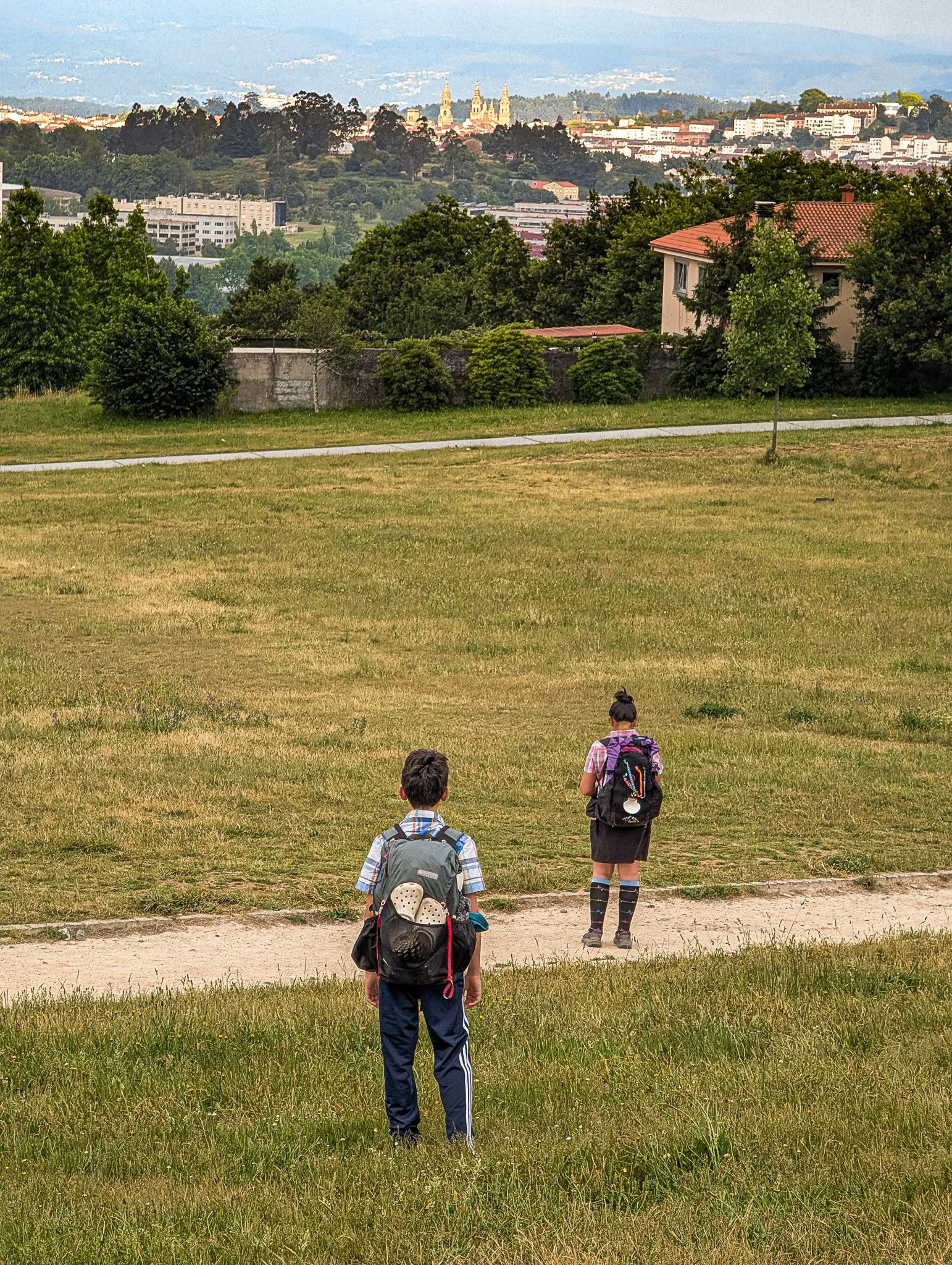
Target acquired
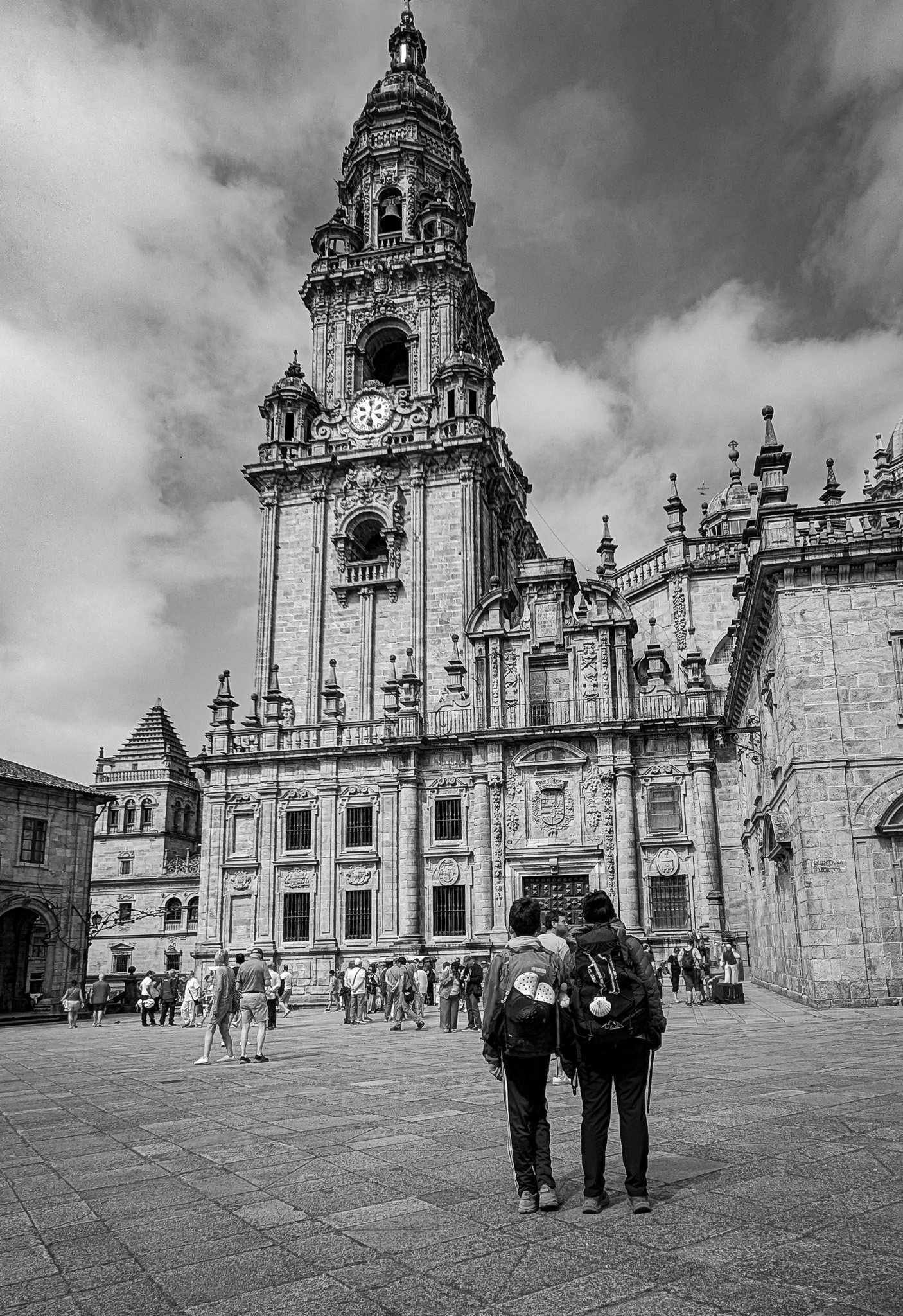
An easy morning walk into Santiago. Having plenty of time, we went to the true summit of Monte do Gozo (“Mount Joy”). This is the first time pilgrims are able to see the Cathedral of Santiago de Compostela’s iconic towers off in the distance. Only 5 km more.
Not really wanting the experience to be over, we took an alternate route through a park to the edge of the city. Then into the crush of Santiago. We made a bee-line for the Compostela office to get our certificates before it got too crowded later in the day.
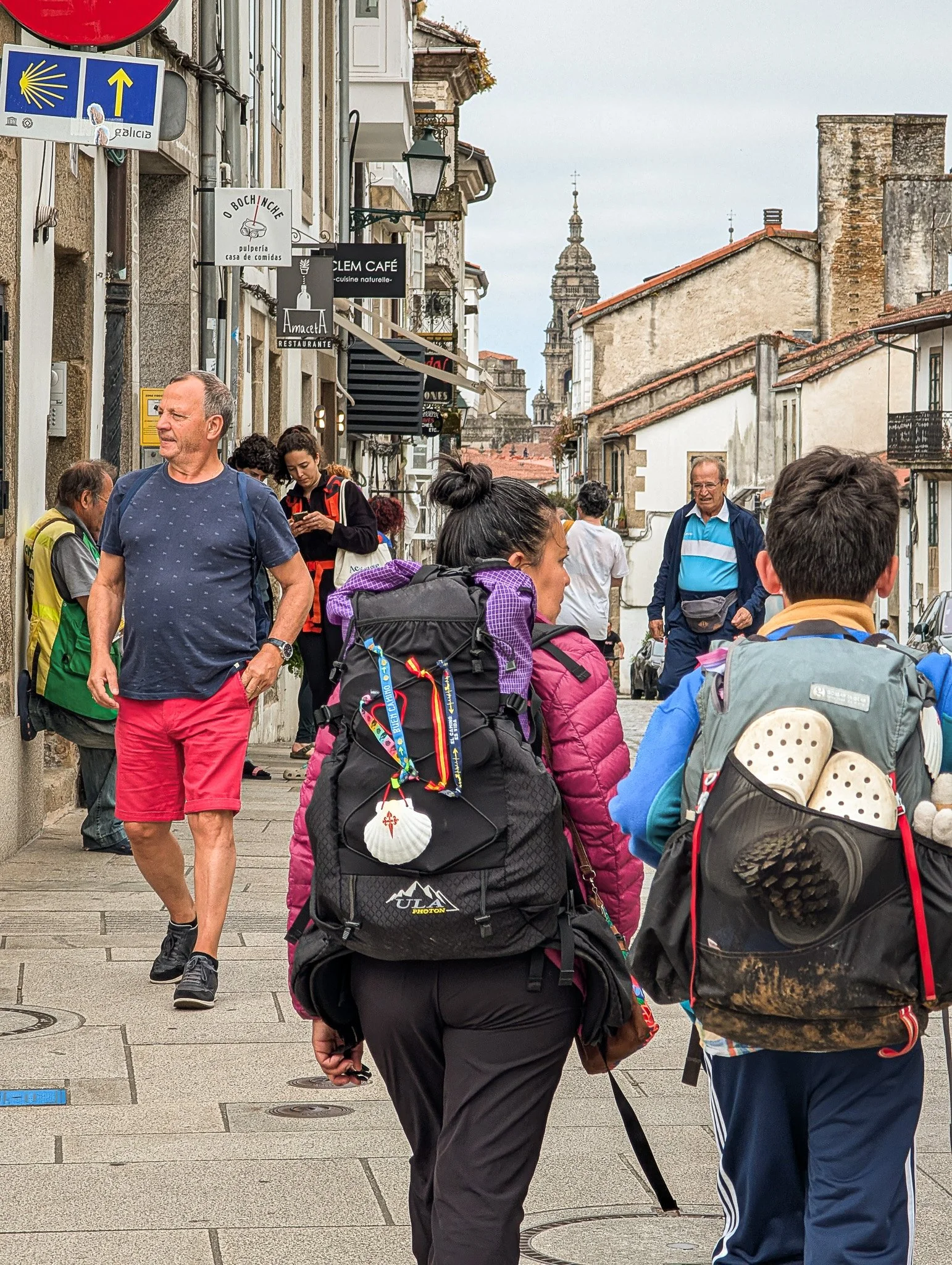
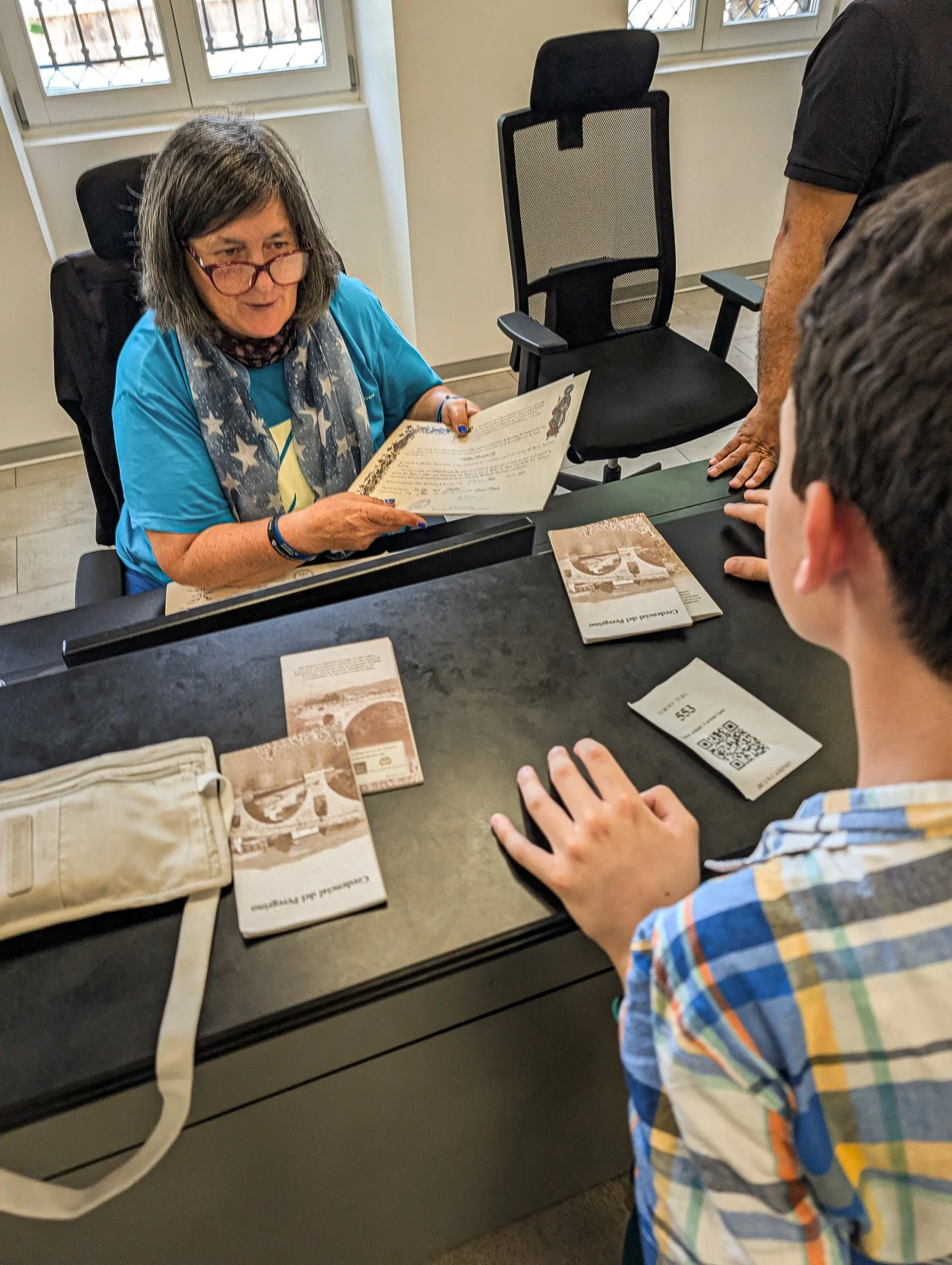
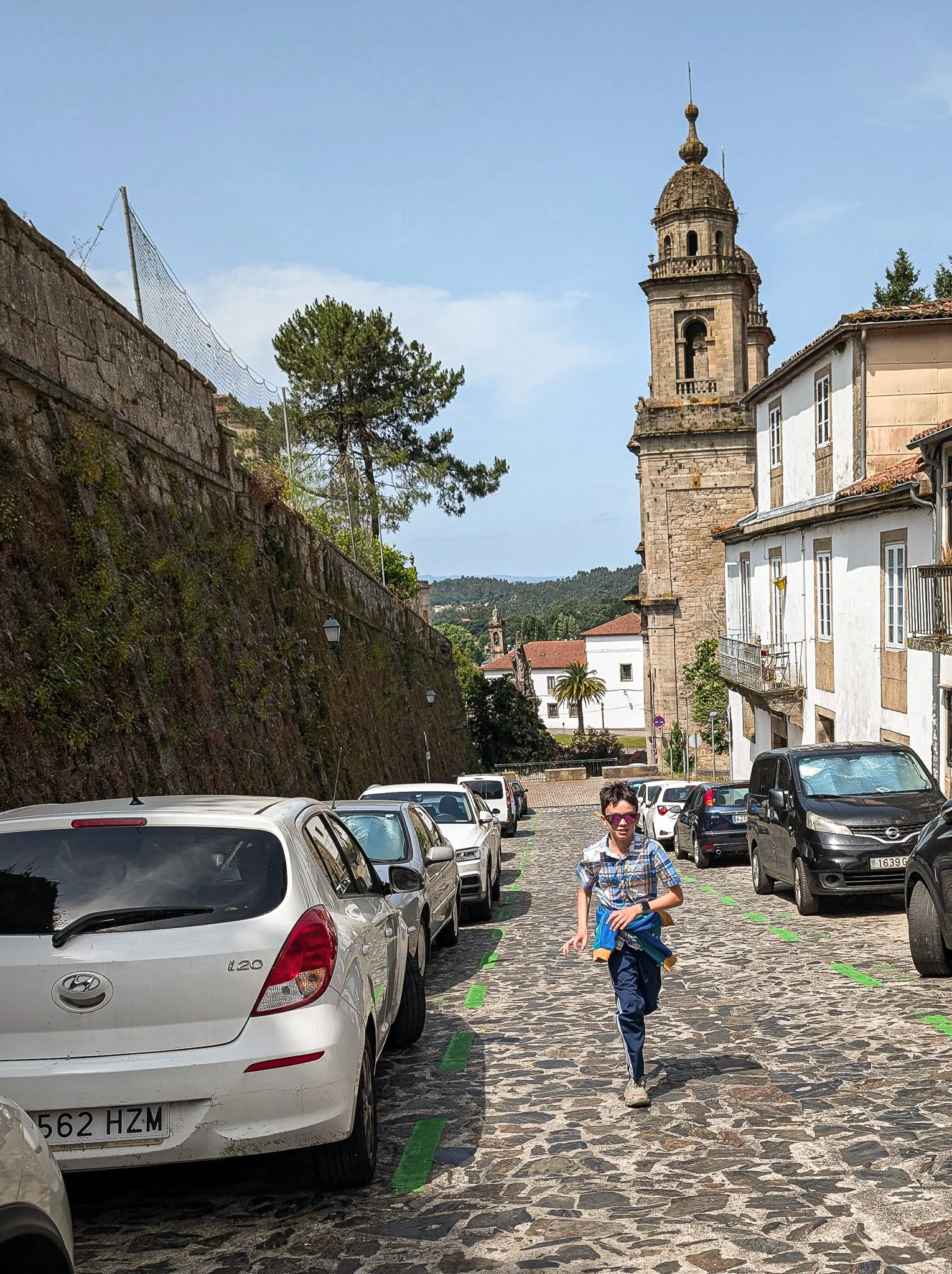
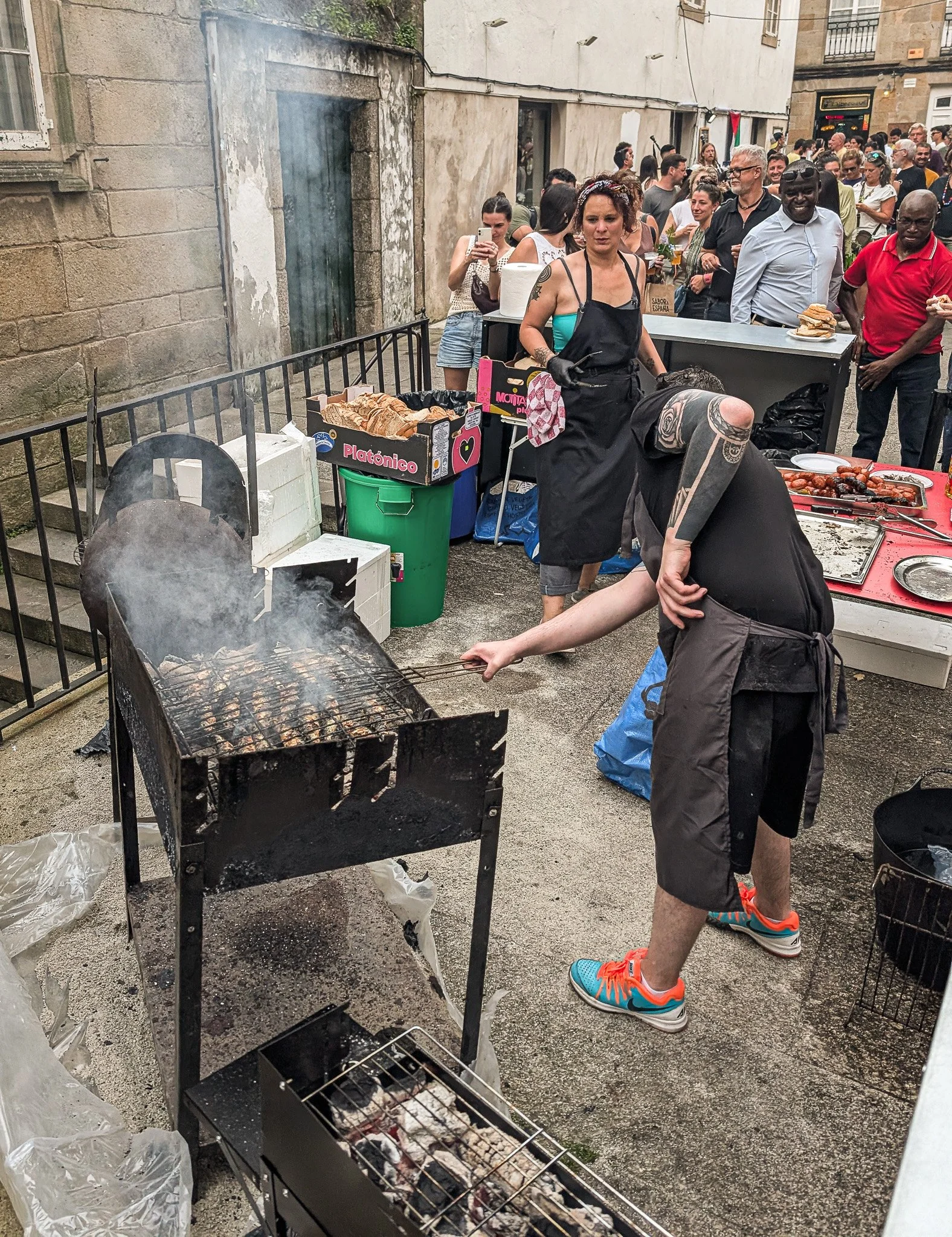
There was a festival going on, so the city was busier than usual. We lined up with the locals for grilled sardines. A traditional Galician band played nearby. The sun was shining, not a given in this part of the country. We had just finished the Camino. Time to celebrate!

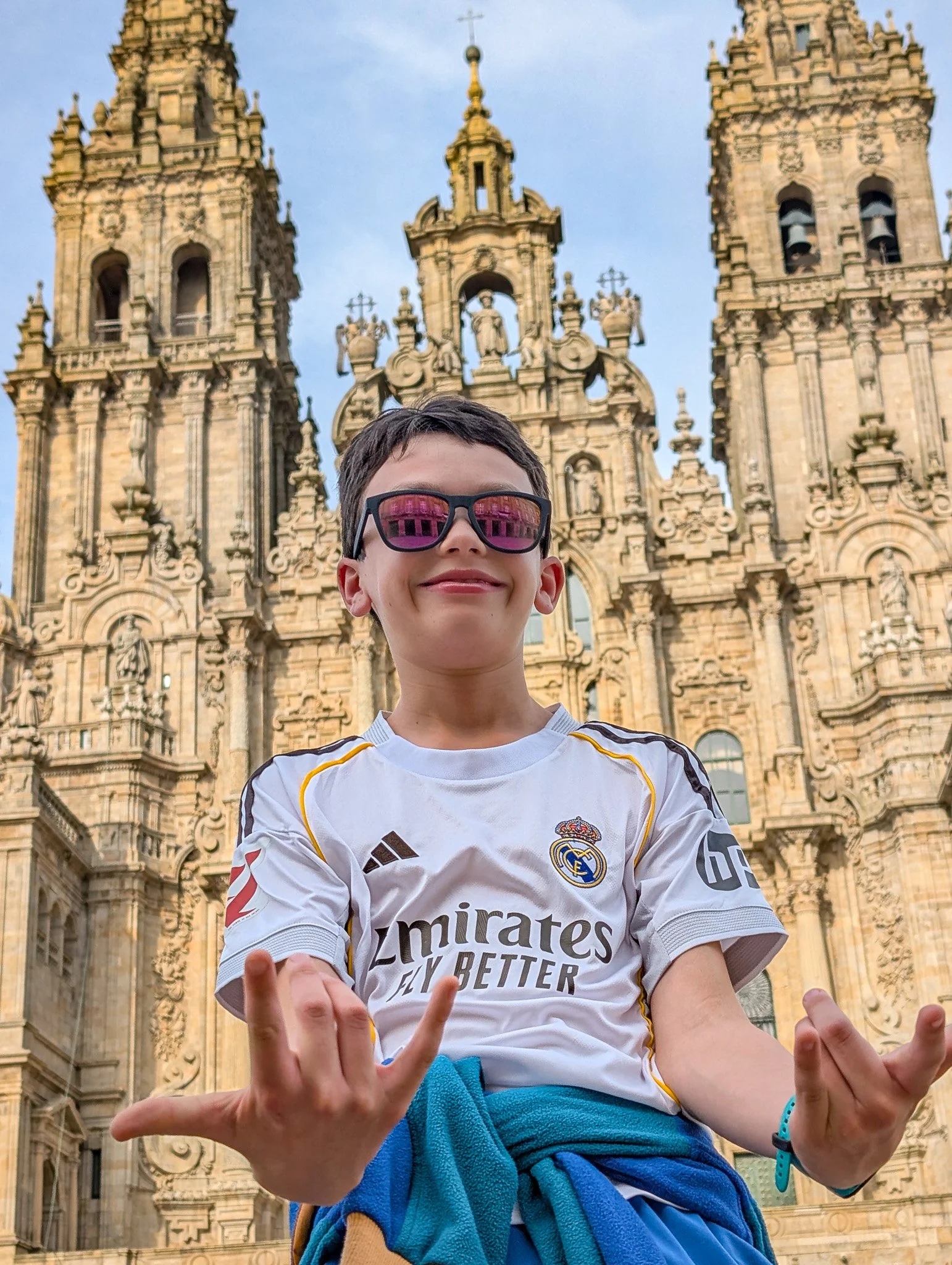
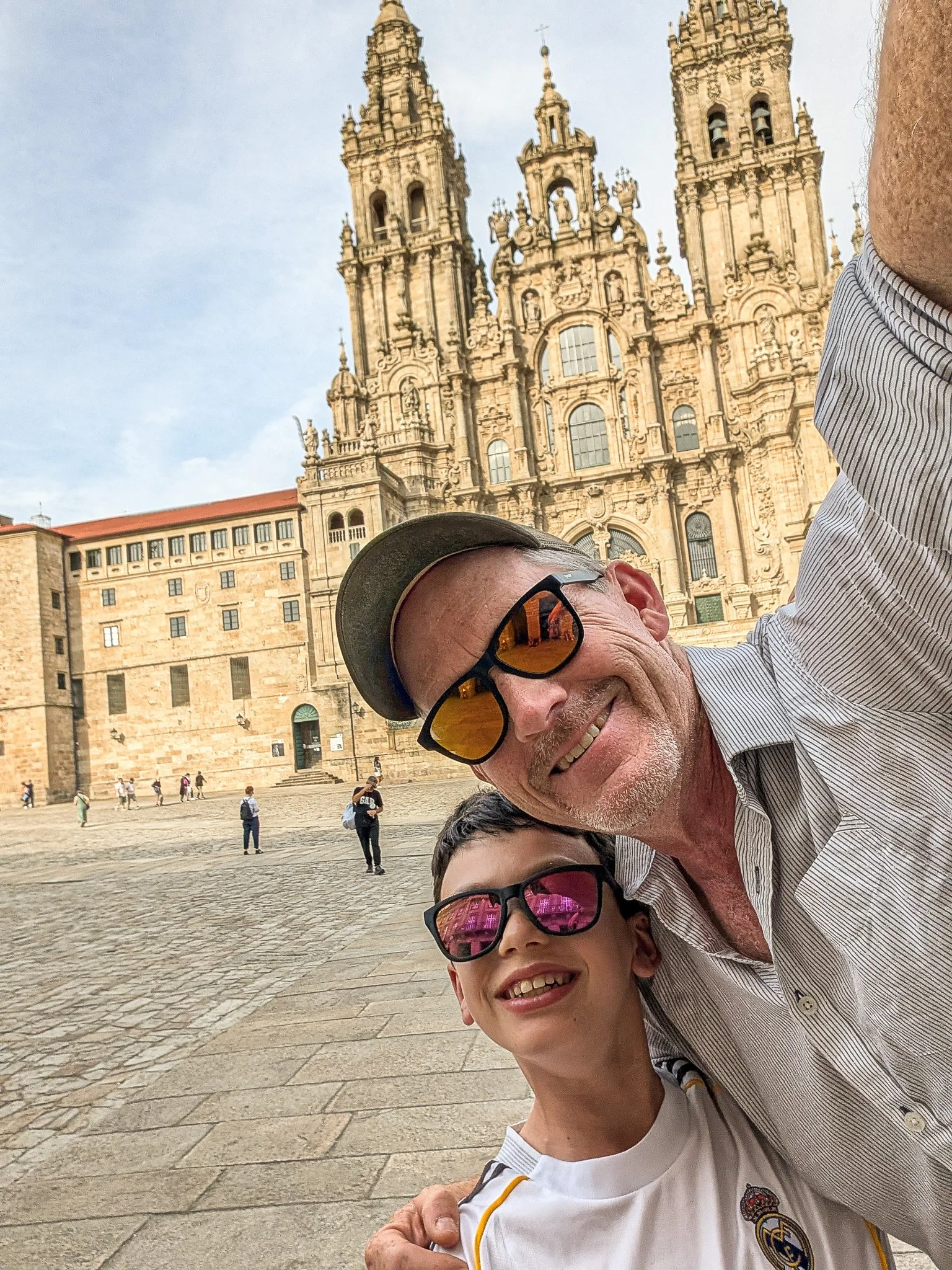
We attended the evening mass at the cathedral. We thought that by arriving an hour early we might get a seat, but we were mistaken. We ended up sitting on the marble floor up front, probably the best seats in the house. At the end, four priests swung the botefumero high into the cathedral. I thought I knew what to expect, but it still floored me. It was a fitting and emotional end to our journey across Spain.
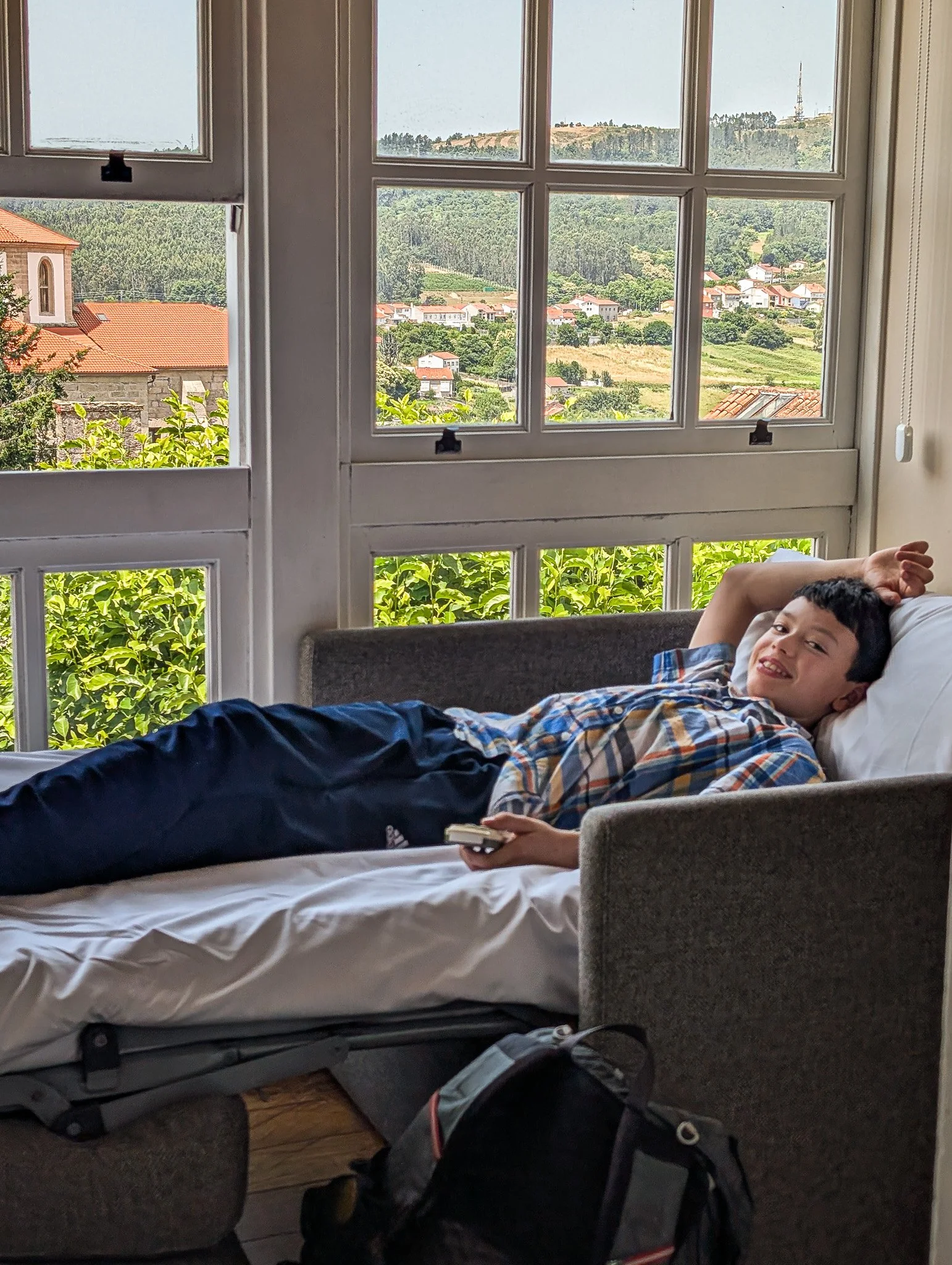
When in Santiago, stay at the Hotel Costa Vella. It’s absolutely the best bang for the buck in the city. Beautiful garden, comfortable rooms, and world-class breakfast. The staff is beyond friendly. A great place to chill after a long walk.
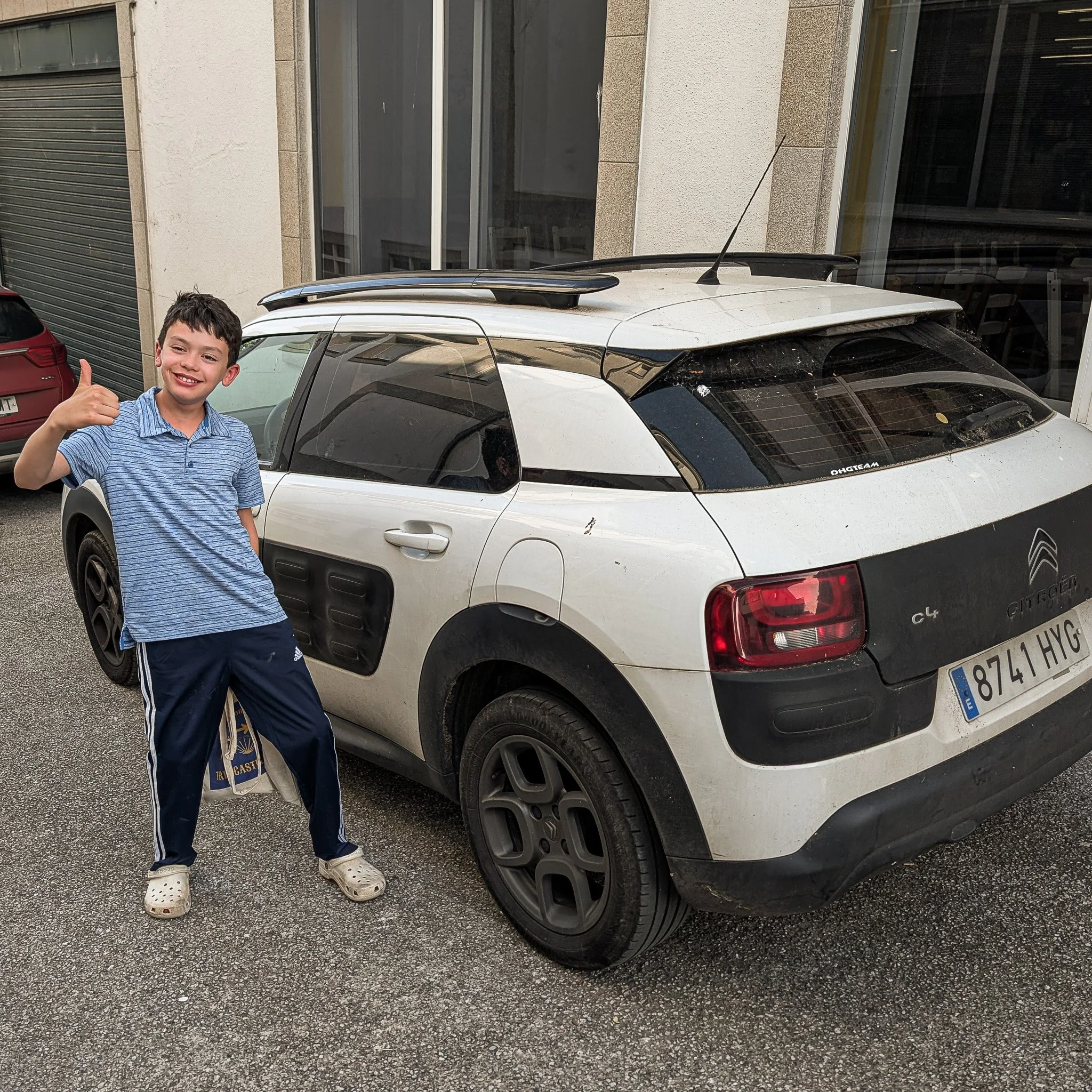
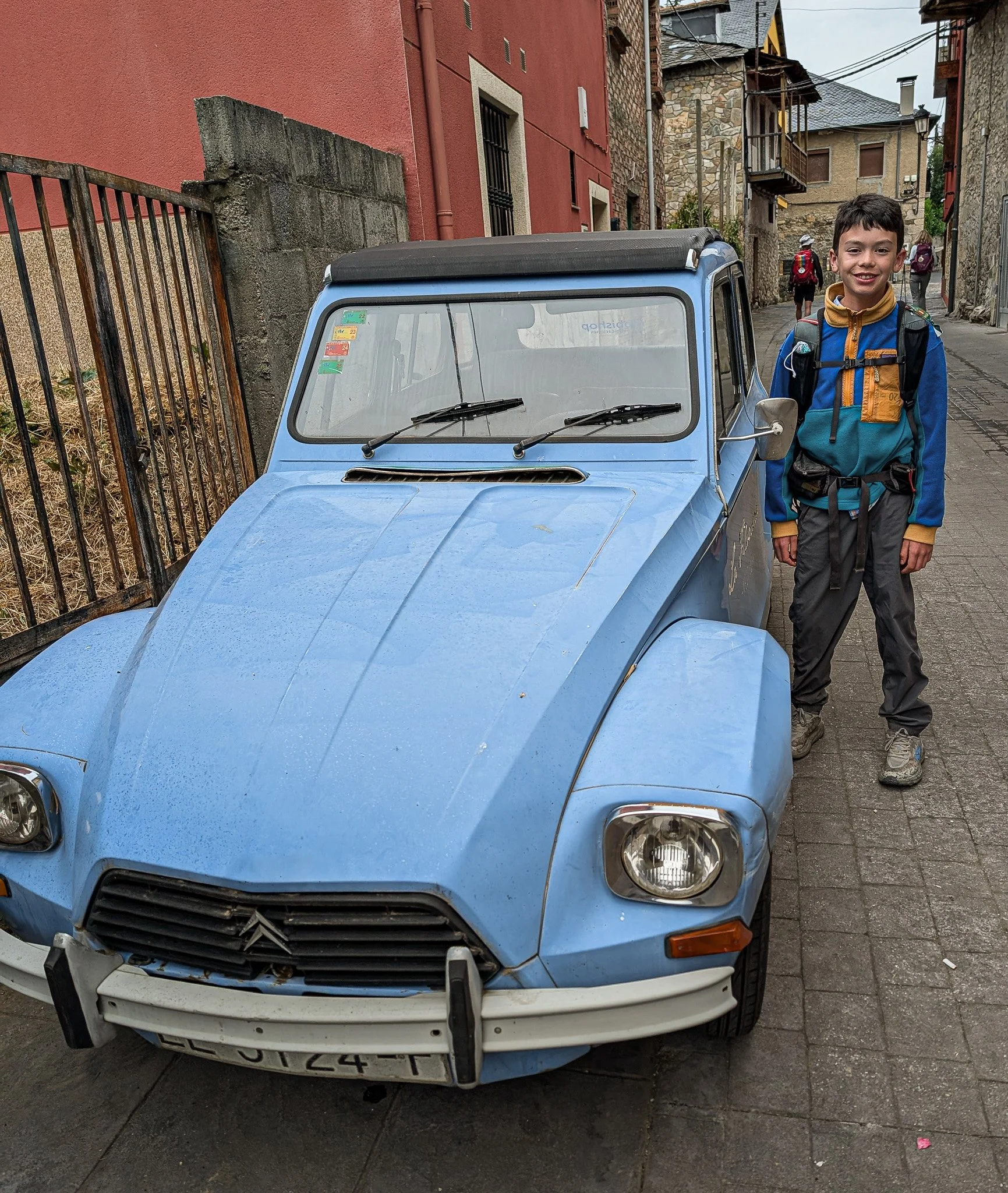
Vehicles of the Camino
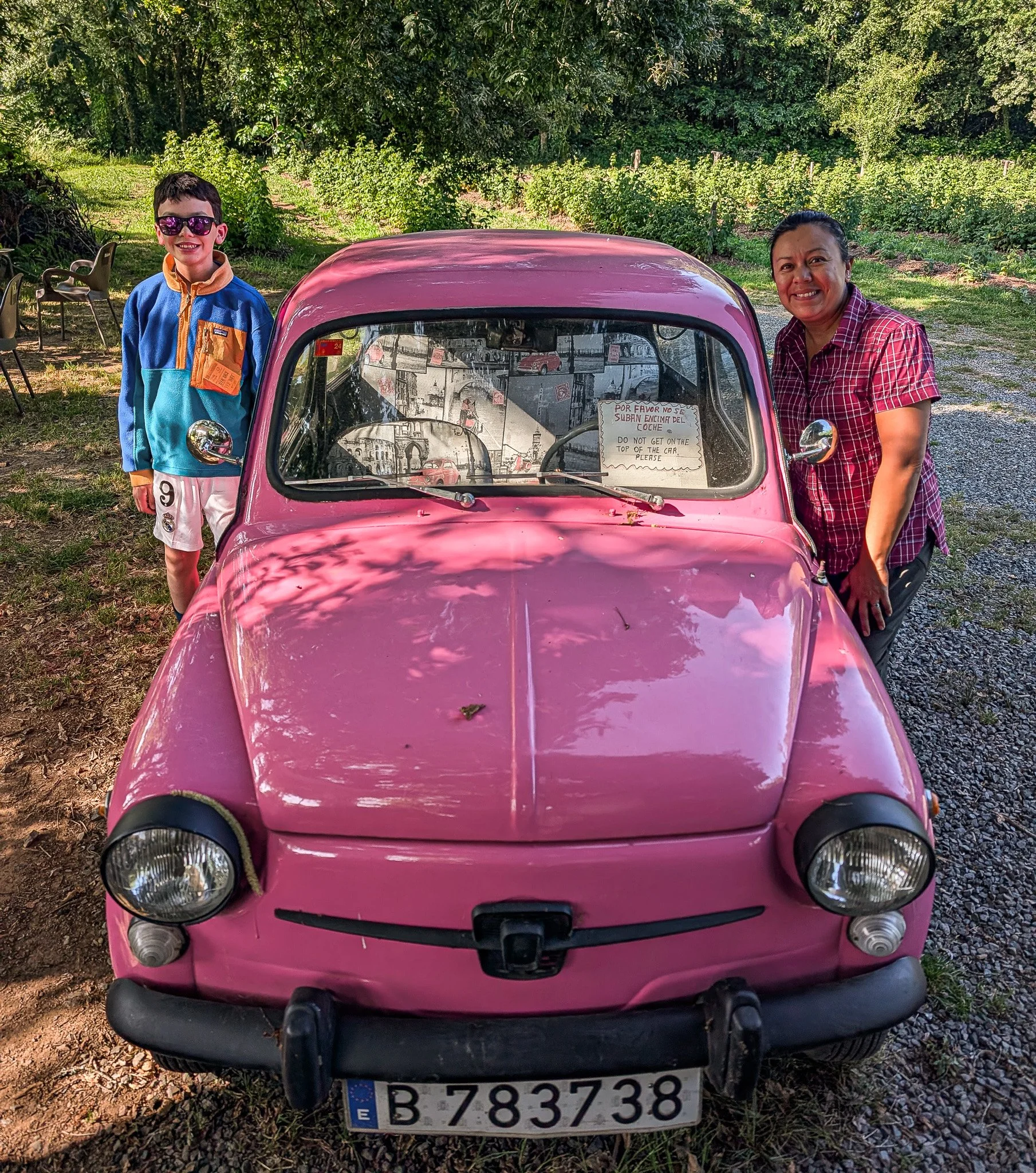
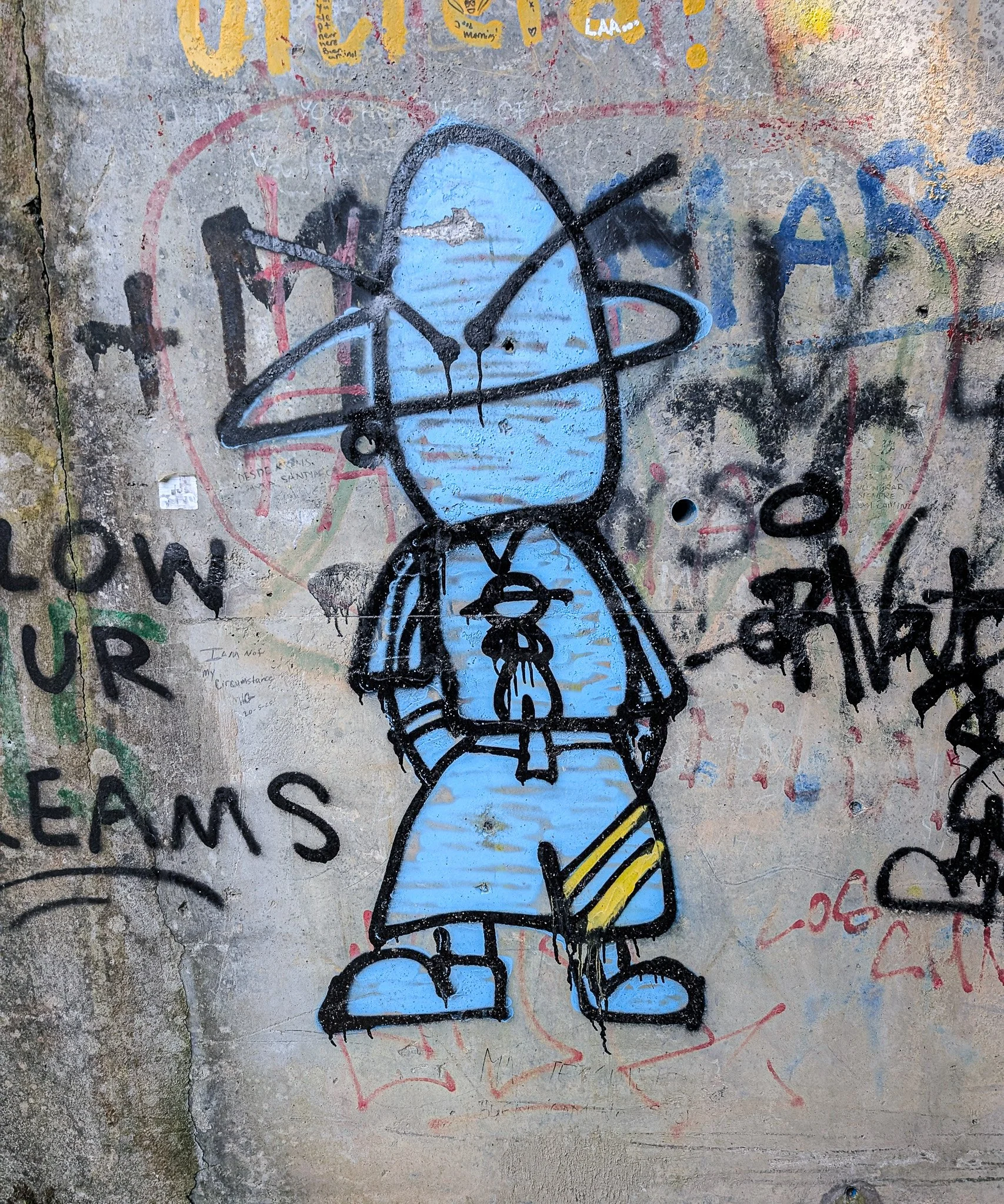
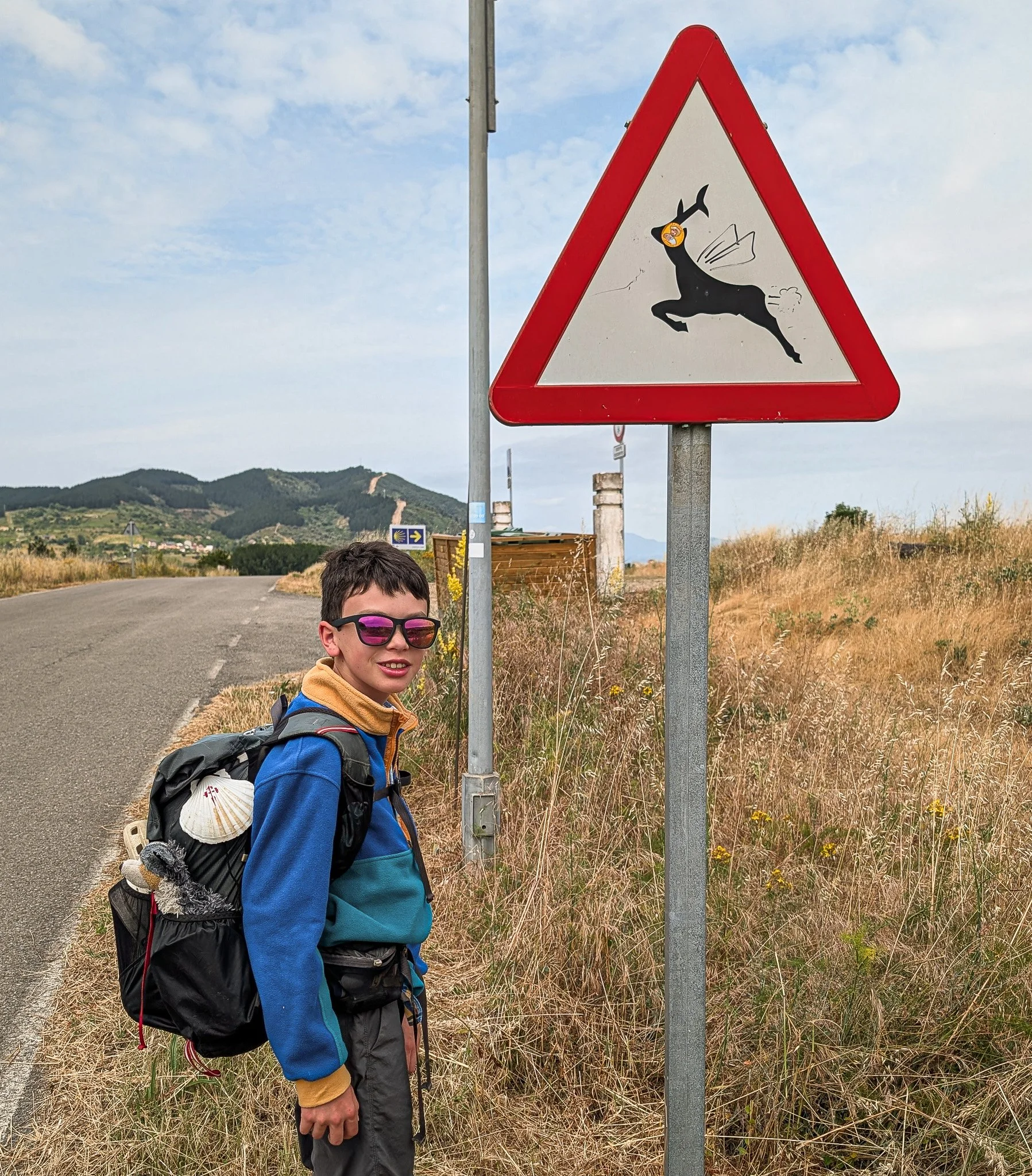
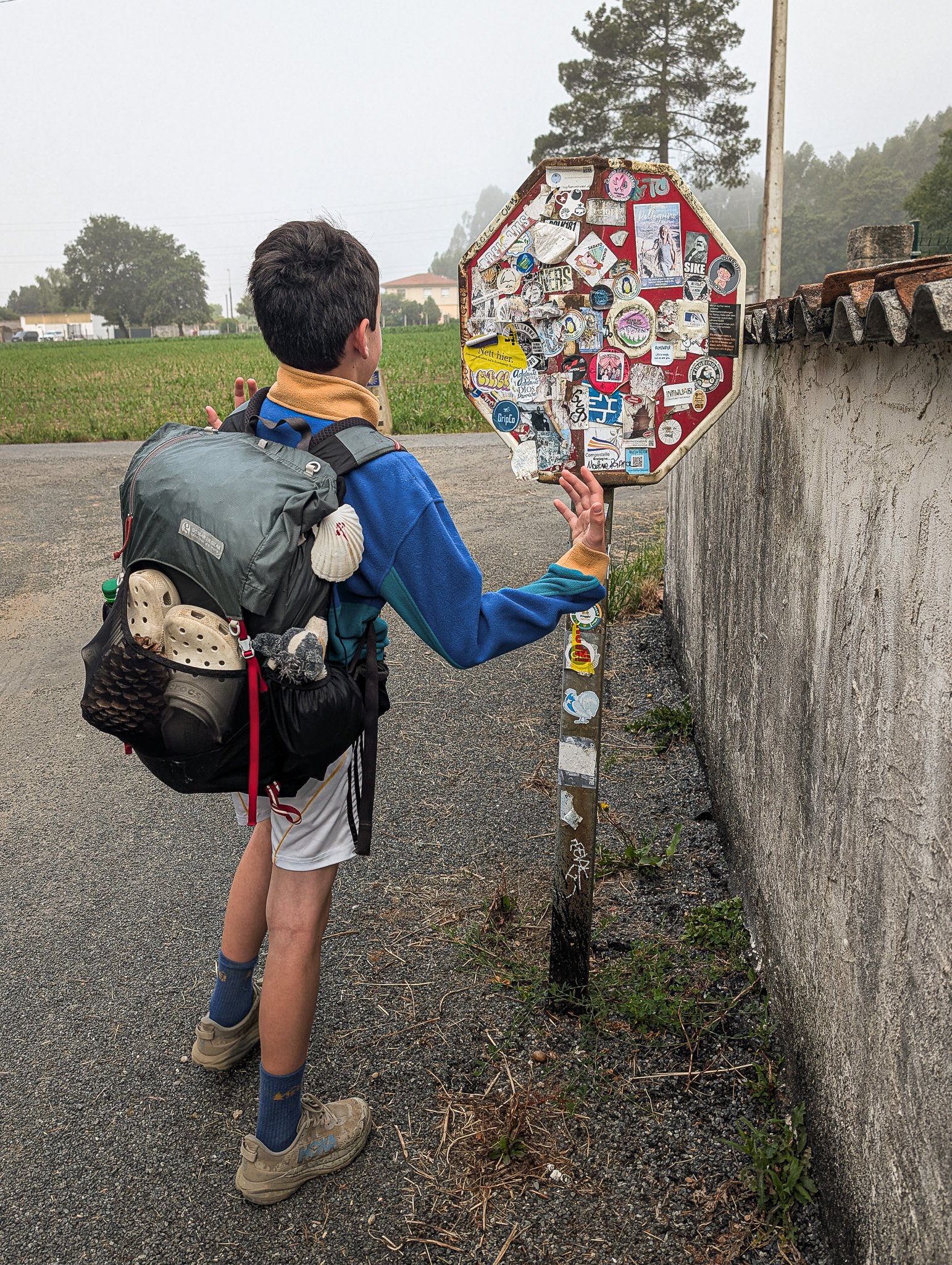
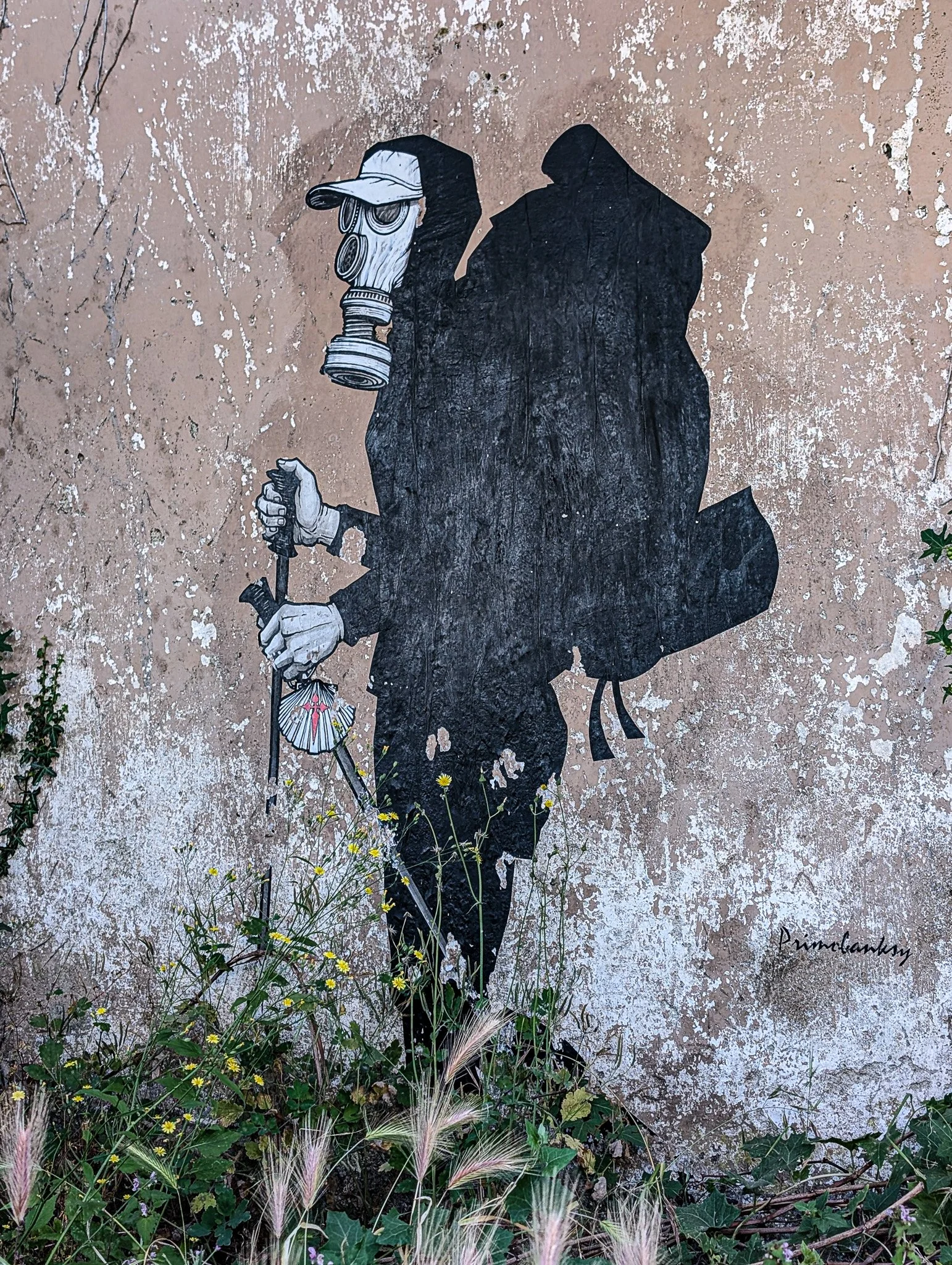
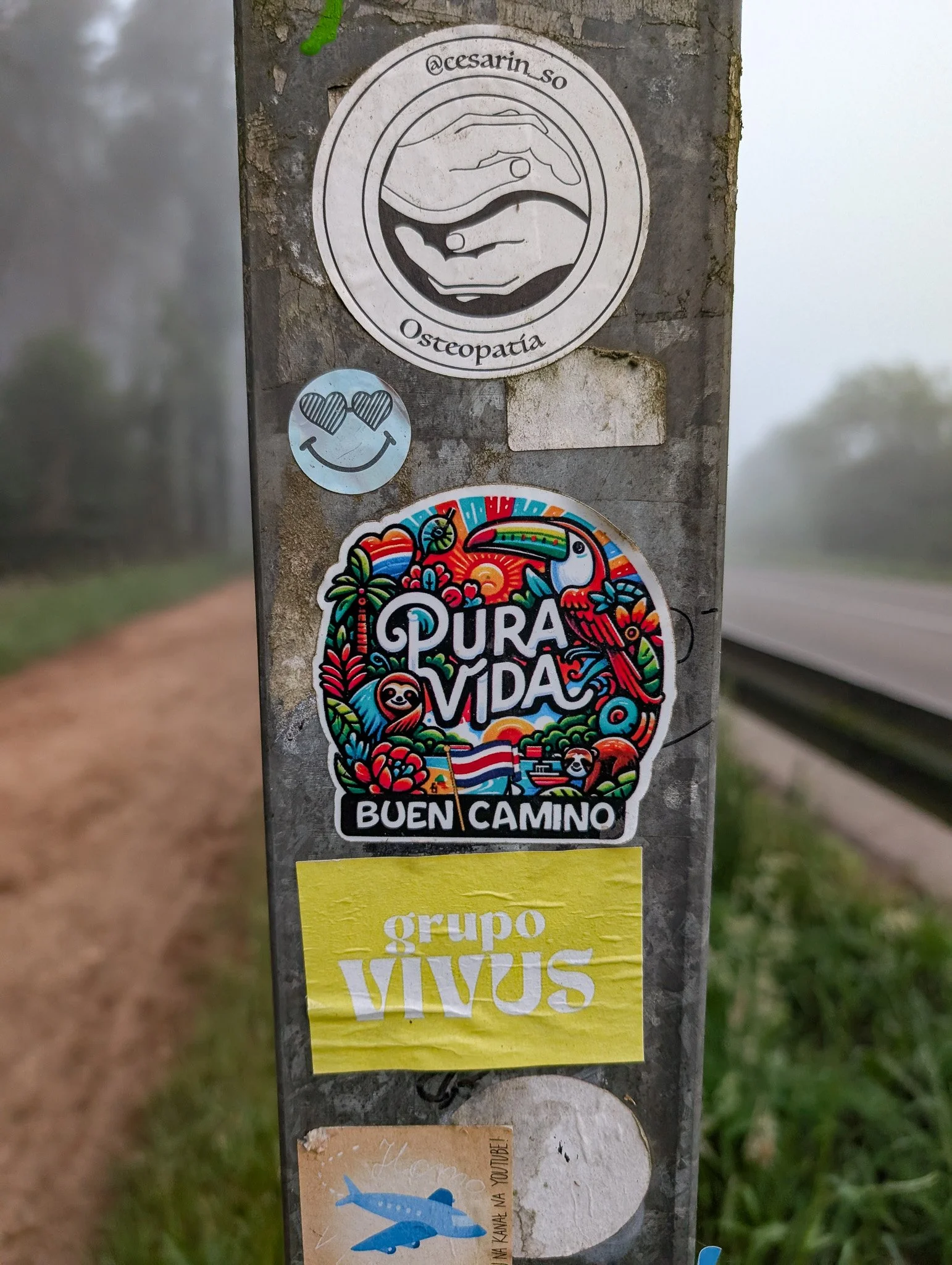
Signs of the Times
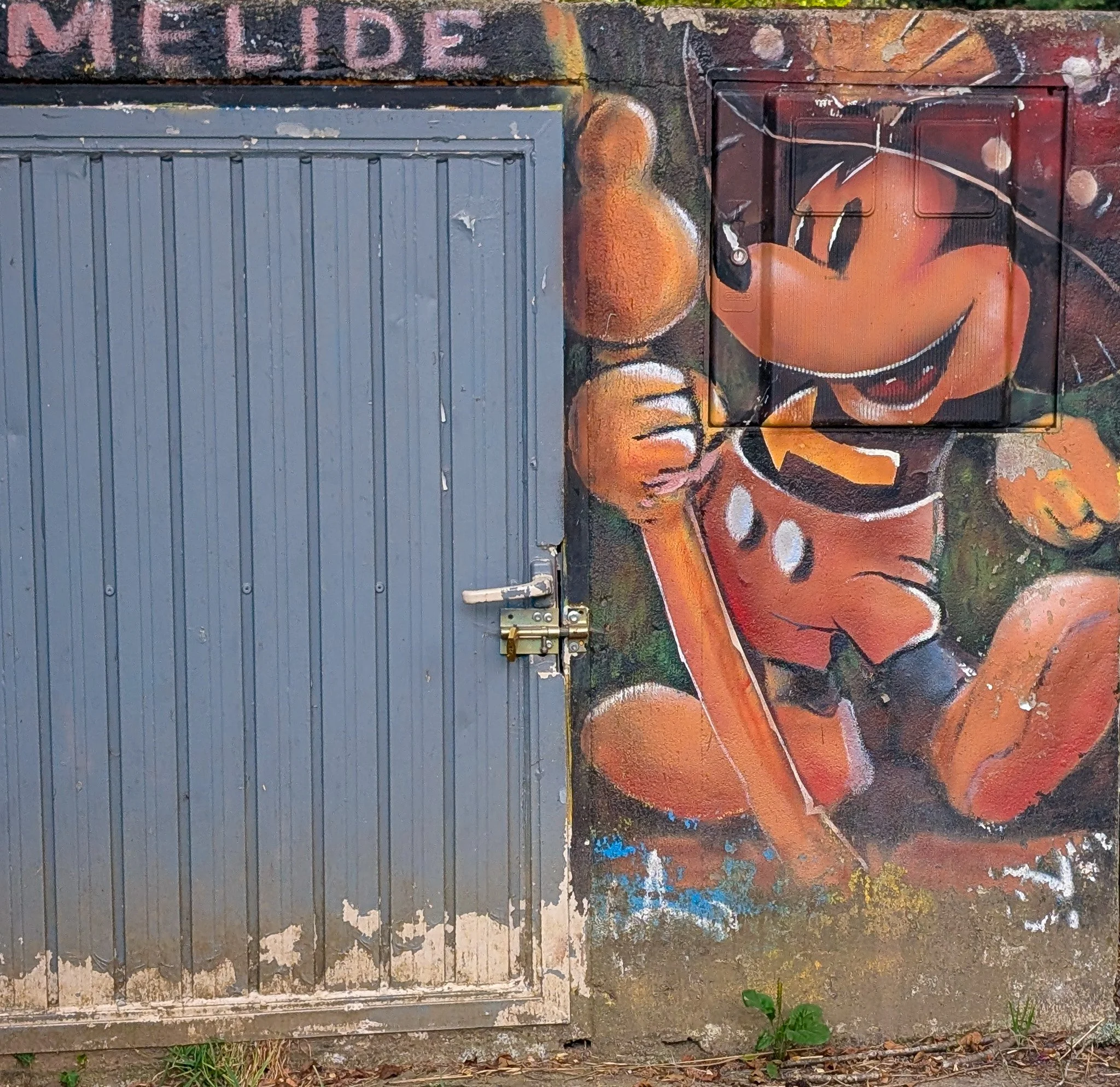
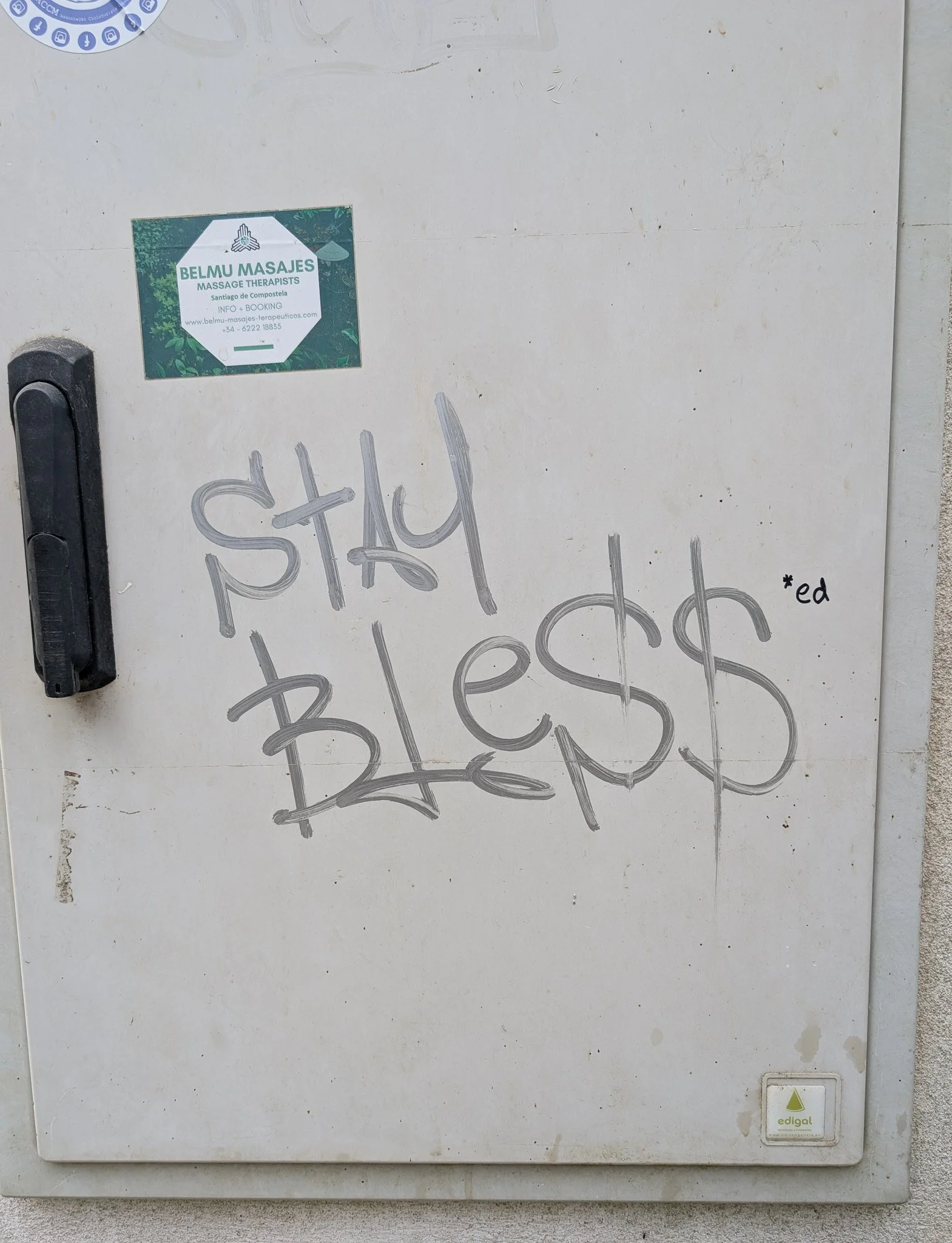
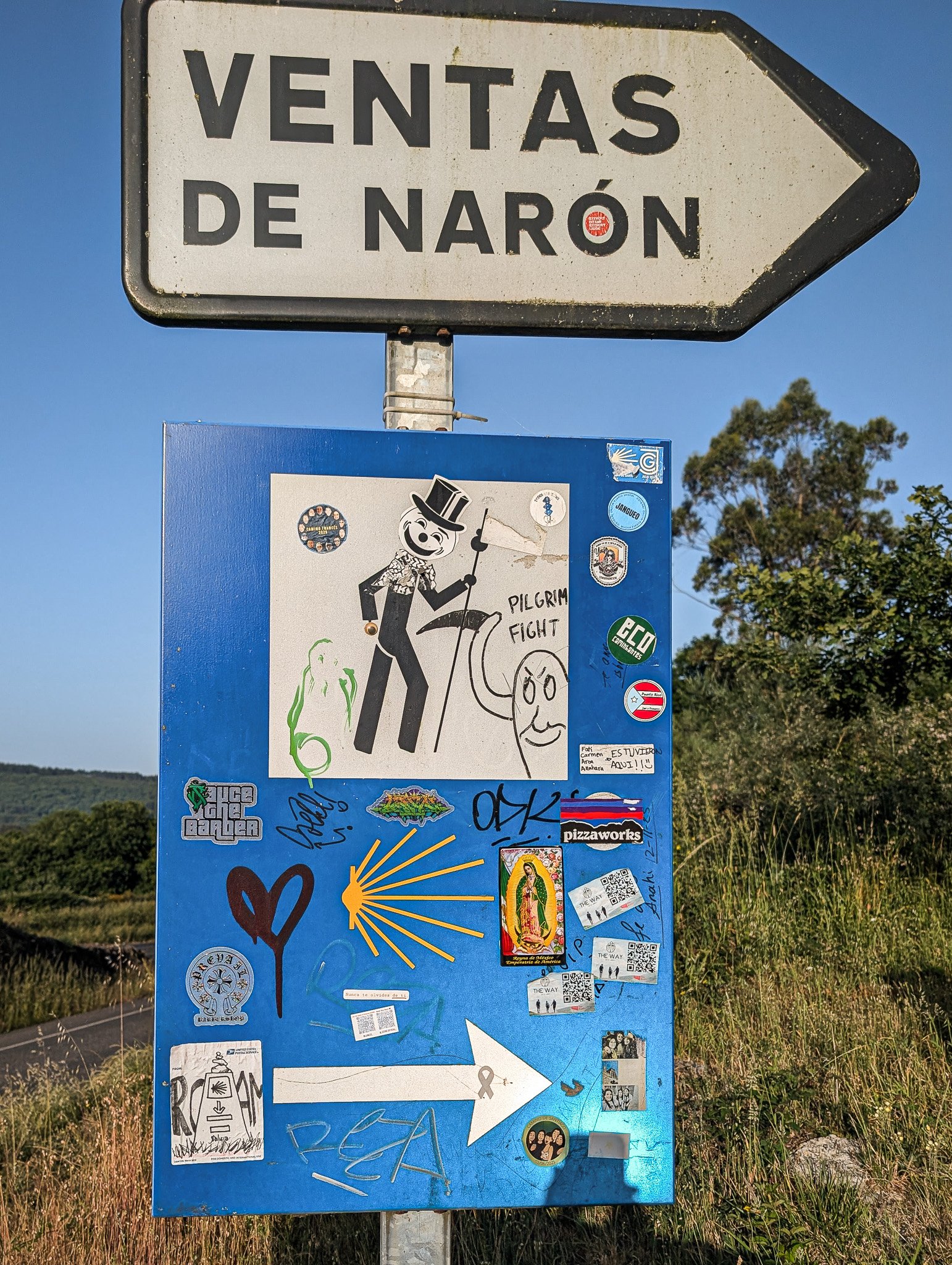
What next? We’re taking a break from the Camino, although Matthew is pushing for an eastbound effort on bikes from Santiago to the French border.
Santiago
